SRINAGAR — In a major policy push aimed at resuscitating Jammu and Kashmir’s struggling industrial ecosystem, the Federation of Chambers of Industries Kashmir (FCIK) has appealed to the Union Ministry of Micro, Small and Medium Enterprises (MSME) for urgent and structured intervention to address the growing crisis facing the region’s MSME sector.
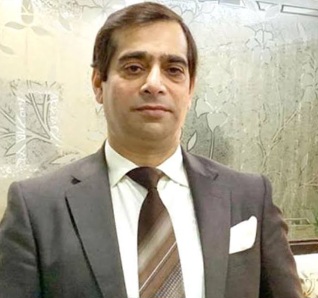
The appeal was made during an interactive session held in Srinagar between FCIK leadership and a visiting delegation from the Ministry of MSME, headed by Union Secretary S.C.L. Das. A detailed memorandum was submitted by FCIK President Shahid Kamili, outlining an extensive roadmap to revive sick industrial units, ensure equitable access to incentives, and accelerate modernization efforts across the region.
According to Kamili, more than 90 percent of the 40,000 registered industrial units in J&K are either non-functional or operating far below capacity, primarily due to prolonged political unrest, natural calamities, and frequent lockdowns that have cumulatively resulted in over 3,000 days of lost operations over the past three decades. Despite repeated representations, he noted, no comprehensive revival framework has been introduced so far.
₹2,000 Crore Revival Fund Proposed
To catalyze recovery, FCIK has proposed the creation of a ₹2,000 crore revival and modernization fund. The fund, according to the memorandum, would support technological upgradation, diversification, and fresh investment flows, with the potential to unlock ₹1 lakh crore worth of dormant industrial assets while creating significant employment opportunities.
Local Procurement and SICOP Revival
The FCIK memorandum also urged a comprehensive revision of public procurement policies to prioritize local manufacturers. The federation proposed the revival of SICOP’s procurement role, beginning with enforcement of the 358-item reservation list for MSEs, alongside a mandatory 25% allocation of public contracts to local MSMEs.
To counteract the negative impact of post-2019 procurement reforms, which FCIK said have largely excluded local manufacturers from the government e-Marketplace (GeM), the body advocated for a “local vendor filter” for contracts up to ₹2 crore. The absence of this, it argued, has severely restricted access to government tenders for small enterprises in the region.
Concerns Over Central Incentive Disparities
Another key demand was equitable access to benefits under the New Central Sector Scheme (NCSS). FCIK stressed that industrial incentives must be uniformly available across all 20 districts of J&K, regardless of whether units were pre-registered under the scheme. The current policy, which largely favors new investments, leaves out numerous existing units struggling for survival, the Chamber argued.
Financial Relief and Regulatory Reforms
FCIK expressed concern over the rising number of stressed assets and non-performing accounts in the sector, blaming high interest rates and aggressive recovery tactics by banks. To address this, it proposed a One-Time Settlement (OTS) scheme and the creation of a ₹1,000 crore Asset Reconstruction Company dedicated to reviving stressed industrial units.
It also sought the operational revival of the J&K State Financial Corporation, which, despite an allocation promise of ₹150 crore under the Prime Minister’s Task Force and the Rangarajan Committee, remains defunct. The body called for a tripartite coordination mechanism between government, banks, and industry to tackle NPAs and streamline credit flows.
Infrastructure and Institutional Development
FCIK highlighted the urgent need to develop industrial estates in remote districts and proposed modern infrastructure including plug-and-play facilities, rooftop solar power, effluent treatment plants, and integration into the PM Gati Shakti framework for better logistics and market connectivity.
On institutional reforms, the federation stressed the need for better internal coordination within the Industries & Commerce Department, greater autonomy for District Industries Centres (DICs), and simplified procedures for business structure changes, amendments, and registrations to reduce red tape and enable a smoother business environment.
Ministry Assures Consideration
Responding to the delegation, Union Secretary MSME S.C.L. Das acknowledged the depth and urgency of the issues raised by the FCIK and assured the stakeholders that the Ministry would give serious and empathetic consideration to their proposals. He emphasized the Centre’s commitment to building a more inclusive and responsive MSME framework for J&K.
The meeting was also attended by senior officials including Joint Secretary MSME Ateesh Kumar Singh; Commissioner/Secretary Industries & Commerce J&K, Vikramjeet Singh; Secretary Labour & Employment, Kumar Rajeev Ranjan; Director I&C Khalid Majeed; Director Employment & Skill Development, Shehzad Alam; MD Handicrafts Corporation, Atul Sharma; GM DIC Budgam, Zahid Khan; and others.
“A Turning Point for J&K Industry”
Speaking after the meeting, FCIK President Shahid Kamili said, “Jammu and Kashmir’s industrial base stands at a historic turning point. With the right policy support, we can transform it into a powerful engine for inclusive and sustainable economic growth. But we need action now, not later.”
The policy dialogue comes at a time when both the Union Government and UT Administration are seeking to rejuvenate J&K’s economy by promoting entrepreneurship, attracting investments, and integrating local industries into national and global value chains. FCIK’s proposals are expected to form a key part of future industrial policy discourse in the region.