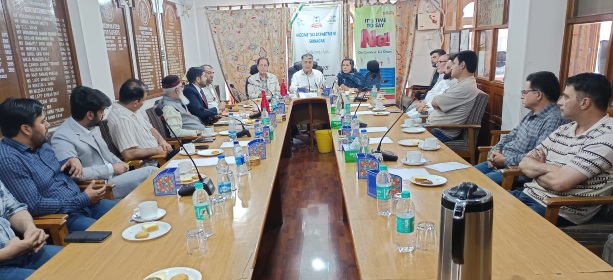
Srinagar: The Kashmir Chamber of Commerce and Industry (KCC&I) on Thursday hosted an interactive session with the Income Tax Department at its headquarters on Residency Road, Srinagar. The session was attended by Dr. Ruveda Salam, Joint Commissioner of Income Tax J&K, along with other senior tax officials, and brought together a cross-section of the Valley’s business community including office bearers, executive members, and chartered accountants.
Welcoming the officials, KCC&I President Javid Ahmad Tenga provided a detailed overview of the current business environment in Kashmir. He voiced the Chamber’s concerns about tax compliance hurdles, procedural inefficiencies, and the growing unease among local traders and industrialists regarding delayed assessments and appeals.
One of the major grievances raised by the business community was the continued requirement for Kashmir-based appeal and exemption hearings to be held in Chandigarh and Jammu. KCC&I stressed the urgent need to have these hearings conducted in Srinagar to ensure easier access and timely adjudication for local assessees.
With the deadline for Advance Tax approaching on June 15, KCC&I members also flagged apprehensions over lower tax collections this quarter, citing subdued economic activity following the April 22 incident which had severely impacted market sentiment and operations across sectors.
Members advocated for better coordination between the Income Tax and GST departments and proposed joint facilitation sessions to address overlapping issues and ensure smoother compliance.
Responding to the concerns, Dr. Ruveda Salam assured participants that all issues raised would be taken up seriously and addressed in a time-bound manner. She encouraged the business community to continue formal engagements with the Department, and also elaborated on procedures related to TDS, Advance Tax, and the fast-tracking of appeal disposals.
Another key request made by the Chamber was the establishment of a dedicated Income Tax ward in Srinagar to handle cases involving exemptions, which are currently processed outside the Valley.


Comments are closed.