There is something deeply troubling about our society that nobody wants to talk about openly.
We Kashmiris take immense pride in presenting ourselves as a deeply religious people. We quote verses, attend sermons, debate theology and constantly remind each other about the importance of family values. Yet, when it comes to fulfilling some of the most basic responsibilities that our faith and conscience demand, many of us conveniently look the other way.
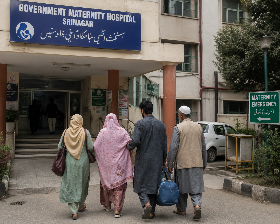
One such reality unfolds every day in our hospitals which I witness first hand, and which I find deeply troubling.
It is not uncommon to see pregnant women arriving for delivery accompanied not by their husbands, but by their mothers, sisters, or other relatives. In fact, many healthcare workers will tell you that a significant proportion of women coming for labour, surgery, or post-delivery care are primarily supported by their parental families rather than the men they married.
This raises an uncomfortable question: what exactly do many Kashmiri husbands think marriage means?
A parent’s duty is to raise, nurture, educate and prepare a child for adulthood. The love of parents is priceless and irreplaceable. No daughter ever stops being her parents’ child, and no decent person would suggest otherwise.
But marriage is not merely a ceremonial event. It is a transfer of responsibility, commitment and companionship. A husband is not simply someone who attends the nikah, hosts a wedding feast and then disappears whenever life becomes difficult. He is supposed to be a partner in the truest sense of the word.
Pregnancy is not a minor inconvenience or just a woman’s and her parents’ issue. Childbirth is not a routine appointment. A woman carries a child for nine months, undergoes immense physical and emotional strain and ultimately faces one of the most painful and vulnerable experiences of her life. If there is any moment when a husband should stand beside his wife, my experience has taught me, it is during this period.
Yet too often, we see the opposite in Kashmir’s maternity hospitals.
Many men proudly discuss religion in public gatherings while leaving their pregnant wives to be cared for by ageing mothers. Some are busy with work, some with social obligations and some simply consider pregnancy and childbirth to be “women’s matters.” Meanwhile, the wife’s family rushes to hospitals, arranges medicines, handles paperwork, stays awake through the night, and provides emotional support.
Why?
Where is the husband?
More importantly, where is the outrage from a society that claims to place such importance on family responsibilities?
What makes this hypocrisy even more painful is that many of these same men would be deeply offended if anyone questioned their religious commitment. They may lecture others about morality and family values, yet fail to perform one of the most fundamental duties entrusted to them.
Our faith does not teach abandonment. It teaches responsibility. It teaches compassion. It teaches standing beside those who depend on us. The Prophet Muhammad (peace be upon him) repeatedly emphasised kindness, care and good treatment towards one’s spouse. There is no honour in outsourcing a husband’s responsibilities to a wife’s parents while claiming moral superiority.
This is not an attack on parents who continue to support their daughters. Their love deserves admiration and respect. The real issue is the growing normalisation of husbands and woman’s inlaws who treat that support as a substitute for their own obligations.
Kashmiri society desperately needs to stop romanticising dependency on parents after marriage while ignoring the responsibilities of spouses. A mature society is one where husbands accompany their wives to hospitals, remain present during crises, shoulder financial and emotional burdens, and recognise that care is not optional, it is part of the marriage contract itself.
Perhaps the time has come for some honest self-reflection.
Before we boast about our religiosity, our traditions, or our family values, we should ask a simple question: if a woman is facing childbirth and her mother is doing the husband’s job, who is really upholding family values?


https://shorturl.fm/5ZzPw
gd2bz5
ne3xx4
9o5eeh
8jz641
ob7v8s
kpjib5