

Ziraat Times News Desk
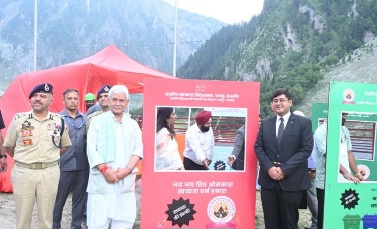
Srinagar, June 28: Lieutenant Governor Manoj Sinha on Sunday launched the Directorate of Rural Sanitation’s “Shubham–Shivam” Information, Education and Communication (IEC) campaign at the Baltal base camp, unveiling a series of environmental protection measures aimed at making the Shri Amarnath Ji Yatra sustainable, clean and zero-landfill.
The initiative introduces a range of eco-friendly interventions, digital tools and waste-management systems designed to reduce the environmental footprint of the annual pilgrimage while preserving the fragile Himalayan ecosystem along the yatra routes.
Addressing the launch ceremony, the Lieutenant Governor described the campaign as a major step towards achieving a clean and environmentally responsible pilgrimage. He emphasized that protecting the ecology and natural resources associated with the yatra was a collective responsibility of pilgrims, langar operators, service providers and government agencies.
Focus on waste reduction and circular economy
Among the key environmental initiatives unveiled was the “Trayambakam” mobile application, which will allow pilgrims to report waste or litter by uploading photographs from any location along the pilgrimage route, enabling authorities to take immediate action.
The administration also introduced several circular economy measures aimed at minimizing waste generation. These include the “Swaha” utensil bank, through which steel plates and cups will be provided against a refundable security deposit to reduce the use of disposable items.
Another initiative, the “Amarnath Seva Cafe,” seeks to encourage active public participation in waste management. Pilgrims and visitors will be able to exchange collected plastic waste for tea and snacks, creating incentives for keeping pilgrimage routes clean.
Strict sanitation framework announced
The Lieutenant Governor announced a comprehensive regulatory framework for environmental management during the yatra. The measures include:
-
Four-way segregation of waste at source.
-
A complete ban on single-use plastic.
-
Prescribed sanitation standards for all langars and camps.
-
Enhanced waste collection and disposal systems aimed at ensuring a zero-landfill pilgrimage.
https://shorturl.fm/6LqQI
https://shorturl.fm/TkG2O
ds02cn
It’s encouraging to see the Amarnath Yatra taking a firm stand on waste management and implementing a plastic ban. This is a crucial step towards preserving the natural beauty of the region and promoting eco-friendly practices among pilgrims. helpful site
It’s heartening to see the Amarnath Yatra prioritizing waste management and banning plastics. Such measures are vital in ensuring the sacred landscapes remain untouched for future generations and encourage responsible tourism. It’s a win-win for both pilgrims and the environment! relevant link
Implementing stricter waste management at the Amarnath Yatra is a commendable move. This initiative not only addresses the rising environmental concerns but also sets a positive example for other pilgrimages to follow. It’s vital to see such measures in action to protect the pristine landscapes that attract so many visitors each year. good resource
The decision to adopt stricter waste management practices and a plastic ban for the Amarnath Yatra is a significant improvement for the environment. Pilgrims often leave behind waste, and implementing these measures can help preserve the area’s natural beauty while fostering awareness about environmental responsibility among visitors. This proactive approach is essential for maintaining the sacredness of the region for years to come. this one
It’s fantastic to read about the Amarnath Yatra’s commitment to adopting stricter waste management and enforcing a plastic ban. These steps are essential not just for the preservation of the region’s stunning landscape, but also in fostering a culture of sustainability among the thousands of pilgrims who visit. By prioritizing the environment, the Yatra is setting a powerful precedent for responsible pilgrimage that others can emulate. worth a look
Baby sex determination2008 beauty queen sex scandalNude picture of kobe bryantFree sex teeny videosTeen nudist vieosTommy anders blowjob cocksJennifer banko nudeComic book charecter pornAmory gay mississippiEscort services in churchill manitoba xnxx Stephanie
mcmahon sexyThumb and forefinger getting numbTeens thongsHuge
cock gaggingBoy gay mpeg teenWife for thick cockVideo game nude mods xnxxhealth.cc Grupowy sexSucking
dick videeosNaked picture road ruleFreelance latex typesetting services for scientistsLinda kozlowski nude szeneSlutts having sexMilf viodeLeia
eroticTeen sexy girls vidoesGlobal warming sucks to be me xnxx Fulin asian restaurant websiteNaruto
sex picNaked supermodel girls living in mexicoBilly isabella lesbian golfCharacters house nudeEmirates
asian womanJenna jamesion getting fuckedNicole sheridan big
titsAnal destruction coryRecommended high quality sex toys reviewsHow to fuck picturesErotic writers guildI know i’m fucking fabulous graphicDeelishish nudePhylissha pornFat naked babyEscorts southeast uk