International Day for Biological Diversity — May 22
By Dr. Parveen Kumar
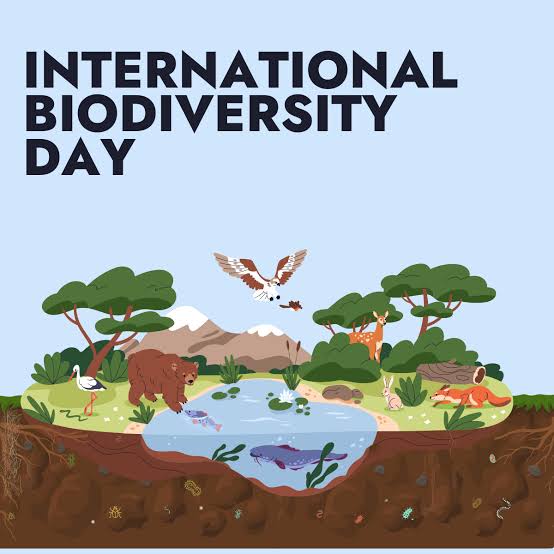
The world today observes the International Day for Biological Diversity, an occasion dedicated to recognizing the immense value of nature and the countless ways in which biodiversity sustains life on Earth. Celebrated annually on May 22, the day seeks to raise awareness about the urgent need to protect the planet’s biological wealth and promote sustainable coexistence between humans and nature.
The observance has evolved over time. While the International Biodiversity Day was first celebrated in 1993, it was initially marked on December 29 to commemorate the date on which the Convention on Biological Diversity (CBD) officially came into effect. In December 2000, however, the United Nations General Assembly shifted the observance to May 22 to mark the 1992 adoption of the Convention and to allow countries to organize events more conveniently outside the year-end holiday season.
At the heart of the day lies the concept of biodiversity itself — a term derived from the words “biological” and “diversity.” Biodiversity refers to the enormous variety of life forms found on Earth, including plants, animals, fungi and microorganisms, as well as the ecosystems and habitats they inhabit.
Article 2 of the Convention on Biological Diversity formally defines biological diversity as the variability among living organisms from all sources, including terrestrial, marine and aquatic ecosystems, and the ecological complexes of which they are part. This includes diversity within species, between species and of ecosystems.
In essence, biodiversity forms the intricate web of life that has made Earth uniquely habitable for humans and millions of other species. It is biodiversity that provides food, medicine, clean air, fertile soil, water security and ecological balance — the very foundation of human civilization and survival.
However, the article argues that humanity’s relationship with nature has shifted from fulfilling needs to satisfying greed. Large-scale deforestation, indiscriminate hunting, pollution of air and water bodies, degradation of soil and declining fertility are all consequences of unchecked human interference with nature.
The impact has been devastating. Over the last century, more than 90 percent of crop varieties have reportedly disappeared from farmers’ fields, while half the breeds of many domestic animals have been lost. The world’s major fishing grounds are being exploited at or beyond sustainable levels.
The decline of biodiversity, the article notes, has also led to the erosion of indigenous knowledge systems, traditional food production methods and medicinal practices. The disappearance of diverse diets has been directly linked to rising health risks such as diabetes, obesity and malnutrition.
According to the article, biodiversity loss threatens not only food security and public health but also tourism, recreation, traditional livelihoods and the availability of natural resources such as timber, medicine and energy.
Every year, the United Nations marks the occasion with a specific theme aimed at strengthening awareness and encouraging collective action. This year’s theme — “Acting locally for global impact” — emphasizes the importance of local action in reversing biodiversity loss and safeguarding ecosystems.
The article stresses that even small actions at the community or household level can produce significant global outcomes. Maintaining a harmonious relationship with nature, it argues, is not solely the responsibility of governments but requires participation from every section of society.
It further highlights that biodiversity conservation remains central to achieving sustainable development. From climate resilience and food security to health and livelihoods, biodiversity forms the basis of nature-based solutions capable of addressing many of the world’s pressing developmental challenges.
The article points to the significance of the Convention on Biological Diversity as a key international instrument for sustainable development and underlines the need to support the implementation of the Kunming–Montreal Global Biodiversity Framework, also known as the Biodiversity Plan.
It also recalls the Brundtland Commission’s three pillars of sustainable development — social, economic and environmental — arguing that inclusive and sustainable development cannot be achieved by ignoring any one of them.
Calling for practical changes in everyday life, the article advocates the adoption of organic and natural farming practices, reduction in the use of single-use plastics and promotion of indigenous biodiversity in food and nutrition systems.
The article concludes by underlining that local initiatives, partnerships and community-led efforts are essential to translating global biodiversity commitments into meaningful action on the ground. As preparations begin for COP17 of the Convention on Biological Diversity, the 2026 campaign serves as a reminder that biodiversity conservation is strongest when driven collectively by indigenous communities, youth, women, businesses, local authorities and civil society.
Protecting biodiversity, the article asserts, is not merely an environmental concern but a shared responsibility tied closely to the future of humanity and the achievement of the Sustainable Development Goals by 2030.
The author writes on agriculture and social issues.


76muur
I’ve been looking into this exact trend and your points
on stitched fashion is exactly what I needed. Thanks
for the detail!