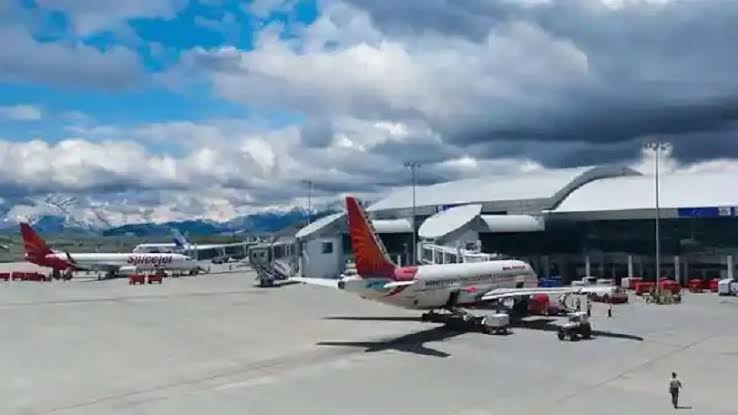
I have long believed that air connectivity is not a luxury for Kashmir, it is a necessity. For a landlocked valley surrounded by mountains and frequently cut off by weather disruptions, aviation serves as a lifeline linking people, businesses and institutions with the rest of the country.
That is why the recent approval of ₹1,677 crore by the Union Cabinet for the expansion of the civil enclave at Sheikh ul-Alam International Airport is, in my view, a major infrastructural milestone. For decades, discussions around upgrading the airport surfaced every tourist season or during periods of heavy travel demand. Now, the project has finally moved from debate to decisive action.
In practical terms, this expansion is more than an airport upgrade. It represents an investment in Kashmir’s economic resilience, tourism growth and long-term connectivity.
Kashmir’s geography makes dependable connectivity particularly important. The Srinagar–Jammu National Highway (NH-44), which connects the Valley to the rest of the country, often faces disruptions due to landslides, snowfall and maintenance work. Rail connectivity is improving but is still transitioning toward full integration with the national network. During severe winters, air travel frequently becomes the only reliable link.
In such circumstances, Srinagar Airport functions not just as a transportation hub but as a critical gateway for medical travel, student mobility, tourism, horticulture exports and religious journeys such as Hajj and Umrah. When the airport faces congestion or operational limitations, the consequences are felt across the Valley.
Building Infrastructure for a Growing Kashmir
From what has been announced, the approved project will include a new terminal building of around 71,500 square metres, which will significantly increase passenger handling capacity. Once completed, the airport is expected to manage close to 10 million passengers annually, easing congestion that has long been visible during peak tourist seasons.
Another major improvement will be the expansion of aircraft parking bays—from nine to fifteen. This may sound like a technical detail, but it is crucial for airlines. Limited apron space often leads to scheduling difficulties and delays. Additional bays will provide airlines with greater flexibility and improve operational resilience, especially during adverse weather conditions.
Ground infrastructure will also receive long-needed attention. A multi-level car parking facility capable of accommodating around 1,000 vehicles is expected to reduce the congestion that passengers regularly experience outside the terminal. Anyone who has travelled through the airport during peak hours knows how urgently such improvements are needed.
Importantly, the project is designed to work within the airport’s dual-use framework, where civilian operations coexist with an Indian Air Force base. Clearer operational zones and modern security systems should strengthen coordination rather than compromise safety.
For Kashmir’s tourism sector, these developments could be transformative. Tourism has become one of the Valley’s strongest economic drivers, supporting hotels, houseboats, transport operators, artisans and small businesses. Yet tourism thrives on predictability and comfort. Congested terminals, flight delays and inadequate facilities inevitably affect the visitor experience.
A modernized civil enclave capable of handling larger passenger volumes efficiently will align airport infrastructure with Kashmir’s growing tourism ambitions. It may also encourage charter flights, film crews and organized international travel groups—segments that require well-managed aviation facilities.
The benefits could extend far beyond tourism. Kashmir’s horticulture sector, particularly its apple industry, relies heavily on timely transportation to markets. High-value produce such as cherries, saffron and walnuts require quick and efficient logistics. Improved cargo handling facilities at Srinagar Airport could reduce dependence on long road transport to distant airports, minimizing losses and improving returns for farmers.
Better cargo infrastructure can also attract agro-processing units, cold-chain investments and export-oriented businesses, gradually diversifying the region’s economy.
At the same time, airport modernization must be matched by improved urban planning. Srinagar city already faces growing traffic congestion. Strengthening approach roads, organizing taxi systems and integrating public transport with the airport will be essential to ensure that expansion delivers real convenience for passengers.
Beyond infrastructure, there is also an employment dimension. Airport expansion creates immediate construction jobs and long-term opportunities for airline staff, ground handlers, security personnel, hospitality workers and transport operators. Increased aircraft capacity could also encourage more airlines to operate in the region, potentially expanding route networks and stabilizing fares.
Of course, approval alone does not guarantee success. Large infrastructure projects are ultimately judged by execution. Timelines must be respected, transparency maintained and coordination ensured between the Airports Authority of India, the Indian Air Force, the civil aviation authorities and the Jammu and Kashmir administration.
For me, the expansion of the civil enclave at Srinagar Airport represents something larger than a construction project. It is a step toward reducing the Valley’s periodic sense of isolation and strengthening its economic and social connections.
Kashmir’s geography will always present challenges. But with thoughtful infrastructure and disciplined execution, those challenges can be transformed into opportunities for growth, connectivity and confidence in the future.
The author is a social activist, national TV debater and columnist.