

By: Mohammad Amin Mir
The credibility of any Revenue administration rests upon the accuracy of its land records. In Jammu & Kashmir, where land represents livelihood, identity and economic security, even minor discrepancies in land measurement can create serious administrative and legal consequences.
I have increasingly observed a growing challenge: the difference between land area measured through traditional tape surveys and that generated through digital platforms such as satellite-based mapping tools. What appears technical on the surface carries far-reaching implications. It affects village statistics, agricultural classifications, development planning and the legal sanctity of recorded land area.
If digital measurements are accepted without scientific verification and lawful procedure, the total area of villages and districts may shift, disturbing long-established revenue records. The solution, in my view, lies neither in rejecting technology nor blindly accepting it, but in harmonizing traditional surveying methods with modern scientific tools under a clearly defined legal framework.
Legal foundation and administrative stability
Land measurement in Jammu & Kashmir is rooted in settlement operations conducted under recognized scientific standards. These surveys form the basis of Jamabandi records, cadastral maps and survey numbers, which carry legal authority and presumption of correctness.
Revenue law ensures stability by recognizing that:
-
Official survey measurements prevail over private estimations.
-
Recorded area cannot be altered without lawful re-survey or government notification.
-
Corrections require application before a competent authority, field verification, technical examination and an official order.
-
Courts rely primarily on settlement records and cadastral maps as authoritative evidence.
If digital measurements alone are allowed to challenge recorded area, the stability of land records would weaken. Ownership certainty depends on the legal sanctity of officially prepared records.
Why discrepancies occur
The difference between tape measurement and digital mapping is not necessarily a sign of error or manipulation. It is often the result of scientific factors:
-
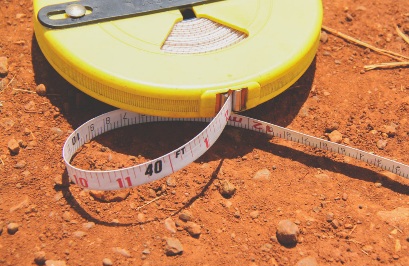
Tape measurement follows actual terrain, while satellite systems calculate horizontal projections.
-
Map projection methods introduce minor distortions.
-
Mountainous terrain affects surface area calculations.
-
Satellite imagery may not precisely capture boundary markers.
-
Resolution limitations create estimation differences.
These variations are natural and expected. The problem arises when technological estimation is confused with legal authority.
The need for reform and integration
In my opinion, the revenue administration must formulate a clear policy framework to address this emerging conflict. Without defined standards, confusion among citizens and officials will continue to grow.
A forward-looking approach should include:
-
A statewide scientific re-survey using GPS and total station technology.
-
Clear legal recognition of the hierarchy of measurement methods.
-
Prescription of a permissible error margin to avoid unnecessary disputes.
-
Integration of GIS-based mapping with revenue records rather than replacing them.
-
Capacity building and training of revenue officials in modern surveying tools.
-
A transparent rectification mechanism involving field verification and formal orders.