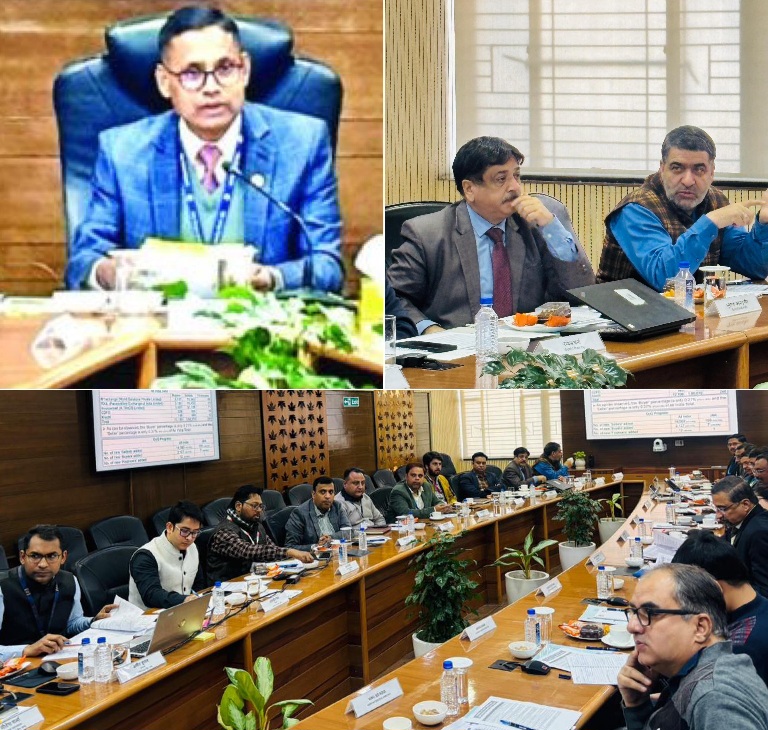
Jammu, Feb 12: The PHD Chamber of Commerce and Industry (PHDCCI), Jammu & Kashmir, participated in the 69th meeting of the Empowered Committee on MSMEs for the Union Territories of J&K and Ladakh, held at the Reserve Bank of India (RBI) office in Jammu for the quarter ended December 31, 2025.
The meeting was chaired by RBI Regional Director Shri Chandrashekhar Azad and attended by senior officials from the Khadi and Village Industries Commission (KVIC), MSME-Development and Facilitation Office, Department of Industries & Commerce, major public and private sector banks, and the UT-Level Bankers’ Committee (UTLBC) Convener, Bank of J&K.
PHDCCI was represented by Mr Bilal Kawoosa, General Convener (Kashmir), and Mr Mushtaq Ahmad Mir, Convener (Banking & Taxation), Kashmir and Executive Committee member (Jammu).
During the deliberations, PHDCCI representatives urged banks to adopt more liberal lending norms to strengthen the MSME sector. They emphasized the need for enhanced infrastructure development and called for “open-hearted” lending to ensure adequate working capital and term loans for genuine entrepreneurs.
A key outcome of the meeting was consensus on increasing awareness of the Credit Guarantee Fund Trust for Micro and Small Enterprises (CGTMSE) scheme to promote collateral-free credit. PHDCCI announced plans to launch a dedicated awareness campaign on CGTMSE in March 2026 to support first-generation entrepreneurs.
In his opening remarks, the RBI Regional Director underlined the importance of MSMEs as a backbone of the economy, contributing significantly to GDP, exports, manufacturing and employment. He highlighted policy announcements in the Union Budget 2026–27, including a proposed ₹10,000 crore SME Growth Fund to support high-potential MSMEs and an additional ₹2,000 crore allocation to enhance risk capital for micro-units.
He also referred to recent RBI policy measures, including the enhancement of collateral-free loan limits for micro and small enterprises from ₹10 lakh to ₹20 lakh.
The committee reviewed progress on Trade Receivables Discounting System (TReDS) implementation, Udyam registrations, credit flow, CGTMSE coverage, non-performing assets (NPAs), Prime Minister’s Employment Generation Programme (PMEGP) cases, rehabilitation of stressed units, banking infrastructure in MSME clusters, and recommendations of the Prime Minister’s Task Force.
The recommendations emerging from the meeting are expected to guide credit policy decisions for the upcoming quarter.