New Delhi / Srinagar: The Ministry of Railways’ Year-End Review for 2025 highlights a transformative year for India’s railway infrastructure, with Jammu & Kashmir emerging as one of the most significant beneficiaries of expanded connectivity, safety upgrades, and large-scale infrastructure investments. From the completion of strategic rail links in the Himalayan region to the introduction of modern trains and freight corridors, the year marked a decisive step in integrating Jammu & Kashmir more closely with the national transport grid.
Kashmir Rail connectivity enters a new era
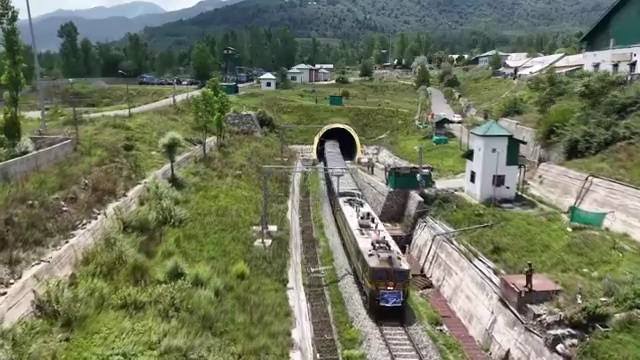
A major highlight of 2025 was the completion of the Udhampur–Srinagar–Baramulla Rail Link (USBRL), a landmark engineering achievement that has established all-weather rail connectivity to the Kashmir Valley for the first time. The 272-km project includes iconic structures such as the Chenab Rail Bridge, the world’s highest railway arch bridge, and the Anji Khad Bridge, India’s first cable-stayed railway bridge.
The operationalisation of this corridor has transformed mobility in Jammu and Kashmir by enabling uninterrupted passenger and freight movement, particularly during winter months when road connectivity is often disrupted. The project has also strengthened strategic logistics, tourism, and regional trade, while creating large-scale employment during construction.
First-ever freight connectivity to Kashmir
In a historic development, Indian Railways operated its first-ever freight train to the Kashmir Valley, carrying food grains to the Anantnag goods terminal. This milestone marked the integration of Kashmir into the national freight network, reducing dependence on long road supply chains and ensuring more reliable access to essential commodities. Officials noted that this would significantly stabilise food supply, reduce transportation costs, and support local markets.
Upgraded stations and passenger amenities in J&K
Under the Amrit Bharat Station Scheme, several stations in Jammu and Kashmir are being modernised with airport-like facilities, including improved waiting areas, better lighting, lifts, escalators, digital signage, and enhanced accessibility for senior citizens and persons with disabilities. These upgrades aim to improve passenger comfort while supporting tourism and regional mobility.
Safety and modernisation measures
Indian Railways reported major safety improvements nationwide, with a sharp reduction in consequential train accidents. Advanced safety systems such as Kavach, an indigenous automatic train protection system, are being expanded to enhance operational safety in challenging terrains, including Himalayan sections.
Modern signalling, track renewals, and bridge rehabilitation have further strengthened rail infrastructure in sensitive regions like Jammu & Kashmir, where terrain and weather pose persistent challenges.


Comments are closed.