

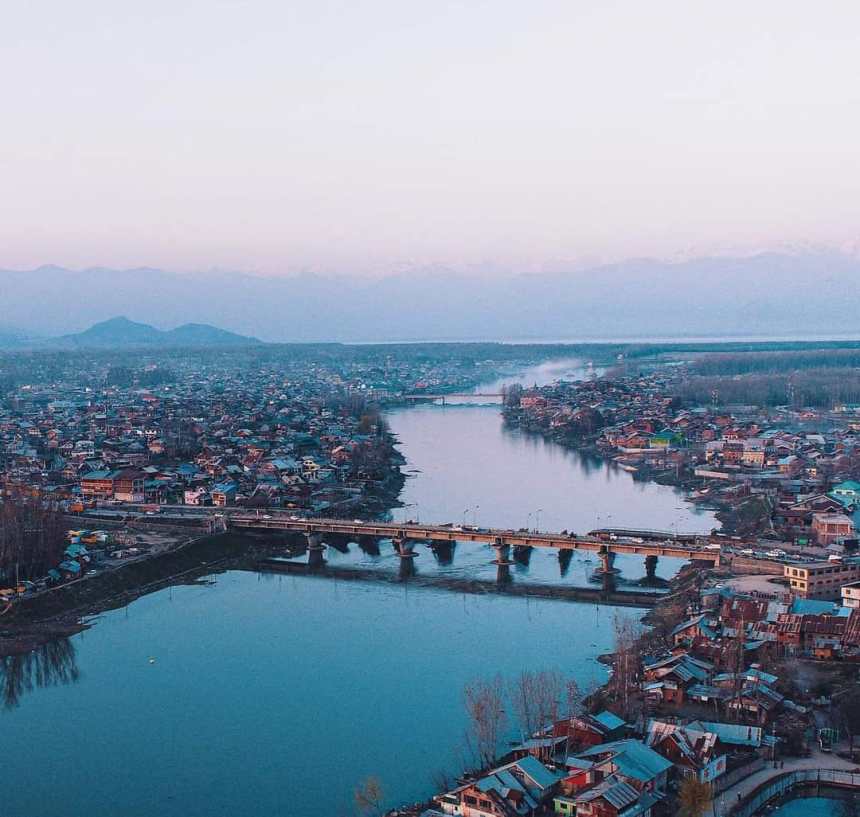
By: Samina Khan – Ziraat Times
Srinagar: In its latest periodic assessment of water quality across the country, the Central Pollution Control Board (CPCB) has identified seven rivers in Jammu & Kashmir containing “polluted river stretches.”
The findings are part of the Polluted River Stretches for Restoration of Water Quality – 2025 report, which assesses water quality based on Bio-Chemical Oxygen Demand (BOD), a key indicator of organic pollution.
According to the data, water quality was monitored across 13 rivers in the Union Territory at 52 distinct locations during the years 2022 and 2023.
-
22 locations across 7 rivers were found to be non-complying with the prescribed water quality criteria.
-
The CPCB has categorized these rivers into “Priority Classes” ranging from I (Most Critical) to V (Least Critical).
Currently, Jammu & Kashmir does not have any river stretches in the “Priority I” or “Priority II” categories (the most severe levels). However, the Chunt Kol river has been placed in Priority Class III, making it the most polluted stretch identified in the region during this assessment.
Detailed analysis of polluted stretches
The report highlights specific “stretches” of rivers where pollution is concentrated, rather than labeling the entire river as polluted.
1. Priority Class III: The Most Concern
-
River: Chunt Kol
-
Location: The stretch at Maulana Azad Bridge has been flagged.
-
Pollution Level: This river recorded a maximum BOD value of 10.7 mg/L, placing it in Priority Class III (BOD between 10-20 mg/L). This indicates a significant organic load likely due to sewage discharge in the urban Srinagar area.
2. Priority Class IV: Major Rivers Affected
Two significant rivers in the region fall under this category (BOD typically between 6-10 mg/L).
-
River Jhelum:
-
Polluted Stretch: Identified from the confluence point of Vishav Nallah to Baramulla (Downstream).
-
Observation: While many monitoring points on the Jhelum (such as Sangam, Verinag, and Sopore) showed lower BOD levels (ranging from 3.2 to 4.9 mg/L), specific points showed spikes. Notably, a high value of 7.8 mg/L was observed at Chattabal Weir, and a significant outlier of 32 mg/L was recorded at Panthachowk. despite the outlier, the stretch is categorized overall as Priority IV.
-
-
River Tawi:
-
Polluted Stretch: From Tawi Bridge to Balol Nallah, Miran Sahib.
-
Observation: The Tawi river sees fluctuating pollution levels as it passes through Jammu. While the BOD upstream at Tawi Bridge is 5.8 mg/L, it rises significantly downstream, reaching 9.5 mg/L at the location “1 km D/S below STP discharge point at Bhagwati Nagar.”
-
3. Priority Class V: Minor Pollution
Four rivers were placed in the lowest priority class (BOD 3-6 mg/L), indicating they are polluted but require less intensive intervention than the others.
-
Basanter: Stretch downstream of Samba (at Chak Manga Gujjar). Max BOD: 3.7 mg/L.
-
Devak: Stretch at Udhampur (near Shiv Mandir). Max BOD: 4.4 mg/L.
-
Gawkadal: Stretch at SRG (Sherghari). Max BOD: 5 mg/L.
-
Lidder: Stretch from Lavendar Park to Nunwan. Max BOD: 3.6 mg/L.
Comments are closed.