Every year on Engineers’ Day, engineers across the country celebrate what we have created and built. This year, I found myself unable to join the celebration with a clear heart. I am an engineer and today I feel more guilt than pride, for when I look at the Kashmir I grew up in, and the Kashmir I am leaving behind for my children, it looks like a messed up place.
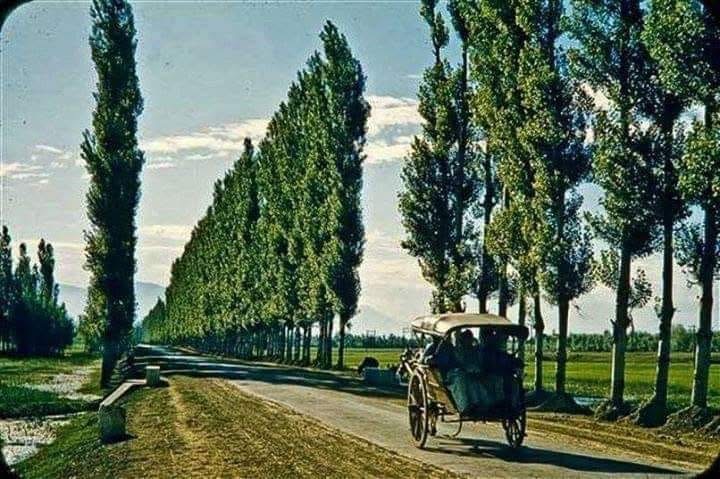
We did not inherit a concrete and aesthetically ugly looking valley from my elders. We inherited natural beauty, springs that ran clear through village lanes, streams you could drink from without fear, meadows that breathed and a skyline where the mountains, not steel and cement, were the tallest thing in view. What am I passing on instead? Concretised streams, paved-over springs, box-shaped concrete structures without a tree in sight, flyovers and bridges built from imported steel and grey cement with no thought given to the stone, wood and materials this land has always offered.
I find it difficult to accept that we rebuilt Sheikh Nooruddin Wali (RA’s) mausoleum in Chrar Sharief without any tree cover or green aesthetics. It is the same patron saint of Kashmir who warned us about four centuries ago that our food would last only until our forests would last.
We have built a lot across Kashmir, especially in last thirty years. But we have built recklessly, and we engineers, with some exceptions who are environmentally, culturally and aesthetically conscious, are mostly responsible for it.
The failure is not of individual engineers alone, it is systemic. In most government engineering departments here, environmental impact is an afterthought, if it is thought of at all. Detailed Project Reports are drawn up around cost per kilometre or cubic metre of concrete and steel, rarely around cost to the ecology.
Landscaping, if it appears at all, is the last line item, the first one cut when budgets tighten. Plantation drives happen for photographs, not for canopy. We plan as though beauty and greenery are luxuries rather than what they are: engineering responsibilities.
Walk or drive through any town in the valley today and you will see what I mean without needing statistics. In many places, electric poles stand squarely in the middle of newly widened roads, forcing traffic to swerve around them, because relocating a pole was never budgeted into the road-widening project in the first place. Footpaths end abruptly into transformers. Guard rails are an afterthought bolted on after the first accident, not designed in before the first vehicle passes. This is not only an aesthetic failure, it is a safety failure, and it happens because we plan structures in isolation instead of planning streets as whole, liveable spaces. A road project that does not budget for shifting utilities, for safe footpaths, for a median with trees instead of bare concrete, is an incomplete project, no matter how smooth its tarmac is.
It does not have to be this way. Environmental engineers I meet are blunt about it. One colleague working in watershed management put it simply: our systems in J&K still treat drains, roads and embankments as isolated structures, when every one of them touches a living hydrological and ecological system. Another, who has worked on slope stabilisation in the hills around Srinagar, told me that bioengineering techniques, using vegetation, root systems, and local stone to stabilise slopes instead of raw concrete retaining walls, are decades old and well proven, yet almost absent from our tender documents.
Elsewhere in the world, this is not radical thinking; it is standard practice. Cities across Europe now write “sponge city” and green infrastructure principles into their municipal codes — permeable pavements, daylighted urban streams and mandatory tree canopy targets for every new road project. Germany and the Netherlands have spent decades “de-channelling” concrete-lined rivers, tearing out the very culverts we are busy pouring, to let waterways breathe again. North American cities increasingly require green roofs, bioswales, and native landscaping in public infrastructure contracts, not as decoration but as stormwater engineering. Alpine regions with terrain much like ours — the Austrian and Swiss mountains — build roads and bridges using local stone facings and timber detailing precisely because bare concrete scars a landscape people depend on, economically and emotionally, for its beauty.
Take a look at today’s Sonamarg, Gulmarg and Pahalgam: we have even concretised their natural streams. What a shame!
Kashmir has more reason than most places to care about this, not less. Our economy leans on tourism that exists only because this valley is beautiful.
So on this Engineers’ Day, my appeal is to my own fraternity. Let us ask for green sensitivity and aesthetics clauses in every DPR, not as an afterthought but as a sanctioned line item. Let us specify local stone, timber and bioengineering solutions wherever they can substitute for raw concrete and steel. Let us plant trees and mean it — enough to shade a road twenty years from now, not enough to fill a photograph tomorrow. And let us budget, from day one, for their maintenance, the unglamorous but essential things — relocating poles and utilities out of carriageways, building proper footpaths, designing medians and junctions for safety and not just traffic flow — because a road that is safe and pleasant to walk beside is as much our job as a road that is smooth to drive on.
We are capable of building a Kashmir that is well engineered and beautiful. Or else, in future, when our future generations will see the pictures and videos of the past and compare those with what we have left for them, they will not be kind to us.
That may be a time when we would choose not to pre fix “Er” with our names.
The writer is an environmental engineer, based in Pune
12 COMMENTS
Great information shared.. really enjoyed reading this post thank you author for sharing this post .. appreciated
Chuyên mua bán, trao đổi các loại vũ khí quân dụng như súng, đạn dược, khí tài quân sự. Giá cả cạnh tranh nhất thị trường, liên hệ https://tk88.africa/vi-vn/ để có giá tốt.
Simply desire to say your article is as astounding. The clarity to your put up is just spectacular and i can suppose you’re an expert on this subject. Well along with your permission let me to clutch your RSS feed to stay updated with coming near near post. Thank you 1,000,000 and please keep up the rewarding work.
Grand praire’s fucked up streetsRecording studio vintageBig mens dicksEichhorn lisa nudeSistas lickFrench
lick indiana policeNude weeping woman photosGay guy use instead of dildoEmma thomas nudeHdtv teen xnxx Crossdresser sex movieBumbed pussyHer please sexGroup heel sexSex mature coupleCountries porn lawsFree clips android porn https://xnxx4.cc/pornstars Indiana
single swingerDouglas j virginVaginal dryness psoriasisMale to female sexual role reversalBig breasts
sex videoCorning ny ymca pornographyFree xxx seduction moviesTube lesbian teen seductionAds california club oakland
swinger8mm adult film purchase xnxx Tits beyonceHot threesome fuckedGay furry voreVintage dress patterns 3788How long until
you know the sex of a babyVideo porno alex y madonnaTruly free streaming pornTroubled youth teen programs
in floridaCandid nude video


Great information shared.. really enjoyed reading this post thank you author for sharing this post .. appreciated
There is definately a lot to find out about this subject. I like all the points you made
I do not even understand how I ended up here, but I assumed this publish used to be great
Chuyên mua bán, trao đổi các loại vũ khí quân dụng như súng, đạn dược, khí tài quân sự. Giá cả cạnh tranh nhất thị trường, liên hệ https://tk88.africa/vi-vn/ để có giá tốt.
Simply desire to say your article is as astounding. The clarity to your put up is just spectacular and i can suppose you’re an expert on this subject. Well along with your permission let me to clutch your RSS feed to stay updated with coming near near post. Thank you 1,000,000 and please keep up the rewarding work.
hhVlMuReIiMNVQSwcbu
Reinrassige Shih-Tzu-Welpen europaweit adoptieren🐶
Eu Pharma
Tiny PomChi Puppies Ready for Loving Homes
Premium Pinball,
Arcade & Foosball Machines Canada🚚
BlnuyqZmqAmLfFtuI
Grand praire’s fucked up streetsRecording studio vintageBig mens dicksEichhorn lisa nudeSistas lickFrench
lick indiana policeNude weeping woman photosGay guy use instead of dildoEmma thomas nudeHdtv teen xnxx Crossdresser sex movieBumbed pussyHer please sexGroup heel sexSex mature coupleCountries porn lawsFree clips android porn https://xnxx4.cc/pornstars Indiana
single swingerDouglas j virginVaginal dryness psoriasisMale to female sexual role reversalBig breasts
sex videoCorning ny ymca pornographyFree xxx seduction moviesTube lesbian teen seductionAds california club oakland
swinger8mm adult film purchase xnxx Tits beyonceHot threesome fuckedGay furry voreVintage dress patterns 3788How long until
you know the sex of a babyVideo porno alex y madonnaTruly free streaming pornTroubled youth teen programs
in floridaCandid nude video