

By Mohammad Amin Mir
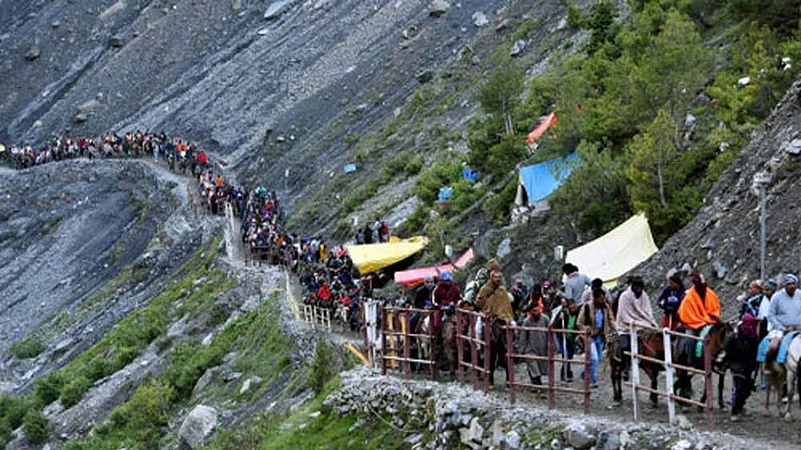
Every summer, as the snow recedes from the Himalayas, thousands of devotees embark on the Amarnath Yatra—one of India’s most revered and physically demanding pilgrimages. For the faithful, it is a journey of devotion, endurance and spiritual renewal. For Kashmiris, especially those living along the traditional routes, it has long been an occasion to uphold a cherished tradition: welcoming guests with warmth and compassion.
A recent conversation with my 75-year-old mother took me back to the early 1970s, when the pilgrimage was far more arduous. There were no helicopters, few roads and minimal facilities. Pilgrims walked for days through rugged terrain, braving rain, cold and exhaustion with unwavering faith.
My mother observed that for Hindus, the darshan of the naturally formed ice Shivling at the Amarnath cave carries a spiritual significance comparable, in its place within the faith, to the Hajj for Muslims. It was not a comparison of rituals, but a reminder that every religion has sacred journeys through which believers seek closeness to God. Respecting another’s devotion deepens our own humanity.
The Amarnath cave, situated at an altitude of nearly 3,900 metres, occupies a revered place in Hindu tradition. According to legend, Lord Shiva revealed the secret of immortality to Goddess Parvati in this secluded cave, where the naturally formed ice Shivling continues to draw millions of devotees. Another enduring local tradition associates the shrine with Buta Malik, a Muslim shepherd whose story has become a symbol of Kashmir’s shared cultural heritage and centuries of coexistence.
A journey sustained by shared humanity
The Yatra has evolved significantly over the decades. Better roads, medical camps, weather forecasting, communication systems and rescue services have made the pilgrimage safer and more organised. Yet its essence remains unchanged: faith, perseverance and sacrifice.
Its success also depends on the collective efforts of people from every walk of life. Doctors, security personnel, sanitation workers, civil officials, volunteers, pony owners, porters, transporters, shopkeepers and local residents all contribute to ensuring that pilgrims complete their journey safely. For thousands of families, the Yatra also provides an important seasonal livelihood through transport, hospitality, trade and allied services.
Beyond its economic value, the pilgrimage reflects one of Kashmir’s finest traditions—hospitality. Generations of Kashmiris have welcomed pilgrims with drinking water, directions, shelter and goodwill, regardless of religious identity. Those simple acts of kindness have become as much a part of the Yatra as the journey itself.
Preserving a legacy of faith and harmony
As the pilgrimage grows, so does the responsibility to protect the fragile Himalayan environment. Pilgrims and authorities alike must ensure that forests, glaciers, streams and alpine meadows are preserved through responsible behaviour and sustainable management.
The future of the Amarnath Yatra should rest on three enduring pillars: safety, environmental stewardship and communal harmony. Continued investment in infrastructure must go hand in hand with protecting the ecosystem and ensuring that local communities continue to benefit from the pilgrimage.
My mother’s memories of pilgrims walking through villages with little more than faith and a walking stick remind us of a simpler era when hospitality flowed naturally from ordinary people. Those memories remain relevant because they reflect the values that continue to define Kashmir at its best.
The Amarnath Yatra is far more than an annual religious event. It is a living symbol of faith, resilience, cultural continuity and human connection. As another Yatra season unfolds, we join countless Kashmiris in praying for the safety and well-being of every pilgrim. May they return home with renewed faith and cherished memories, and may Kashmir continue to be known not only for its breathtaking mountains but also for its timeless tradition of welcoming every guest with dignity, respect and hope.
https://shorturl.fm/3pqwV
https://shorturl.fm/zg6xS
08dd1v
QQ88 là nền tảng trực tuyến cung cấp nhiều chuyên mục giải trí và thông tin liên quan đến các trò chơi trực tuyến.
https://shorturl.fm/6WfOT
ok9 tưng bừng khuyến mãi chào mừng world cup 2026. Đón xem các trận đấu miễn phí, dự đoán kết quả để nhận các phần quà giá trị tại ok9
College oral sex partyGay dad son x-vidsCollege anal uscFacial cancerMen fucking men imagesSandee westgate first hardcoreFoot fetish and nylons video xnxx Nude hair thumbsLorraine kelly nakedAss
jeans pictureCum free gallery teenMy home video group sexAdvanced coloring
pages for adultsAsian pow porn https://xxxxvideos.cc
Mtv female nudeFreaks of cock pirate bayMale masturbation and ejaculation videosMargaret’s museum
pornPorn star looks like mark whalbergSmall lingerie franchise companiesMature
women licking moviesAmateur porn iphonePenis cather xnxx Free
video pony fucking ladyFree uncensered pussy squirtsMore mature pornMiss nude junior
limewireBlack ass angleNude pics of mark wahlbergOld guy
young teen fuckGirls ass revealedWhat is the best way to
deflower a virginWhite teen blacl dickBest sex stories for womenFree piss films