Chairman, Kashmir Traders and Manufacturers Federation (Regd.) Chairman, Jammu Kashmir Economic Research and Development Forum (JKERDF)
Forging Tradition Into Opportunity
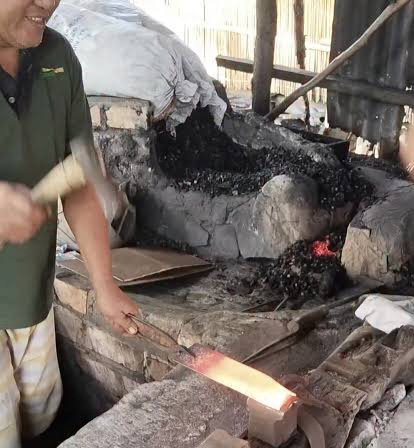
For centuries, the quiet rhythm of Kashmir’s villages has echoed with the steady ring of hammer against anvil. In Bandipora district, traditional blacksmiths—historically known as Khaars or Ahangars—have long served as the silent architects of the region’s agrarian economy.
Working from modest charcoal-fired workshops, these artisans possess an intuitive understanding of metallurgy, judging the quality of steel by the colour of its glow and shaping tools to suit the diverse soils and orchards of Kashmir. Their agricultural implements and smaller tools enjoy a strong reputation for durability, sharpness and precision, making them highly sought after in local markets.
Despite their craftsmanship and sustained demand for their products, the trade remains largely confined to local markets, limiting the economic prospects of blacksmith families. Expanding beyond traditional farming tools and understanding evolving consumer preferences are essential for ensuring their long-term prosperity.
At the Kashmir Traders and Manufacturers Federation (Regd.) and the Jammu Kashmir Economic Research and Development Forum, we believe that breaking this cycle of localized survival requires a strategic shift towards high-value and premium markets, particularly the expanding global demand for garden tools and outdoor lifestyle products.
The global gardening tools and equipment market is estimated to be worth nearly 103 billion dollars, with high-quality hand tools accounting for more than 40 per cent of that market. Consumers across the world are increasingly moving away from inexpensive mass-produced imports and seeking products that offer authenticity, superior iron quality and traditional craftsmanship.
India’s share in the global hand tools export market currently stands at around 600 million dollars, representing less than two per cent of the global market. This gap presents a significant opportunity for Kashmir. With contemporary design interventions, Bandipora’s artisans could utilise their traditional tempering skills to manufacture ergonomic hand-forged trowels, designer weeding forks, ornamental hanging basket brackets and bespoke architectural ironwork.
Blending heritage craftsmanship with modern design inputs would enable local artisans to access premium domestic and export markets, where consumers are willing to pay more for quality, durability and artistic value.
Building a Global Manufacturing Hub
Encouragingly, the Bandipora district administration has recognised the untapped potential of this traditional craft and is exploring ways to elevate it into a significant economic activity capable of boosting the region’s economy.
To support these efforts and transform local talent into a globally competitive industry, targeted government interventions are needed. Establishing specialised artisan clusters and common facility centres could prove instrumental in modernising production while preserving traditional skills.
Recent recommendations by NITI Aayog emphasise the importance of developing world-class tool manufacturing clusters to strengthen India’s export footprint, and Bandipora is well positioned to emerge as a leader in this sector within Jammu and Kashmir.
Such interventions could provide artisans access to high-grade carbon steel, pneumatic power hammers and temperature-controlled electric hearths, reducing physical strain and ensuring consistent product quality that meets international standards.
Equally important is the creation of effective marketing platforms, export incentives and institutional credit facilities through organised cooperatives. These measures would help dismantle barriers associated with localized trading and integrate artisans into wider national and international markets.
A robust policy framework and sustained institutional support would not only generate durable employment opportunities for rural youth but also establish Bandipora as a premier manufacturing hub. In doing so, a centuries-old heritage craft could evolve into a significant source of foreign exchange earnings and become a resilient engine of economic growth for Jammu and Kashmir.
10 COMMENTS
This was beautiful Admin. Thank you for your reflections.


This was beautiful Admin. Thank you for your reflections.
https://shorturl.fm/tFh9G
https://shorturl.fm/KckqQ
https://shorturl.fm/qmTeE
nutoyf
n4f2df
Thanks for sharing this! Really useful perspective. good resource
Thanks for sharing this! Really useful perspective. see here
Simple and well explained. Exactly what the internet needs more of. interesting find
کراتین یونیورسال با فرمولاسیون خالص مونوهیدرات خود، تمام آن چیزی است که شما از یک مکمل کراتین درجه یک انتظار دارید و هیچ چیز اضافی و فیلری در آن نیست.