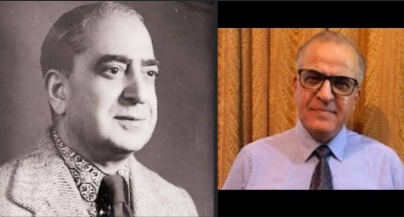
In an era increasingly marked by polarization, identity politics, and the persistent temptation to divide communities along religious lines, stories of unity are essential reminders of what societies are capable of at their best. Among such stories, the lives and work of Dr Ali Jan and Dr Susheel Razdan stand out as powerful examples of how individuals can transcend religious boundaries to embody a shared moral vision rooted in compassion, dignity, and human solidarity. Their contributions are not confined to a region or a moment in history; rather, they represent a universal template for coexistence and mutual respect.
To understand the significance of figures like Dr Ali Jan and Dr Susheel Razdan, one must appreciate the cultural and historical context in which they lived and worked. Kashmir, often described as a paradise on earth, has long been a meeting ground of diverse spiritual traditions. From the mystical teachings of Sufism to the philosophical depth of Shaivism, the region has historically nurtured a syncretic culture known as Kashmiriyat—a term that encapsulates communal harmony, tolerance, and a shared cultural ethos. Yet, this harmony has not been immune to disruption. Political turmoil, conflict, and social fragmentation have periodically strained the bonds between communities. It is precisely in such moments that individuals like Dr Ali Jan and Dr Susheel Razdan become vital, as they do not merely preach unity but practice it, often at personal cost.
While their religious identities differed, what united them was a profound commitment to service. Both were respected in their respective fields, known not only for professional excellence but for their dedication to the welfare of others. Dr Ali Jan was admired for his humility and sense of responsibility toward all segments of society, guided by the belief that service to humanity is the highest form of faith. His interpretation of faith was inclusive and free of sectarian boundaries. Similarly, Dr Susheel Razdan embodied compassion and selflessness, focusing on alleviating suffering and fostering understanding beyond religious identity. Together, they represented a powerful alignment of shared ethical purpose.
What distinguishes their relationship is a deep, lived brotherhood. Their association was practical, visible, and rooted in everyday interactions. They collaborated, supported one another, and stood together during times of crisis, demonstrating that unity is not achieved through declarations but through consistent engagement. In a world where interfaith dialogue often remains confined to formal spaces, their example shows that trust is built through small, consistent acts of solidarity.
Their lives invite a reconsideration of the ethical foundations of communal harmony. Discussions about Hindu–Muslim unity are often framed in political or strategic terms, but at its core, unity is an ethical commitment. It requires individuals to see beyond labels, recognize the dignity of others, and act with empathy and fairness. Both men embodied these principles in their daily lives, illustrating that religious traditions, when understood in their true spirit, are reservoirs of ethical wisdom rather than sources of division.
In contemporary discourse, narratives of conflict often dominate, amplified by media and political rhetoric. Against this backdrop, the stories of Dr Ali Jan and Dr Susheel Razdan serve as a crucial counter-narrative. They challenge the assumption that religious identities are inherently antagonistic and demonstrate that these identities can coexist and enrich one another. Their lives complicate simplistic narratives and affirm that coexistence is both possible and natural.
Their legacy holds particular relevance for younger generations navigating a world shaped by rapid technological change and diverse influences. It underscores that harmony requires conscious effort, that relationships can transcend ideological divides, that values must be reflected in action, and that standing for unity often demands courage.
While individual efforts are crucial, they must be supported by broader societal structures. Educational institutions, civil society organizations, and media platforms all have a role in promoting narratives of unity. Integrating such stories into public discourse can help ensure that their legacy is not only remembered but actively carried forward. Social cohesion is not merely a moral imperative but a practical necessity for stable and resilient societies.
Although rooted in the context of Kashmir, the message embodied by Dr Ali Jan and Dr Susheel Razdan has global relevance. Societies around the world grapple with issues of identity and coexistence, and their example offers a universal lesson: unity is achieved not by erasing differences but by embracing them with mutual respect. Their lives demonstrate that diversity, approached with empathy, can be a source of strength.
The preservation of such legacies depends on storytelling. Narratives have the power to shape perceptions and inspire action. By telling these stories thoughtfully and repeatedly, society can foster a cultural memory that values unity over division. At the same time, such storytelling must remain grounded, acknowledging the complexities and challenges involved in living a life of ethical commitment.
It is also important to acknowledge that individual examples cannot alone resolve structural inequalities or deeply entrenched divisions. However, dismissing their importance would be misguided. Figures like Dr Ali Jan and Dr Susheel Razdan provide a moral foundation upon which broader efforts can be built, demonstrating what is possible and setting a standard for both individuals and institutions.
Ultimately, their legacy is a call to action. It challenges individuals to reflect on their own attitudes and behaviors, to engage with those who are different, to challenge prejudice, and to build relationships grounded in trust and respect. These are not abstract ideals but practical choices that shape everyday life.
In the final analysis, the significance of Dr Ali Jan and Dr Susheel Razdan lies in what they represent: the possibility of genuine human connection across divides. Their lives remind us that unity is not a distant ideal but a tangible reality shaped by choices, actions and relationships. In a world often defined by division, their example offers a vision of shared humanity, mutual respect, and enduring brotherhood.