By: John Mohamad Mir (Forest Officer, Wildlife Protection Department)
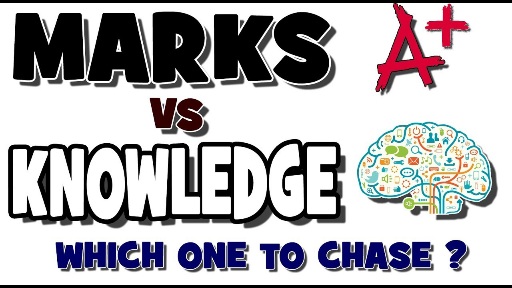
With the recent declaration of Class 10th and 12th examination results by JKBOSE, thousands of students across Jammu and Kashmir find themselves weighed down by numbers printed on a marks sheet. For some, these numbers bring joy and celebration; for others, disappointment and self-doubt. However, it is essential to understand a fundamental truth of education: marks do not define a student’s intelligence, capability, or future success, knowledge does.
Marks are merely a system of assessment designed to evaluate performance in a limited timeframe and under specific conditions. They often test memory more than understanding, speed more than depth, and conformity more than creativity. Many brilliant minds fail to score exceptionally high marks due to exam anxiety, personal challenges, or learning styles that do not align with conventional evaluation methods.
History is replete with examples of individuals who did not excel academically in terms of marks but went on to become innovators, academicians, civil servants, leaders, scientists, writers, and reformers. Their success was driven by curiosity, perseverance, practical wisdom, and a lifelong desire to learn, qualities that no marks sheet can fully capture.
Knowledge is not about rote learning or reproducing textbook answers. It is about understanding concepts, developing critical thinking, solving real-world problems, and applying learning in practical situations. A knowledgeable student questions, explores, experiments, and connects ideas beyond the classroom.
Unlike marks, knowledge stays with a person for life. It builds confidence, enhances decision-making, and equips individuals to face challenges in academics, careers, and society. True education empowers a learner to think independently and ethically, not just to score high.
The societal obsession with marks places immense psychological pressure on students. Comparison, unrealistic expectations, and fear of failure often lead to stress, anxiety, and even loss of self-belief. Parents and society must recognize that every child has unique talents and strengths, some excel academically, others in arts, sports, technology, innovation, or social leadership.
Reducing education to marks alone discourages creativity and sidelines students who may shine in non-traditional fields. Education should be about nurturing potential, not ranking human beings.
Success should not be measured by percentages or grades alone, but by skills, values, adaptability, and knowledge. A student who understands concepts deeply, communicates effectively, and continues learning is far better prepared for life than one who merely scores high marks without comprehension.
The modern world values problem-solvers, critical thinkers, and lifelong learners, qualities that cannot be measured by examination scores alone.
To students who may feel disheartened by their results, remember, this is not the end of your journey. Your marks do not limit your dreams or define your intellect. Focus on building knowledge, skills, and character. Learn from failure, stay curious, and keep improving. Education is a marathon, not a sprint.
Marks may open doors, but knowledge builds the path forward. Let us shift our focus from chasing numbers to cultivating understanding, wisdom, and creativity. In doing so, we will create not just successful students, but enlightened individuals who contribute meaningfully to society.


Comments are closed.