Srinagar, Dec 16: Reduced snowfall and prolonged dry weather are having a severe impact on rivers, streams, and springs across Kashmir, marking a sharp contrast to December months in the past, when the region usually remained clad with thick snow blanket.
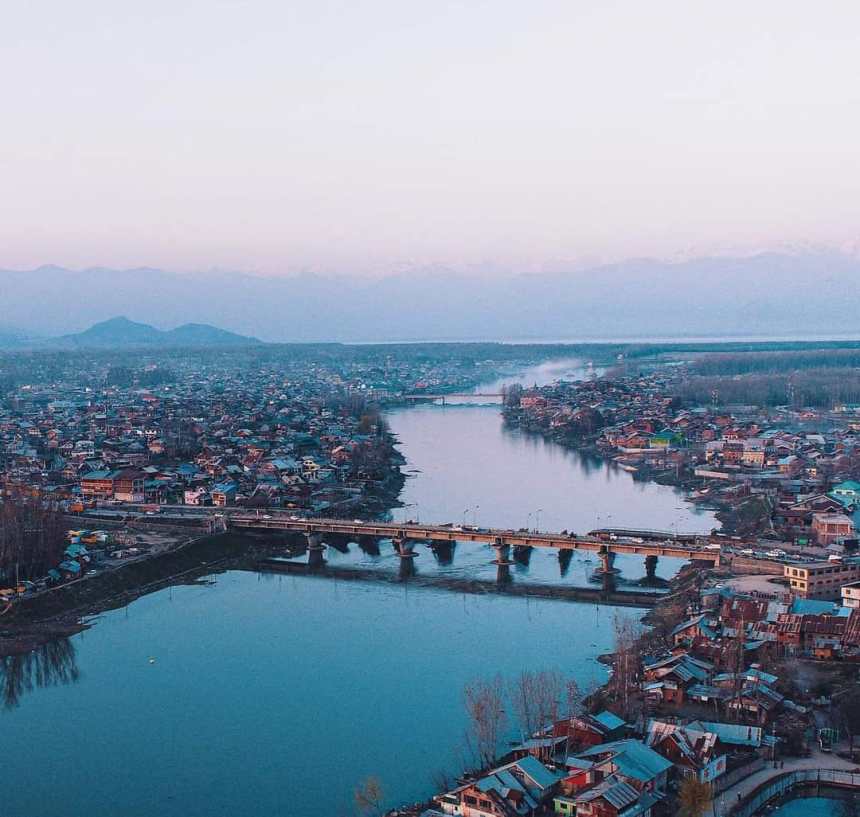
According to official data, water level of river Jhelum, considered to be Kashmir’s lifeline, has fallen to 0.65 meters at key points such as Sangam and Pampore. Its lowest level this season.
Several tributaries have dried up, while many natural springs in Pulwama, Shopian, and Bandipora have reduced flow, affecting drinking water in these areas, said an official.
He said that monitoring wells show groundwater levels dropping between 0.5 and 3 meters, and wetlands are shrinking, impacting migratory birds.
“Every year, the situation worsens. Farmers are anxious as irrigation water is limited, and household supplies are strained,” said Bashir Ahmad, of Pulwama.
The India Meteorological Department (IMD) reported a 17 per cent rainfall deficit across Jammu and Kashmir during the post-monsoon season from October 1 to December 10, with Srinagar recording a 47 per cent shortfall.
Other districts such as Baramulla (-67 per cent), Bandipora (-65 per cent), Shopian (-78 per cent), and Kargil (-93 per cent) also recorded below-average precipitation, while some districts, including Samba and Jammu, received excess rainfall.
Officials said the current dry spell, with minimal Western Disturbances bringing precipitation, has directly caused the depletion of rivers and springs.
Forecasts indicate continued dry weather into late December, potentially worsening the situation unless significant rain or snow arrives.
Authorities warned that dry vegetation and prolonged moisture deficits are increasing the risk of forest fires in the Valley.
“The combination of low river levels and dry weather is alarming for both agriculture and water security,” said an official from the Department of Disaster Management, Srinagar.
Experts at Sher-e-Kashmir University of Agricultural Sciences and Technology of Kashmir (SKUAST-K) stressed the need for urgent, science-driven interventions.
Vice-Chancellor Prof Nazir Ahmad Ganai said, “Rising climate variability and water scarcity are major threats to agriculture. We need drought-resilient crops and better water management strategies immediately.”
Scientists recommended research on regenerative agriculture, efficient water-use technologies, and climate adaptation to mitigate the impact of changing weather patterns.


Comments are closed.