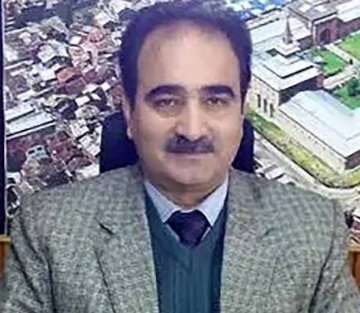
Governance, at its best, is not about authority or hierarchy — it is about responsibility, trust, and purpose. When I recently spoke at the University of Kashmir on the theme of Good Governance, I was reminded how differently governance is understood depending on where one stands. Having spent decades in the civil services, and earlier years in academia and science administration, I have seen governance from multiple vantage points. Each offers a lesson, and together they form a powerful truth: good governance is ultimately about people, not procedures.
In government service, governance is often measured by the speed and efficiency with which services reach the most remote citizen. In an academic institution, however, governance is judged by something deeper—by how lives are shaped, minds are nurtured, and fairness is upheld. While the contexts differ, the moral core remains the same: governance must serve, not dominate.
India, as the world’s largest democracy, carries a unique responsibility. Our diversity of cultures, languages, and aspirations demands a governance model that is not merely administrative but ethical. In regions like Jammu and Kashmir, this responsibility becomes even more profound. Here, governance is not just about development schemes or official protocols; it is about restoring trust, healing wounds, and affirming dignity.
Good governance in such a context must be humane rather than mechanical, responsive rather than distant, and just rather than selective. People must feel heard, respected, and treated fairly. Without this, even the most well-designed policies lose meaning.
Over the years, I have come to believe that transparency and accountability are the twin pillars upon which public trust rests. Institutions—whether administrative or academic—must be open in decision-making and answerable in conduct. Justice delayed or denied weakens faith in governance; justice delivered with fairness strengthens democracy itself.
Nowhere is this more vital than in a region like Kashmir, where governance is not an abstract concept but a lived experience. Here, education becomes more than instruction—it becomes hope. A university is not merely a campus; it is a promise. A promise that merit will prevail, that truth will be respected, and that opportunity will not be denied.
During my tenure as Secretary in the General Administration Department, a young officer once asked me a simple but profound question: “Sir, will I be judged by my work or by who I know?”
That question, to me, defines the essence of good governance. It is not about files or formalities; it is about fairness felt and justice experienced.
Governance must be rooted in ethics. Corruption, favouritism, and indifference corrode institutions faster than any external threat. True governance begins with integrity—at every level. When honesty becomes habitual and fairness institutionalised, systems begin to heal themselves.
Good governance is also collective. It is not the responsibility of governments alone. Institutions, civil society, media, and citizens all share the duty of upholding ethical standards. When each stakeholder acts with sincerity, governance transforms from control into care.
In universities especially, governance must nurture freedom of thought, merit, and accountability. It must ensure that students feel heard, teachers feel respected, and administrators act with humility. Education is not merely about degrees; it is about dignity, opportunity, and the courage to think independently.
Ultimately, good governance is not measured by grand announcements or towering buildings. It is measured by trust. When governance is just, society becomes stable. When governance is ethical, society progresses. And when governance is humane, people thrive.
Good governance is not about power—it is about purpose.
Not about authority—but about responsibility.
And not about control—but about care.
If our institutions are guided by these principles, then governance will not merely function—it will inspire.
This article is an abridged version of the author’s lecture delivered at the Kashmir University in December 2025