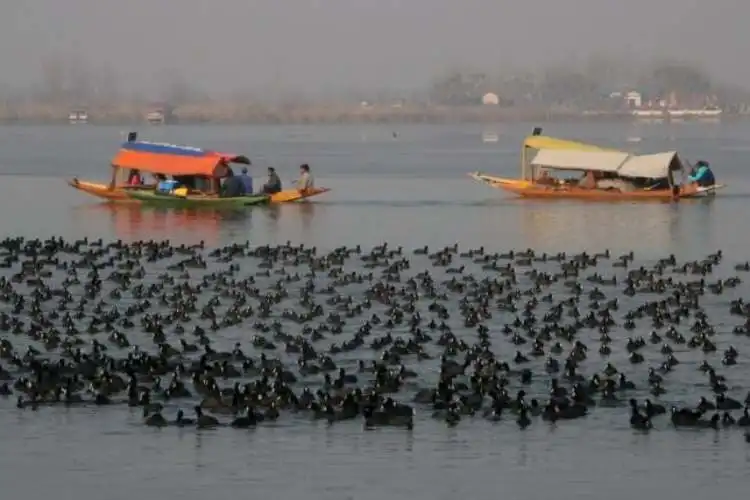
Every winter, as icy winds sweep across Central Asia and Europe, thousands of migratory birds take to the skies and find their way to the wetlands of Kashmir. These winged guests — from colorful ducks like the Mallard and Northern Pintail to elegant waders and geese — bring life, color, and melody to the Valley’s serene waters.
Wetlands such as Hokersar, Hygam, Chatlam, Kranchoo, Fashkoori, Manibugh, and Shallabugh turn into bustling sanctuaries, welcoming birds that have traveled thousands of kilometers to escape the harsh northern winters. Their arrival is not just a natural wonder but a sign of ecological health — proof that Kashmir’s wetlands still serve as safe havens for wildlife. These migratory birds are scheduled species protected under the Wildlife Protection Act, 1972.
The Department of Wildlife Protection, Jammu and Kashmir, plays a pivotal role in conserving these wetlands and protecting migratory birds. Every winter, the department strengthens its on-ground protection measures across all major wetlands by setting up round-the-clock anti-poaching camps and other conservation initiatives.
While the Department of Wildlife Protection, J&K, is at the forefront of conservation efforts, true success depends on community participation. Locals living around wetlands can play a crucial role in safeguarding these fragile ecosystems.
Villagers, students, and visitors need to understand the ecological and economic importance of migratory birds. Awareness drives, nature walks, and school programs can foster a spirit of care among the younger generation. Residents can assist wildlife officials by reporting poaching, illegal fishing, or landfilling near wetlands. A vigilant community acts as the strongest deterrent to wildlife crime.
Regular wetland cleaning campaigns, waste removal, and plantation of native vegetation help restore natural habitats. When locals lead these efforts, the results are long-lasting. Bird-watching tours, guided visits, and local handicraft stalls can also provide income to residents. When conservation brings economic benefits, people are more likely to protect the natural resources around them.
Wetlands are more than just water bodies — they are living ecosystems that support humans, wildlife, and the environment alike. Saving migratory birds means saving Kashmir’s ecological identity.
The sight of thousands of birds taking flight at dawn over Hokersar or Chatlam is one of nature’s greatest spectacles. It would be a tragedy if future generations were to lose this wonder. Every citizen — from schoolchildren to elders — can contribute by spreading awareness, respecting wildlife laws, and keeping our wetlands clean.
Migratory birds are the winged guests that connect Kashmir to distant lands. Their protection is not the sole duty of the Wildlife Department but a shared mission for all. When communities participate actively, conservation becomes a collective success story. Almighty has blessed our Valley with numerous water bodies that support these beautiful and ecologically significant birds. Together, we can ensure that these graceful travelers continue to return to the Valley year after year, filling its skies with life and grace.


Comments are closed.