By: John Mohamad Mir (Wildlife Officer, Wildlife Protection Department, J&K)
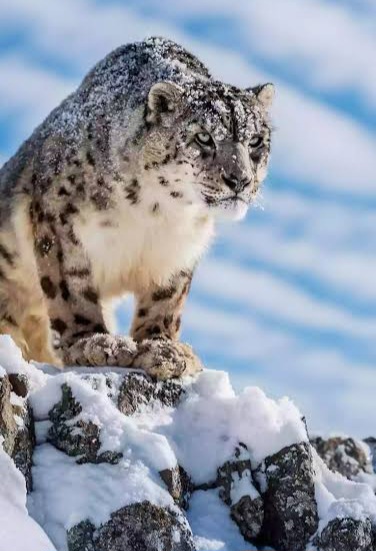
The snow leopard (Panthera uncia), often called the “Ghost of the Mountains,” is one of the most elusive and magnificent big cats in the world. Found across the rugged mountain ranges of Central and South Asia, including the Himalayas, Pamirs, and Altai, this species symbolizes the ecological health of high-altitude ecosystems.
To honor and protect this majestic cat, International Snow Leopard Day is celebrated annually on October 23. The day marks a global commitment to safeguarding snow leopards and their habitats, emphasizing collaboration among the many countries where this species is found.
The snow leopard is perfectly adapted to its harsh environment. Its thick fur, long tail, and powerful limbs enable it to survive in the freezing, rocky terrains of the Himalayas at elevations of 3,000–5,000 meters.
India is home to around 718 snow leopards, primarily in the high-altitude regions of Ladakh, Himachal Pradesh, Uttarakhand, Sikkim, Jammu & Kashmir, and Arunachal Pradesh.
To protect this species, the Government of India launched Project Snow Leopard (2009), which focuses on landscape-level conservation, involving local communities in protection efforts, and strengthening research, monitoring, and conflict mitigation.
In recent years, India has also formulated the National Snow Leopard Ecosystem Protection Program (NSLEP) and adopted the National Protocol for Snow Leopard Population Assessment, which uses advanced camera traps and genetic studies for accurate monitoring. Ladakh’s Hemis National Park, Himachal’s Spiti Valley, and Uttarakhand’s Nanda Devi Biosphere Reserve are among India’s key snow leopard habitats.
The snow leopard is not only a flagship species but also a keystone of high-mountain ecosystems. Its presence indicates a healthy prey population and a balanced environment. Protecting snow leopards ensures the preservation of mountain biodiversity, water security for millions living downstream, and livelihoods for local communities dependent on mountain resources.
Modern conservation recognizes that local communities are the true guardians of the mountains. Several initiatives now provide alternative livelihoods through eco-tourism, handicrafts, and other sustainable ventures, ensuring peaceful coexistence between people and leopards.
Each year, International Snow Leopard Day is celebrated through awareness programs in schools and communities, art and essay competitions, film screenings, nature walks, policy discussions, and conservation pledges.
International Snow Leopard Day reminds us that protecting this elusive predator is vital for maintaining the ecological integrity of the world’s highest mountains. The snow leopard’s survival depends on our collective will to preserve its habitat, reduce conflicts, and promote coexistence between humans and nature.
As global temperatures rise and mountain ecosystems face increasing pressures, the message of the snow leopard is clear — our survival is intertwined with the survival of the wild.


Comments are closed.