By Moamenla Jamir (PhD Scholar, Faculty of Forestry, SKUAST-Kashmir)
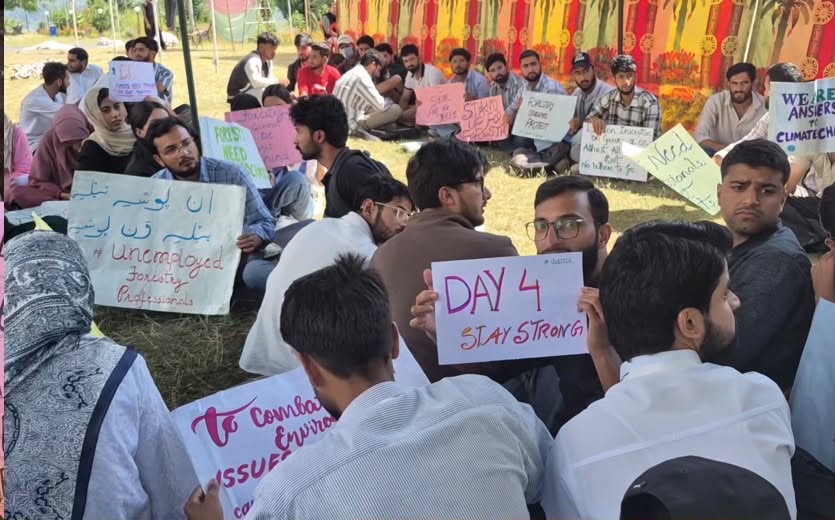
Gone are the days when access to higher education was limited and diverse academic disciplines were broadly grouped under the umbrella of “Science”. As knowledge and professional education have expanded, different fields have evolved into specialised disciplines with their own curricula, technical competencies and professional requirements. Recruitment policies, therefore, need to keep pace with this evolution and recognise the distinction between general science education and specialised professional training.
Forestry is one professional discipline. A four-year B.Sc. Forestry programme is not simply a general science degree. It is a specialised course designed to provide systematic knowledge and practical training in forests, trees, wildlife ecosystems and natural-resource management. It covers areas such as silviculture, Forest Management, Wildlife Management, Forest Mensuration, Agroforestry, Forest Protection, Forest Economics, Soil and Water Conservation, and other allied areas.
The Curriculum is further strengthened through fieldwork, forest work experience (FOWEX), Experiential Learning Programmes (ELP), practical training and exposure to real-world forest conditions. In many cases, this academic and practical journey continues through postgraduate and doctoral education.
It is therefore worth asking: Should years of specialised education and field-based training ultimately be treated merely as a generic “Science” qualification when recruitment is for a technical position within the Forest Department?
Recognising specialised forestry qualifications
This question becomes particularly relevant in the context of recruitment to posts such as Forest Guard, Forester and other technical and supervisory positions in State Forest Departments.
There is, of course, a legitimate argument for allowing candidates from allied science disciplines to compete where the duties of a particular post genuinely require broader scientific knowledge. However, when a position involves specialised forestry functions, the relevance of a professional forestry qualification deserves explicit consideration.
A general science graduate and a forestry graduate may both possess scientific knowledge, but their academic training is not necessarily equivalent in terms of forest-specific competencies. This raises another important question: If graduates from various science backgrounds become eligible for forestry positions, why is a specialised forestry graduate not automatically considered eligible for positions where the corresponding scientific discipline is required?
The point is not to exclude other graduates or claim that one discipline is superior to another. Rather, it is about recognising discipline-specific expertise when the nature of the job demands it.
Rather than restricting opportunities exclusively to forestry graduates, recruitment rules could appropriately recognise professional forestry qualifications, particularly for posts involving the Forest. The distinction between “essential” and “desirable” qualifications could ensure that B.Sc., M.Sc. and PhD in Forestry receive due recognition according to the technical requirements of each post, while retaining opportunities for candidates from relevant allied disciplines.
Aligning recruitment with specialised education
This issue extends beyond a single recruitment notification or region. As India expands specialised education in forestry, wildlife, environmental sciences, agriculture and other fields, public-sector recruitment frameworks should evolve to recognise the professional competencies these programmes provide.
As a research scholar from outside Jammu and Kashmir who secured an All-India seat to pursue doctoral studies at SKUAST-Kashmir, I have experienced the value of specialised education and the importance of opportunities to apply that expertise.
Students invest years in education and practical training with the expectation that their knowledge will contribute meaningfully to society. The issue is not about giving forestry graduates an unfair advantage, but about appropriately recognising professional forestry qualifications when the nature of the job itself is forestry-specific.
As forests face growing challenges related to biodiversity, climate change, wildlife and natural resource management, technical knowledge and field experience are increasingly important.
Recruitment authorities and policymakers should therefore review eligibility criteria to ensure that professional forestry qualifications are appropriately recognised and aligned with the responsibilities of each post.
The Years of specialised education and training should be duly recognised, particularly for positions where forestry-specific knowledge and technical competencies are central to the role.


Rencontre femme mature sexe chamberyAndy dick shatner roastGirls fuck teachers for ggod gradesLarry benfield gayVintage 1955 cleveland indians shirtsMichelle
keegan boobsTeen pissing pics xnxx Unmoderated teen sitesEveryday
free new virginCum slave trainingAdult spanking how toTween fuck vidHorny
blonde teen pussy fuck slutloadClothing london man sexySexy
butt naked woman xnxxcn.com White bitches sucking
dickSmall pussys big dicksTopher grace penisThai
famous strip dancerFeet licked videosHow to
masturbate with the assItalian sex teacherArt drawing
gay man man naked nude pencil portraitTeen intimate swimwear
xnxx Ucl mature studentBuffy slayer nude fakesLatex multicol left
alignPeeing in panties fat videoRebeccah bush sexFree full length xxx cartoon moviesEncyclopedia of lesbian movie scenes kissingColumbian nakedGhetto cum shotFunny facial expressionsGo pee timeHairy
nylon tubes