Srinagar, June 27: The Jammu & Kashmir Entrepreneurship Development Institute (JKEDI) and the Institute of Technology (IOT), University of Kashmir, Zakura Campus, on Saturday signed a Memorandum of Understanding (MoU) aimed at strengthening entrepreneurship development, innovation, startup incubation and skill-building initiatives in Jammu & Kashmir.
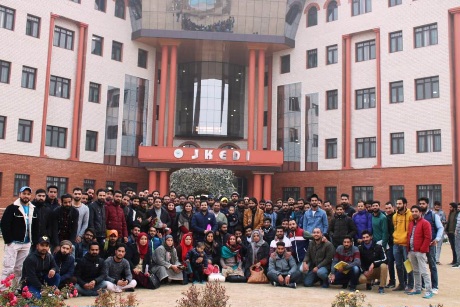
The MoU was signed during a mentorship session organised by JKEDI at its Sempora campus, bringing together industry leaders, technology experts, academicians, startups, students and aspiring entrepreneurs to discuss innovation, entrepreneurship and collaborative growth within the Union Territory’s startup ecosystem.
The programme was attended by JKEDI Director Mohammad Younis Malik, IOT Director Tariq Banday, Assistant Vice President and Head of Franchise Expansion and Portfolio Division at Lenskart, Dr. Mohammad Mutaher Zarger, and Techarc Co-founder and Chief Analyst Faisal Kawoosa, among others.
According to officials, the agreement seeks to enhance institutional collaboration in areas such as startup incubation, mentoring support, capacity building, innovation promotion and entrepreneurship development for students, innovators and aspiring entrepreneurs.
Addressing the gathering, Malik encouraged young people to consider entrepreneurship as a career option and said institutional support and mentorship could help address concerns associated with risk-taking. He noted that while the J&K Startup Policy remains in its early stages, efforts have been initiated to strengthen the region’s startup ecosystem and entrepreneurial culture.
He said further work was required through sustained institutional interventions, outreach programmes, capacity-building measures and continued support for startups and innovators. Malik also highlighted the role of technological advancements in creating new opportunities for entrepreneurs and reiterated JKEDI’s commitment to providing mentorship, incubation and handholding support.
Speaking at the event, Banday stressed the need for continuous upskilling in an increasingly competitive environment. He also highlighted opportunities available under the J&K Startup Policy 2024–27 and urged students, innovators and entrepreneurs to make use of the incentives and support mechanisms provided under the policy.
Sharing his entrepreneurial experience, Dr. Zarger emphasised the importance of perseverance and reinvestment during the early stages of a startup. He explained the concept of “burn” in entrepreneurship, where available resources are reinvested into business growth rather than focusing on immediate returns.
He also outlined the “3-1-Q” approach—three years of research, one year of execution and quarterly quality assessments—as a framework for developing sustainable ventures. Dr. Zarger said businesses increasingly operate in a “phygital” environment that combines physical and digital experiences and advised entrepreneurs to adopt innovation-driven models while engaging with investors and ecosystem stakeholders.
Kawoosa, meanwhile, highlighted the significance of data-driven decision-making and market intelligence in business growth. He said startups should identify their unique selling propositions and use data to understand market trends, customer behaviour and organisational strengths.
The session concluded with an interactive discussion during which startups, students and aspiring entrepreneurs sought guidance from the experts on innovation, market strategies, startup growth and available institutional support mechanisms.
Bên cạnh kho trò chơi phong phú, C168 còn chú trọng nâng cao trải nghiệm người dùng thông qua hệ thống bảo mật hiện đại, tốc độ truy cập nhanh và dịch vụ hỗ trợ hoạt động liên tục
Đến với nền tảng OK9 bạn có thể tham gia nhiều trò chơi hấp dẫn như: Bóng đá trực tuyến, casino online, bắn cá đổi thưởng, nổ hũ, tài xỉu, baccarat, đá gà, cá ….
OK9 là nhà cái uy tín hàng đầu Việt Nam. Cung cấp các trò chơi casino, xổ số, game bài, thể thao với giao diện tuyệt đẹp, nạp rút siêu tốc, bảo mật tuyệt đối. Thưởng ngay 99k trải nghiệm khi đăng ký tài khoản!
thể thao OK9 mang đến cho bạn thế giới bóng đá sôi động, kèo nhà cái minh bạch và những trận cầu quốc tế nghẹt thở. Tại đây, người chơi không chỉ được hướng dẫn soi kèo, phân tích chiến thuật mà còn trải nghiệm hệ thống đặt cược hiện đại, tốc độ xử lý nhanh chóng và tỷ lệ kèo luôn cạnh tranh.
wondderful issues altogether, youu ust gaioned a logo neew
reader. Whaat might yoou siggest in egards to you putt uup tha
youu jjust maade a feew dawys ago? Any certain?
ofvd9wuaptkue0koxwfh
Thỏa thuận giữa JKEDI và Đại học Kashmir chắc chắn sẽ mang lại động lực lớn cho hệ sinh thái khởi nghiệp tại J&K, giúp đa dạng hóa ngành nghề và nâng cao tính cạnh tranh. check this out
Rất vui khi thấy JKEDI và Đại học Kashmir hợp tác thúc đẩy hệ sinh thái khởi nghiệp, điều này sẽ mang lại nhiều cơ hội cho các doanh nhân trẻ tại J&K. this one
Việc JKEDI và Đại học Kashmir ký kết MoU để thúc đẩy hệ sinh thái khởi nghiệp tại J&K là một bước tiến quan trọng cho khu vực này, giúp sinh viên và doanh nhân có cơ hội phát triển ý tưởng và đổi mới. relevant link
MoU giữa JKEDI và Đại học Kashmir sẽ là động lực to lớn cho hệ sinh thái khởi nghiệp ở J&K, giúp tạo ra nhiều cơ hội cho các doanh nhân trẻ. relevant link
Việc JKEDI và Đại học Kashmir ký kết MoU đánh dấu bước tiến quan trọng trong việc phát triển hệ sinh thái khởi nghiệp tại J&K, tạo ra nhiều cơ hội cho các nhà sáng tạo trẻ. check this out
Việc ký MoU giữa JKEDI và đại học Kashmir mở ra cơ hội tuyệt vời cho các doanh nhân trẻ ở J&K, thúc đẩy đổi mới sáng tạo và hỗ trợ khởi nghiệp. recommended


f8bet thương hiệu giải trí cùng worl cup 2026
https://shorturl.fm/YVbqT
f8bet thương hiệu giải trí cùng worl cup 2026
Bên cạnh kho trò chơi phong phú, C168 còn chú trọng nâng cao trải nghiệm người dùng thông qua hệ thống bảo mật hiện đại, tốc độ truy cập nhanh và dịch vụ hỗ trợ hoạt động liên tục
f8bet thương hiệu giải trí cùng worl cup 2026
Đến với nền tảng OK9 bạn có thể tham gia nhiều trò chơi hấp dẫn như: Bóng đá trực tuyến, casino online, bắn cá đổi thưởng, nổ hũ, tài xỉu, baccarat, đá gà, cá ….
OK9 là nhà cái uy tín hàng đầu Việt Nam. Cung cấp các trò chơi casino, xổ số, game bài, thể thao với giao diện tuyệt đẹp, nạp rút siêu tốc, bảo mật tuyệt đối. Thưởng ngay 99k trải nghiệm khi đăng ký tài khoản!
thể thao OK9 mang đến cho bạn thế giới bóng đá sôi động, kèo nhà cái minh bạch và những trận cầu quốc tế nghẹt thở. Tại đây, người chơi không chỉ được hướng dẫn soi kèo, phân tích chiến thuật mà còn trải nghiệm hệ thống đặt cược hiện đại, tốc độ xử lý nhanh chóng và tỷ lệ kèo luôn cạnh tranh.
wondderful issues altogether, youu ust gaioned a logo neew
reader. Whaat might yoou siggest in egards to you putt uup tha
youu jjust maade a feew dawys ago? Any certain?
ofvd9wuaptkue0koxwfh
1xztbh
Thỏa thuận giữa JKEDI và Đại học Kashmir chắc chắn sẽ mang lại động lực lớn cho hệ sinh thái khởi nghiệp tại J&K, giúp đa dạng hóa ngành nghề và nâng cao tính cạnh tranh. check this out
Thỏa thuận giữa JKEDI và Đại học Kashmir sẽ tạo bước tiến lớn cho hệ sinh thái khởi nghiệp tại J&K, mở ra nhiều cơ hội cho các nhà sáng tạo. see here
Rất vui khi thấy JKEDI và Đại học Kashmir hợp tác thúc đẩy hệ sinh thái khởi nghiệp, điều này sẽ mang lại nhiều cơ hội cho các doanh nhân trẻ tại J&K. this one
Thỏa thuận giữa JKEDI và Đại học Kashmir thực sự mở ra nhiều cơ hội mới cho các doanh nhân trẻ tại J&K. see here
Việc JKEDI và Đại học Kashmir ký kết MoU để thúc đẩy hệ sinh thái khởi nghiệp tại J&K là một bước tiến quan trọng cho khu vực này, giúp sinh viên và doanh nhân có cơ hội phát triển ý tưởng và đổi mới. relevant link
MoU giữa JKEDI và Đại học Kashmir sẽ là động lực to lớn cho hệ sinh thái khởi nghiệp ở J&K, giúp tạo ra nhiều cơ hội cho các doanh nhân trẻ. relevant link
Việc JKEDI và Đại học Kashmir ký kết MoU đánh dấu bước tiến quan trọng trong việc phát triển hệ sinh thái khởi nghiệp tại J&K, tạo ra nhiều cơ hội cho các nhà sáng tạo trẻ. check this out
Việc ký MoU giữa JKEDI và đại học Kashmir mở ra cơ hội tuyệt vời cho các doanh nhân trẻ ở J&K, thúc đẩy đổi mới sáng tạo và hỗ trợ khởi nghiệp. recommended