Dubai/New Delhi, April 29: The United Arab Emirates has announced its exit from OPEC after nearly 60 years of membership, a move that could significantly reshape global oil supply dynamics and inject fresh volatility into energy markets already strained by geopolitical tensions in West Asia.
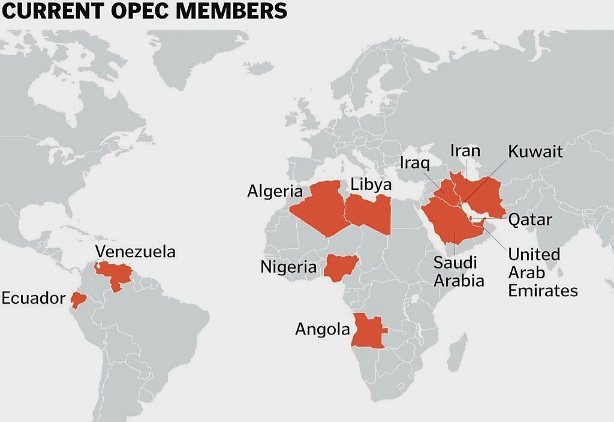
Founded in 1960 by Saudi Arabia, Iran, Iraq, Kuwait and Venezuela, the bloc later expanded to include countries such as Algeria, Libya, Nigeria, Gabon, Republic of the Congo and Equatorial Guinea. Collectively, OPEC countries control about 80% of the world’s proven oil reserves but account for roughly 40% of global crude oil production—leveraging this balance to influence prices. In recent years, its influence widened through the OPEC+ grouping led by Russia.
Blow to OPEC’s market control
The departure of the UAE—OPEC’s third-largest producer—is widely seen as weakening the cartel’s ability to regulate supply through coordinated production cuts or increases. For decades, the group has acted as a stabilising force in oil markets, adjusting output to maintain price levels that support member economies.
Analysts say the exit could reduce OPEC’s leverage at a time when global oil supply chains are already under severe stress due to regional conflict and disruptions in key transit routes such as the Strait of Hormuz.
More oil—or more volatility?
At the centre of the UAE’s decision is its ability to expand production. With capacity estimated at around 4.8 million barrels per day and scope for further growth, the country is now free from OPEC quotas and can pursue an independent output strategy.
This introduces competing possibilities for global markets. Increased UAE production could ease supply shortages and eventually soften prices. However, the breakdown of coordinated supply discipline could also trigger short-term volatility, especially in an already fragile market environment.
Energy crisis backdrop deepens impact
The move comes amid one of the most severe energy supply disruptions in recent history, linked to tensions involving Iran and instability in the Gulf region. The Strait of Hormuz—through which a significant share of global oil flows—remains a critical vulnerability.
Economic estimates suggest the ongoing crisis could impose costs ranging from $600 billion to over $1 trillion on the global economy, driven by high fuel prices, inflationary pressures and cascading impacts on food and industrial supply chains.
Strategic shift: monetising reserves
The UAE’s exit also reflects a broader strategic shift among oil producers. As the world gradually transitions towards cleaner energy, countries with low-cost reserves are increasingly seeking to maximise production while demand remains strong.
By stepping outside OPEC, the UAE gains flexibility to monetise its reserves rather than restrain output to support prices—potentially signalling a trend that other producers may follow.
Implications for global oil prices
In the near term, oil prices are expected to remain elevated due to geopolitical risks and supply disruptions. Over the longer term, however, increased independent production—especially from the UAE—could weaken OPEC’s pricing power, increase competition, and lead to sharper price swings.
For major import-dependent economies like India, this could translate into a more unpredictable energy landscape, marked by periods of both price spikes and potential corrections.
A turning point for oil markets
The UAE’s departure marks a significant inflection point in global energy geopolitics. It not only challenges the cohesion of OPEC but also signals a shift toward a more fragmented oil market—where national strategies may increasingly outweigh collective control, with far-reaching consequences for global supply and pricing stability.


buy viagra here: Cheap generic Viagra online – Viagra without a doctor prescription Canada