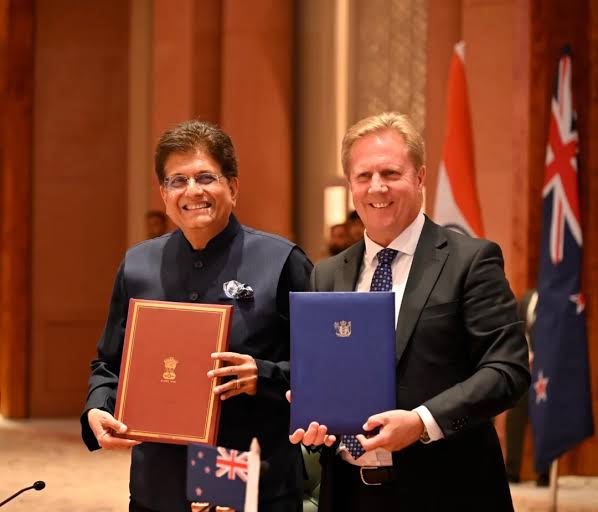
New Delhi, April 27: Jammu & Kashmir’s key sectors—including handicrafts, saffron, and horticulture—are set to benefit from enhanced global market access following the signing of a comprehensive Free Trade Agreement (FTA) between India and New Zealand on Monday. The agreement, described as a major milestone in India’s trade diplomacy, is expected to open new export opportunities for the Union Territory’s traditional and rural industries.
The India–New Zealand FTA eliminates duties on 100 percent of Indian exports, significantly improving competitiveness across sectors. Officials said the agreement would particularly support labour-intensive industries and MSMEs, while also boosting employment and strengthening value chains.
For Jammu & Kashmir, the deal is expected to increase the global visibility of products such as carpets, apples, walnuts, and saffron. The enhanced access to the New Zealand market is likely to support rural livelihoods and artisan-based industries, which form a critical part of the region’s economy.
At the national level, the agreement includes a USD 20 billion investment commitment over 15 years, aimed at strengthening long-term economic cooperation. It also focuses on sectors such as renewable energy, infrastructure, agriculture, and services, while creating new opportunities for Indian professionals and students.
The FTA provides zero-duty access for Indian goods across all tariff lines and includes provisions to boost exports in textiles, leather, engineering goods, processed foods, and pharmaceuticals. At the same time, India has safeguarded sensitive sectors such as dairy and key agricultural products by placing them in the exclusion category.
In agriculture, the agreement outlines cooperation in areas such as horticulture, beekeeping, and food processing, with action plans for products like apples and honey. These measures are expected to improve productivity, quality, and global competitiveness of Indian produce.
The pact also marks New Zealand’s first-ever commitment to facilitate trade in traditional medicine systems such as Ayurveda and yoga, alongside provisions for student mobility and skilled workforce movement, including a dedicated visa pathway.
Officials said the agreement will not only deepen bilateral trade but also position India as a stronger player in the Oceania region, while delivering broad-based benefits across states, including Jammu & Kashmir.