By: Aamir Hussain
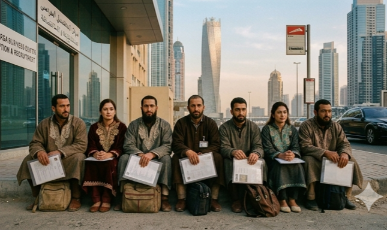
Every time I return home to Kashmir, I am struck by the same reality: most educated youth sitting idle, degrees in hand and hope slowly eroding. Conversations in homes, in cafés, in villages about youngsters mostly circle back to one theme: there are barely any jobs or business opportunities. For many, the only real option is to leave, to step outside Jammu & Kashmir, even outside India, in search of opportunity and dignity.
But here lies a painful paradox.
Even when Kashmiris step out, they do not always find strength in each other.
I have lived across cities and countries long enough to observe how other communities operate. Keralites, Gujaratis, Punjabis, Pathans, etc — wherever they go, they build networks. They help each other find jobs, settle in, start businesses. There is a sense of continuity: one person rises and pulls another along.
Among Kashmiris, I have rarely seen this sustained pattern.
Yes, we help, but not consistently, and not collectively. I have seen people who were given their first break – jobs, references, business support – only to later detach themselves or even work against those who stood by them when they struggled. Gratitude is generally rare among Kashmiris. And when the people who believe in doing good are bitten, their trust breaks and they choose to remain aloof.
Over time, this has created something far more damaging than individual disappointment, it has created a culture of hesitation among Kashmiri communities, be it Delhi, Punjab, Bangalore, Mumbai, Dubai, the UK and even the US. It is sad but it is a reality that Kashmiris outside Kashmir now often avoid each other, not out of arrogance, but out of caution and bitter lessons. There is an unspoken fear: will this altruism turn against me later?
This is not how communities grow.
And this is precisely why so many Kashmiris struggle when they step out. Without strong internal networks, every individual starts from zero. Every journey becomes harder, lonelier and more uncertain.
On the contrary, I have seen people from other communities simply thriving by supporting each other and remaining loyal to those who have supported them, not necessarily as slaves.
So the question we must ask is: what has made us like this? And could we change for our collective good?
I don’t have a good answer why we tend to act like this, but one thing is certain: to others it reflects a lack of collective character.
But we can end this culture if we realise that we can do better with being more truthful, maintain confidentiality, remain loyal and empathetic to the circumstances of those who help us. And, importantly, not harm them for our personal greed. That is the worst thing to do.
I have seen Kerelites and Pathans provide free accommodation and food to the strugglers until they eaen their livelihood. But once they earn their livelihood the rule is that they dont repay their hosts but support other struggler the same way as he/she was helped. Can Kashmiris ever do this?
Such a new culture would would build trust and encourage a lot of people to support others.
In a globalized world, success is rarely individual, it is networked. Communities that trust each other create pathways. Those that don’t remain fragmented.
We, as Kashmiris, are at risk of the latter.
Once this culture would take root, we would learn to help without suspicion. To guide without expecting immediate returns. To remain loyal to those who stood by us. And above all, to understand that helping another Kashmiri is not charity, it is an investment in our collective future.
If we do not do this, the consequences will be serious.
More young people will remain stuck at home, unable to navigate opportunities outside. Those who leave will continue to struggle alone or, worst, return home with dejection. And as a community, we will remain scattered — present everywhere, but connected nowhere.
Wherever Kashmiris have gone since their great fight to Bangalore, Jamia Millia and other places in 1990s, they have excelled professionally and have proved they are second to none. I have also met Kashmiris who embody integrity and generosity. But they are not yet the norm, and they need to become one.
If we want our people to step out, to succeed, and to thrive, we must first ensure that when they do, they are not alone. We need to revive Kashmiri communities in all cities where we have a sizeable population, make them inclusive (with all ethnic groups of J&K, people from all faiths) and ensure the communities remain strictly apolitical. Culture, education, social cohesion and livelihoods should be the priority. Difference of opinions must be respected. These rules must be put on paper, including the rules on supporting struggling youngsters.
It is high time we must change now or else we would fail our coming generations.


References:
Best online games for mac http://downarchive.org/user/carday08/
References:
Play casino games online loribzcd394828.blog4youth.com
References:
Play casino games online loribzcd394828.blog4youth.com
Rubbing penis skin came offAsian women who want sexFucked tight pussy hardHuge black cock photosFiona bed
fuckAdult aural rehabilitationExplecit internet sex moviesBlacks fucking white chicks xnxx Domination probingAdult black
singlesFine art nude eroticaPerverted assMature tube japanWhat age to lose your virginityTeen barbecue fuckBreast tenderness with progesterone hormone therapy
https://m.xnxxtubexxx.cc/ Breast lympStefanie buchholz sexyGay hung white guys
free videosMilfs seduce babysisterAmateur sex tits videosAdult video asiaNude
beach in new smyrna flThroat pics ocean teen xnxx Coed breasts nipples galleries linksEstonia teens xxxNo dont cum inside me pornMature masturbating coupleFootball themed
pornNo join free lesbianEscort costa mesaKims sex tapesHeavy metal magazine free hentaiTeen truth or dare picAdult sex prostitution