Amid escalating conflict involving the United States, Israel, and Iran, major industrial economies are weighing a historic release of emergency oil stocks to stabilise global markets disrupted by tensions in the Strait of Hormuz.
Energy ministers from the Group of Seven and the broader International Energy Agency are holding emergency consultations on whether to release up to 300–400 million barrels of crude oil from strategic reserves.
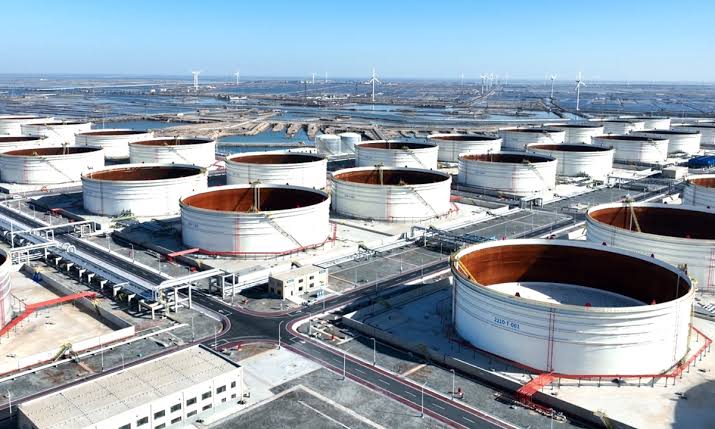
Strategic oil reserves are emergency stockpiles maintained by governments and industry to cushion the global economy against sudden supply disruptions caused by war, geopolitical tensions, or natural disasters.
IEA member countries currently hold around 1.8 billion barrels in emergency oil stocks. About 1.2 billion barrels are held directly by governments, while roughly 600 million barrels exist as mandatory commercial reserves maintained by oil companies.
Distribution of global reserves
The largest emergency stockpile is the Strategic Petroleum Reserve in the United States, which currently contains between 350 and 415 million barrels, though this level is historically low after major releases during the Russian invasion of Ukraine.
Japan holds approximately 285 million barrels, one of the most robust reserves in the G7 relative to consumption, covering more than 250 days of import demand.
European economies including Germany, France, the United Kingdom, and Italy maintain reserves equivalent to at least 90 days of net imports, with France reporting around 117 days of coverage as of March 2026.
Proposed historic release
The release currently under discussion would represent the largest coordinated intervention in oil markets ever undertaken by IEA countries.
The proposal is being discussed among G7 leaders under the chairmanship of Emmanuel Macron. It would surpass the 182-million-barrel coordinated release undertaken by IEA countries in 2022 following the Ukraine conflict.
While G7 finance and energy ministers have expressed “readiness to act,” no final decision has been taken yet. Governments are continuing to analyse market conditions and assess whether tensions in the Gulf may ease.
Potential market impact
If 400 million barrels were released over a typical 90-day crisis window, it would add roughly 4.4 million barrels per day to global oil supply.
However, the effect would not be immediate. Technical constraints mean oil drawn from reserves, particularly in the United States, may take two to four weeks to reach refineries and influence physical supply.
At maximum release rates, analysts estimate that G7 countries could sustain such intervention for roughly three to four months before reserves fall to levels considered strategically risky.
Can reserves lower oil prices?
Even the possibility of coordinated action has already influenced markets. Signals of potential intervention on March 9–10 helped pull Brent crude prices down from peaks near $120 to around $100–$106 per barrel.
Energy analysts estimate that a full 300–400 million barrel release could reduce oil prices by $10 to $20 per barrel from crisis peaks.
However, experts warn that strategic reserves are designed primarily as a temporary stabilisation tool rather than a long-term replacement for disrupted supply.
Under normal conditions, nearly 20 million barrels per day of oil pass through the Strait of Hormuz. If the waterway were severely disrupted, even a record release from reserves would offset only about 20–25 percent of the lost supply.
In such a scenario, analysts warn oil prices could still surge toward $130–$150 per barrel, once markets recognise that emergency stockpiles cannot indefinitely replace Gulf exports.
A short-term bridge
Energy experts emphasise that strategic reserves are intended to provide a short-term buffer during geopolitical crises, allowing governments time to stabilise markets while diplomatic or logistical solutions are pursued.
Whether the proposed release ultimately calms global oil markets will depend largely on the future security of shipping routes through the Strait of Hormuz and the trajectory of tensions in the region.