

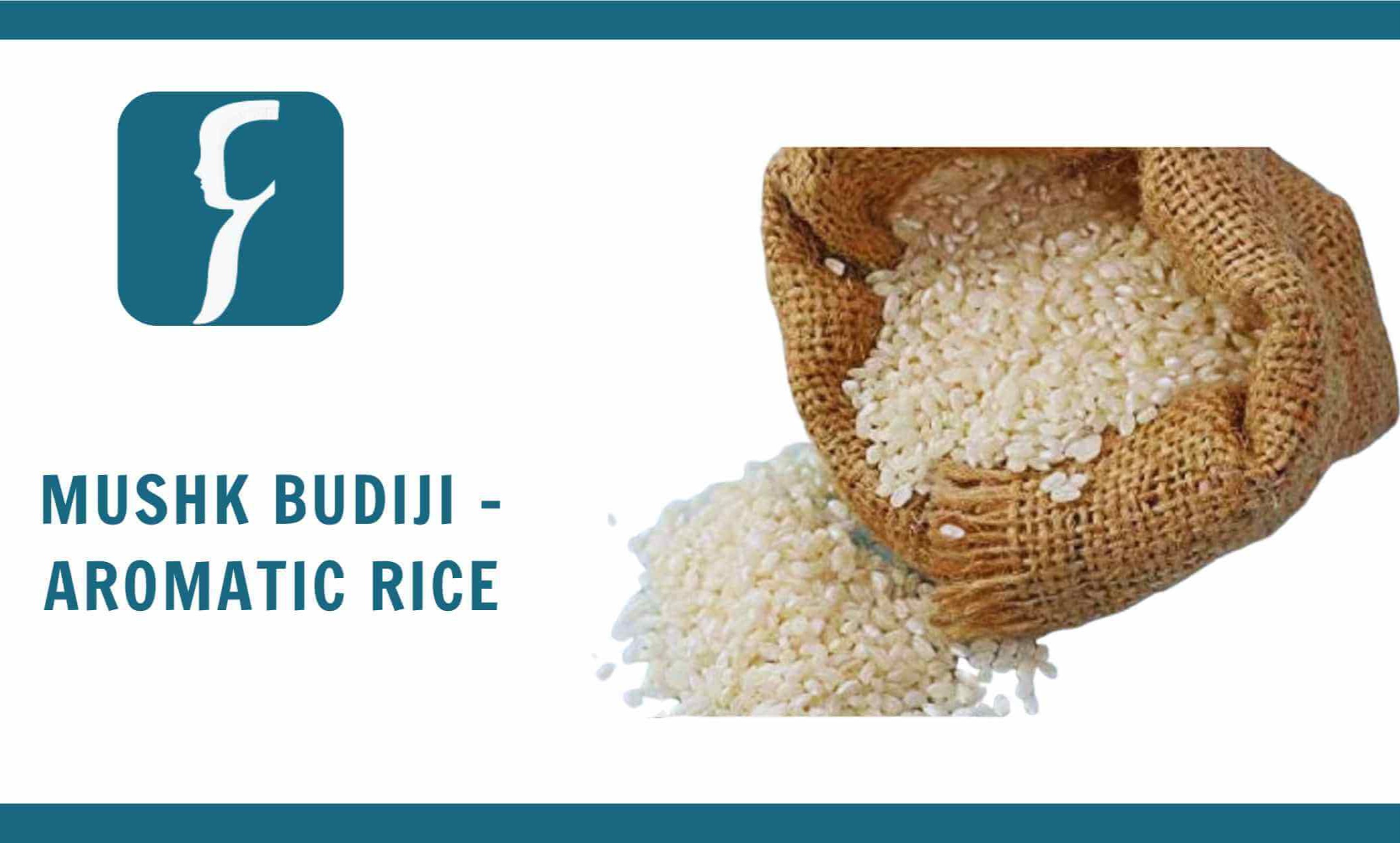
Scent of gold: Can Kashmir’s ‘Mushq Budji’ dethrone world’s most expensive rice?

By: Shabana Fayaz and Adil Khan – Ziraat Times

Srinagar, Feb 8: In the high-stakes world of luxury grains, Japan’s Kinmemai Premium rice currently wears the crown. Certified by Guinness World Records as the most expensive rice on the planet, it fetches a staggering $73 per 140g box. Its secret? A patented polishing process and a “life force” enzyme test overseen by 91-year-old Keiji Saika. To chefs, the grains look like “diamonds.”

In the temperate valleys of Kashmir, a rival has been there for centuries, and is barely known beyond the region. It doesn’t have a Guinness certificate yet, but it has something Japan’s “diamond” rice can’t replicate: a legendary, intoxicating aroma that can perfume an entire village during harvest. An aroma which is far more distinct than the best of Basmati rice varieties.

Meet Mushq Budji – the indigenous “Queen of Fragrance” that could hold the key to saving Kashmir’s disappearing rice lands.

The grain of the kings
Mushq Budji is a short-grained, bold rice grown primarily in the high-altitude belts of Southern Kashmir. For centuries, it was the centerpiece of Wazwan (Kashmiri royal feasts), prized for its buttery texture and a scent so potent it is said to be “audible” to the nose from miles away.

Feature

Kinmemai Premium (Japan)

Mushq Budji (Kashmir)

Price Point

About $520 per kg

About ₹250–₹300 per kg (Local)

Selling Point

Enzyme vitality & “Life Force”

Intense natural aroma & heritage

Exclusivity

1,000 boxes per year

Exact production uncertin. Restricted to specific niche micro-climates

Status

Global Luxury Export

Domestic Heritage Secret

Could Kashmiri farmers’ destiny change?
Economists argue that Mushq Budji could be a “geographical insurance policy”. Currently, Kashmir is witnessing a massive land conversion crisis. Farmers, struggling with the low margins of common paddy, are converting their ancestral fields into “urban jungles” (housing colonies) or apple orchards.

If Mushq Budji goes mainstream, the math changes overnight. Farmers could fetch four times the price of standard rice. This economic pivot would provide a powerful incentive to keep “paddy land” as “paddy land,” preserving the valley’s ecological balance and preventing the unchecked sprawl of concrete.

Why isn’t it going global?

Despite the potential, Mushq Budji remains a “largely domestic” secret. Mushq Budji was officially granted the GI Tag by the Government of India in 2023. This puts it in the same legal league as Champagne, Darjeeling Tea, and Kashmir Saffron. The GI registration was spearheaded by the Sagam Mushqbudji Farmer Producer Company Limited, supported by NABARD and SKUAST-Kashmir.

While SKUAST-K (Sher-e-Kashmir University of Agricultural Sciences and Technology) and the Agriculture Department have received significant public funding to revive the variety, critics and economists are asking tough questions: What is the holdup?

Mushq Budji is temperamental. Experts say that it only develops its signature aroma in specific altitudes and water conditions. Large-scale cultivation in the plains often results in a loss of fragrance, meaning the “scaling up” process requires precision that current infrastructure struggles to provide.

In the late 20th century, the variety almost went extinct due to its high susceptibility to Rice Blast disease. While SKUAST has successfully purified the seeds, farmers still fear a total crop loss without modern, localized protective measures. Availability of authentic, certified and adequate seeds is another major issue.

Unlike Japan’s Toyo Rice Corporation, which markets rice with the sophistication of a Swiss watchmaker, Kashmir’s heritage rice lacks a global “luxury” branding strategy. There is no “1,000 boxes a year” exclusivity; instead, it is sold in bulk bags, diluting its perceived value on the international market.

A bearish rivalry?
The weekend menu in the luxury food world is getting weirder. While Kashmir fights to save its rice, Basmati varieties grown in Jammu and other parts of Kashmir have captured global markets like anything.

Perhaps there is a lesson there for Kashmir’s policy makers: the global palate is searching for the “unusual” and the “authentic.” If a chef in Hokkaido can turn a “problem bear” into a refreshing delicacy, surely the combined forces of the Agriculture Department and SKUAST can turn a world-class, aromatic diamond like Mushq Budji into a global household name.

Experts believe that if the government can bridge the gap between “niche farming” and “global luxury branding,” Mushq Budji could do for Kashmir what Basmati did for the plains, but at a premium that makes the “most expensive rice in the world” look like a mere contender.