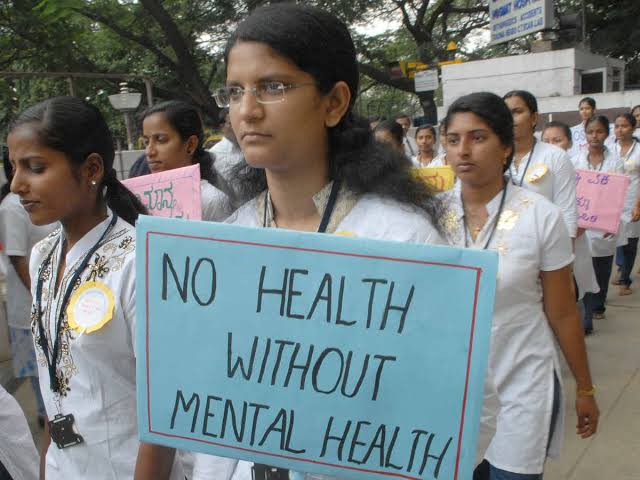
New Delhi, Feb 11: The Union Budget 2026–27 has announced a major expansion of India’s mental healthcare infrastructure, including the establishment of a second National Institute of Mental Health and Neuro Sciences (NIMHANS-2) in northern India and the upgradation of key institutions in Ranchi and Tezpur.
The new NIMHANS-2 will be modelled on the existing NIMHANS in Bengaluru and will focus on advanced treatment, training and research in neurosciences and mental healthcare. The move aims to address the long-standing absence of a national-level mental health institute in north India and improve regional equity in access to specialised services.
As part of the expansion, the National Mental Health Institutes at Ranchi and Tezpur will be upgraded into Regional Apex Institutions to strengthen specialised mental health care, education and trauma services in their respective regions.
The Budget has also proposed establishing Emergency and Trauma Care Centres in district hospitals across the country to ensure 24×7 access to critical emergency medical services, including mental health support.
The government said the measures are intended to reduce regional disparities, expand access for vulnerable populations and address the growing burden of mental health disorders across age groups.
India’s mental healthcare framework has evolved significantly over the past decades. The Mental Healthcare Act, 2017 guarantees the right to affordable and quality mental healthcare services and decriminalises suicide attempts. The National Health Policy, 2017 recognised mental health as a national priority and emphasised strengthening specialist training and primary-level services.
Under Ayushman Bharat, more than 1.75 lakh Sub Health Centres and Primary Health Centres have been upgraded into Ayushman Arogya Mandirs, where mental health services form part of comprehensive primary healthcare. The Ayushman Bharat PM-JAY scheme covers several mental health conditions, offering cashless treatment for specified procedures.
The District Mental Health Programme (DMHP), which began in 1996 and now covers 767 districts, provides community-based mental healthcare, including outpatient services, 10-bedded inpatient facilities at the district level, counselling, suicide prevention initiatives and public awareness campaigns.
Digital initiatives have also expanded access. The National Tele Mental Health Programme (Tele-MANAS), launched in October 2022, operates a 24×7 toll-free helpline and has handled over 33 lakh calls so far. The service now includes video consultations, multilingual support and an AI-powered chatbot. As of February 5, 2026, more than 2,000 video consultations had been conducted.
India currently has 47 government-run mental hospitals, including three central institutions—NIMHANS Bengaluru, LGBRIMH Tezpur and CIP Ranchi—along with mental health services across AIIMS facilities. Capacity-building initiatives have sanctioned 25 Centres of Excellence and upgraded 47 postgraduate departments to strengthen training of mental health professionals.
According to the government, the Budget measures build on this foundation and signal a continued commitment to expanding mental health and trauma care infrastructure, improving workforce capacity and ensuring more equitable access to services nationwide.