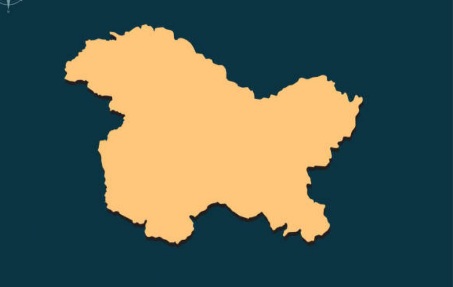
In the architecture of land governance, history does not belong only to landowners. It also belongs to the landless. It belongs to those who tilled soil they did not own, who lived on village commons, who worked as artisans, labourers, shepherds and village hands. Their names were rarely written in Jamabandi ownership columns, yet their presence was formally acknowledged through a parallel register of equal legal and social significance: the Bikrimi Chola.
Today, as thousands of citizens across Jammu & Kashmir apply for RBA, ALC, IB, SC, ST and other category certificates, a quiet but serious challenge has emerged. It is not a challenge of law, but of documentation. Not of eligibility, but of verification. Many applicants fulfil every legal requirement. Their families have lived in the same villages for generations. Their caste histories are known. Their residence is continuous. Yet certificates are denied because they do not own land, because their names do not appear in Jamabandi, and because the Record of Rights speaks primarily of ownership. The one register that once recorded their civil existence, the Bikrimi Chola, is missing from most villages.
This absence goes beyond administrative inconvenience. It results in the loss of documented history, the weakening of identity, and the marginalisation of communities whose existence was once formally recorded. The Jamabandi and Bikrimi Chola were designed as complementary records, one economic, the other social. Today, one is preserved, digitised and enforced, while the other lies forgotten in damaged bundles, neglected storage rooms, or has disappeared altogether. With it, the landless citizen quietly fades from official memory.
How villages were once recorded
To understand the importance of Bikrimi Chola, one must return to the original settlement operations of Jammu & Kashmir. During settlement, villages were not only measured; they were socially documented. Settlement staff recorded families, castes, occupations and length of residence. They distinguished clearly between proprietors and non-proprietors and created two parallel records. Jamabandi recorded ownership, possession, cultivation, inheritance and revenue. Bikrimi Chola recorded households, caste and community identity, village residence and social roles.
The landless were never treated as invisible. Artisans, labourers, shepherds, fishermen, potters, weavers, barbers, washermen and village servants were all recorded. These families often lived on abadi land, village commons or non-cultivable areas. They had no khasra numbers, but they had lineage, social standing and deep-rooted belonging. Their houses were known, their graves were in the village, their places of worship were built by them, and their services sustained village life for generations. Bikrimi Chola recorded them not as encroachers, but as original residents.
Legally, Bikrimi Chola was never an informal list. It was a public document prepared under statutory authority, verified during settlement, finalised after public hearing and attested by settlement officers. In law, the caste, residence and lineage recorded in Bikrimi Chola carry evidentiary value equal to that of Jamabandi. For landless families, it often remains the only original proof of village origin. Without it, their historical presence becomes difficult to establish.
Certification without history
Today’s certification process demands proof of residence, caste, ancestry and village origin. For proprietors, Jamabandi provides this easily. For the landless, the absence of Bikrimi Chola creates obstacles. They are asked to produce revenue records that never existed for them beyond this register. As a result, eligible citizens become excluded not by law, but by the absence of preserved documentation.
In many villages, Bikrimi Chola registers are damaged, incomplete or missing. Some were never digitised. Others were misplaced during office shifts, floods, fires or administrative restructuring. In some areas, officials are unaware the register ever existed. This reflects not intent, but prolonged institutional neglect. While ownership records were prioritised and preserved, social identity records were allowed to deteriorate.
The human cost of this loss is significant. Students are denied scholarships, families are denied welfare support, workers are denied category status and households are denied recognition. Their ancestors were recorded, their residence was verified, their caste was written. Only the register is missing. The loss was not theirs, yet they bear the consequence.
Bikrimi Chola must be recognised again as valid proof for certification. Supported by Shajra Nasab, electoral rolls, school records, ration cards and local verification, it provides a reliable foundation for establishing identity. Revenue authorities are custodians of public records and carry a responsibility to preserve and restore them. Digitisation that preserves land but forgets people remains incomplete.
Even where registers are lost, reconstruction is possible using settlement records, household lists and village maps, following established verification procedures. What is required is administrative resolve. Jamabandi and Bikrimi Chola were never meant to compete. They were meant to complete each other. One recorded land, the other recorded life. Preserving only one leaves history unfinished.
The landless citizen is not landless in history. His ancestors lived, worked and belonged. Their names were written. The state lost the register; the citizen lost his proof. Restoring Bikrimi Chola is not merely about records. It is about restoring balance, memory and fairness. Governance, after all, is not only about fields and files. It is about people and their place in history.