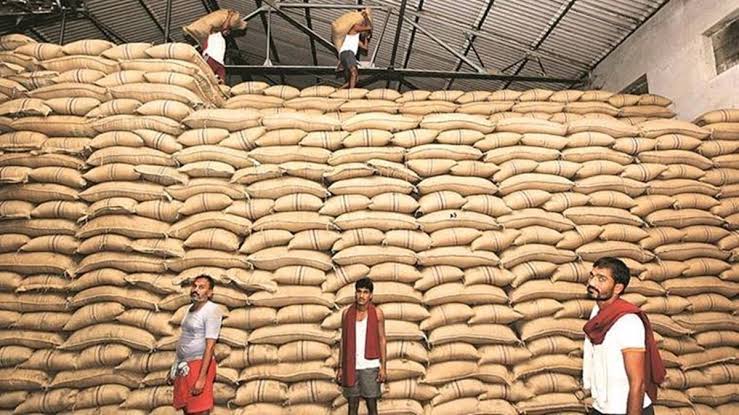
New Delhi, Jan 31: The balanced use of fertilisers has emerged as a critical enabler of sustainable agriculture, aligning productivity goals with soil health and environmental responsibility, according to a detailed note released by the Union government on Friday. The Government of India said it is actively promoting balanced fertilisation through a combination of policy measures, scientific interventions and farmer-centric schemes to ensure long-term agricultural sustainability.
The official note received by Ziraat Times underlined that balanced fertilisation involves applying all essential macro and micronutrients in appropriate proportions, quantities, timing and methods, based on crop needs, soil fertility and climatic conditions. It cautioned that excessive and imbalanced use of fertilisers—particularly nitrogen—has led to nutrient depletion, soil degradation, reduced crop quality and increased environmental risks over time.
From Green Revolution to Soil Health Concerns
The government recalled that the Green Revolution of the mid-1960s transformed India into a food-secure nation through high-yielding varieties, irrigation and fertiliser use. However, prolonged intensification and declining use of organic manures gradually resulted in nutrient imbalances and deterioration of soil health. These imbalances, officials said, now adversely affect crop productivity, increase pest and disease vulnerability, degrade livestock feed quality and undermine the sustainability of integrated crop-livestock systems.
To address these challenges, the Indian Council of Agricultural Research (ICAR) launched the All India Coordinated Research Project on Long-Term Fertiliser Experiments (AICRP-LTFE), which has provided empirical evidence on nutrient mining and soil degradation, shaping policies for rational nutrient management.
Balanced Fertilisation and Its Benefits
The government reiterated that balanced fertilisation is central to sustainable agriculture, enhancing nutrient-use efficiency, improving soil organic matter and biological activity, bridging yield gaps and reducing nutrient losses through runoff and leaching. The approach is grounded in Justus von Liebig’s Law of the Minimum, which states that crop growth is limited by the scarcest nutrient, regardless of the abundance of others.
According to the PIB note, balanced fertilisation improves crop yields, boosts the performance of high-yielding varieties, enhances crop quality and stress tolerance, lowers environmental risks and reduces unnecessary fertiliser costs, making it economically viable for farmers.
Science-Based Approaches to Nutrient Management
The government highlighted several scientific strategies being promoted nationwide, including Integrated Nutrient Management (INM), soil test–based recommendations, Soil Test Crop Response (STCR), Diagnosis and Recommendation Integrated System (DRIS) and Site-Specific Nutrient Management (SSNM). These approaches integrate chemical fertilisers with organic matter, crop rotation and residue management to optimise nutrient use and sustain soil health.
Regenerative agriculture practices—such as cover cropping, mulching, micro-irrigation, agroforestry and reduced soil disturbance—were also cited as complementary to balanced fertilisation by improving soil structure, nutrient retention and moisture availability.
Major Government Initiatives
A range of government schemes are driving the adoption of balanced fertiliser use. These include the Soil Health Card Scheme, under which over 25.55 crore cards have been issued, providing farmers with plot-wise nutrient status and crop-specific recommendations. The Nutrient-Based Subsidy (NBS) Scheme encourages balanced use of nitrogen, phosphorus, potassium and sulphur, with over ₹2.04 lakh crore allocated for phosphatic and potassic fertilisers between 2022–23 and 2024–25.
The mandatory introduction of neem-coated urea, Paramparagat Krishi Vikas Yojana for organic farming, PM-PRANAM to reduce chemical fertiliser use, and the promotion of nano fertilisers and fortified fertilisers were also highlighted as key interventions improving fertiliser efficiency and soil health.
Strict Enforcement to Protect Farmers
The Department of Fertilisers, in coordination with state governments, has undertaken extensive enforcement drives during the 2025–26 Kharif and Rabi seasons to curb diversion and misuse of fertilisers. Officials said over 14,600 show-cause notices were issued, more than 6,300 licences suspended or cancelled, and 766 FIRs registered to safeguard farmer interests and maintain the integrity of the fertiliser supply chain.
Outlook
The government concluded that balanced fertilisation is now central to India’s agricultural strategy, as it seeks to sustain productivity while tackling soil degradation, nutrient imbalance and environmental stress. With science-based policies, technological innovation and farmer awareness, officials said the country is strengthening the resilience and long-term productivity of its agricultural sector.