

By: Basic Members of the Patwar Fraternity
In every system of governance, there are silent sentinels who keep the wheels turning while remaining largely invisible in public discourse. In Jammu & Kashmir’s revenue administration, that sentinel is the Patwari.
From land records and mutations to certificates, digitisation, surveys, GIS mapping, and public service delivery, the Patwari stands at the very foundation of land governance. Yet, for decades, this crucial functionary has laboured under systemic neglect, administrative overload, and chronic policy inertia.
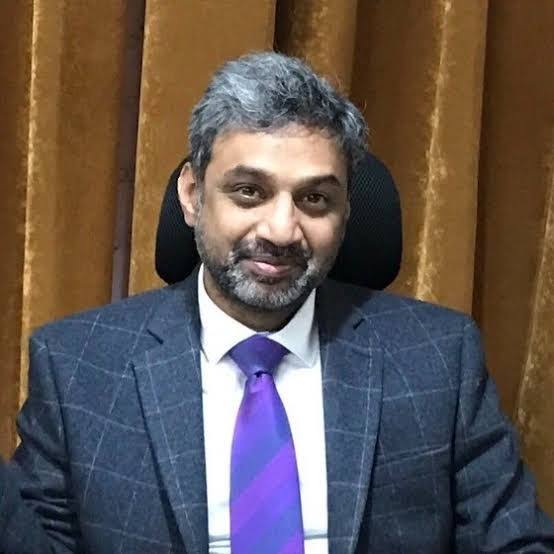
It is against this backdrop that the meeting held on 8 January 2026 between a delegation of the Patwar Association and the Financial Commissioner Revenue (FCR) assumes historic significance. This was not a routine official interaction. It was a moment of recognition—when the voice of the grassroots finally reached the highest level of revenue administration.
A Meeting that Signalled Change
The delegation of the All Jammu & Kashmir Patwar Association (AJKPA), led by its Apex President Shri Sofi Ghulam Mohammad, and comprising senior representatives from across the Union Territory, met the Hon’ble FCR at his own call for a detailed and structured discussion on long-pending grievances, legitimate demands, and institutional challenges confronting the Patwar fraternity.
What emerged was more than dialogue. It was a clear signal that governance cannot be built on the broken backs of its field staff.
The Patwari: The Most Overworked Public Servant in J&K
To understand the gravity of the issues raised, one must first understand who a Patwari is today.
In Jammu & Kashmir, the Patwari is not merely a record keeper. He is:
-
Custodian of land records
-
Backbone of revenue administration
-
First point of contact for citizens
-
Frontline executor of digitisation
-
Bridge between the state and the citizen
Currently, a Patwari handles:
-
46 online public services
-
Digitisation of Jamabandies
-
Q-GIS and ArcGIS mapping
-
SWAMITVA scheme implementation
-
GPRS-based land tracking
-
Online mutation systems
-
e-Office integration
-
Revenue court digitisation
-
Online certification platforms
No other department has undergone such a radical technological transformation in such a short time—and no other cadre has been expected to shoulder it without commensurate manpower, infrastructure, training, or financial recognition.
Today’s Patwari is expected to be a land law expert, GIS technician, surveyor, digital operator, disaster responder, census enumerator, election officer, and scheme implementation agent—all rolled into one.
This is not governance. This is institutional exploitation.
Rationalisation of Patwar Halqas: A Structural Necessity
One of the foremost demands raised before the Hon’ble FCR was the rationalisation and creation of Patwar Halqas.
Across Jammu & Kashmir, Patwar Halqas are often irrationally large, geographically hostile, and administratively unmanageable. In hilly, border, forest, and snowbound areas, a single Patwari may be responsible for dozens of villages and thousands of land parcels.
Digitisation has not reduced this burden—it has multiplied it.
The Association highlighted that e-Office File No. 210951, concerning census-based rationalisation, remains pending with the Chief Settlement Commissioner and Land Records (CSLR). Rationalisation is no longer a luxury; it is an administrative emergency.
The Hon’ble FCR’s acknowledgment of this reality reflects a rare understanding of governance from the ground up.
Restoring the Administrative Pyramid: Girdawar Qanungo Circles
Another critical demand was the creation of Girdawar Qanungo (GQ) circles.
Revenue administration is a pyramidal structure:
-
Patwari at the base
-
Girdawar Qanungo as supervisory layer
-
Tehsildar at the executive level
When the middle layer collapses, the entire structure weakens. Years of stagnation and vacancy in the GQ cadre have left Patwaris without supervision, mentoring, or quality control.
The Hon’ble FCR’s assurance that excess posts will be converted into GQ circles within the shortest possible timeframe marks an administrative revival, not merely a cadre reform.
Grade Pay: A Thirteen-Year Injustice
For over thirteen years, Patwaris have sought rectification of grade pay anomalies. Their demand is neither unreasonable nor unprecedented.
When Panchayat Secretaries received an upgrade from Level-2 to Level-4, it proved that policy intervention is possible where intent exists. Yet the Patwari—who manages land worth crores and whose records determine ownership, inheritance, compensation, and rehabilitation—remains stuck in outdated pay structures.
This is not just unfair; it is dangerous. An underpaid revenue system is a vulnerable revenue system.
The Hon’ble FCR’s assurance of full logistical support offers long-awaited hope. The onus now lies on the Finance Department to translate this assurance into action.
Technical Grade: Justice for the Digital Soldier
The digital transformation of the Revenue Department has been implemented not by consultants, but by Patwaris themselves.
They were not recruited as IT engineers.
They were not appointed as GIS experts.
They learned on the job—through trial, error, and responsibility.
Today, Patwaris operate ArcGIS, Q-GIS, drone surveys, GPRS mapping, and mobile data platforms. Yet there is no Technical Grade to recognise this reality.
If a Patwari is expected to function as a digital land governance officer, he must be treated as one. The Hon’ble FCR’s acceptance of this logic is a defining moment for the cadre.
Gadgets: Tools of Governance, Not Luxury
Digitisation without devices is like governance without laws.
Expecting Patwaris to run advanced GIS and satellite systems on outdated gadgets undermines the entire digital ecosystem. The assurance to provide sustainable, high-capacity devices reflects practical and forward-looking leadership.
Governance needs tools—and those tools must match the task.
A Financial Commissioner Who Listened
At a time when bureaucratic apathy often prevails, the Hon’ble Financial Commissioner Revenue demonstrated what administrative leadership truly means.
He listened.
He engaged.
He acknowledged.
He committed.
His words recognising Patwaris as resilient and dedicated restored dignity to a cadre long treated as expendable.
Leadership That Made It Possible
This engagement was made possible by the disciplined and visionary leadership of AJKPA under:
-
Sofi Ghulam Mohammad (Apex President)
-
Iftikar Ahmad Mirza (Vice President, UT)
-
Peer Shafat Rasool (Vice President, UT)
-
Robinder Kumar (Treasurer)
-
Rohit Singh (Secretary, Jammu)
-
Arfan Ahmad Mir (District President, Reasi)
-
Altaf Ahmad (District President, Budgam)
-
Amandeep Singh (District Secretary, Jammu)