

Ziraat Times Spotlight Report
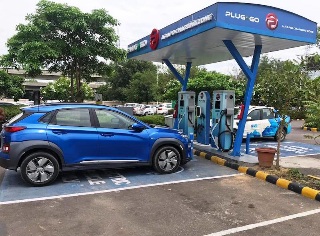
New Delhi: The Government of India has released comprehensive guidelines for the installation and operation of Electric Vehicle (EV) charging infrastructure, making it easier for public and private entities to set up EV charging stations across the country.
The Ministry of Power’s “Guidelines for Installation and Operation of Electric Vehicle Charging Infrastructure 2024”, notified on September 17, 2024, lay down standards for creating a connected and interoperable national EV charging network, including facilities for battery swapping and charging.
EV Charging Stations Now an Unlicensed Activity
According to the guidelines, setting up EV charging stations (EVCS) is fully unlicensed, allowing any institution, company, EV manufacturer or private entity to establish, operate and maintain EV chargers anywhere in India.
₹2,000 Crore Allocation Under PM E-DRIVE
To accelerate the rollout of public charging infrastructure, the Ministry of Heavy Industries has earmarked ₹2,000 crore under the PM E-DRIVE Scheme. The funding will support the installation of EV charging stations in cities and along highways.
Eligible entities—Government ministries, CPSEs, autonomous bodies, State/UT governments and their PSUs—can seek subsidies for setting up public charging stations. These bodies will appoint nodal agencies to aggregate demand and oversee implementation.
Category-Wise Subsidy Structure
The PM E-DRIVE Scheme offers capital subsidies based on the type of location:
-
Category A:
Government offices, hospitals, residential complexes, educational institutions, CPSEs
100% subsidy on upstream infrastructure and EVSE; chargers must be accessible to the public. -
Category B:
Railway stations, airports, PSU fuel pumps, bus stations, metro stations, municipal parking, ports, NHAI toll plazas and wayside amenities
80% subsidy on infrastructure and 70% on EVSE. -
Category C:
Market complexes, malls, streets, private commercial zones, city and highway locations not covered under A or B
80% subsidy on infrastructure. -
Category D:
Battery Swapping Stations (BSS) and Battery Charging Stations (BCS)
80% subsidy on infrastructure.