New Delhi: The Government of India has put in place a comprehensive regulatory framework to ensure ethical digital media practices and protect children from age-inappropriate content on over-the-top (OTT) platforms, while safeguarding freedom of speech guaranteed under Article 19(1) of the Constitution.
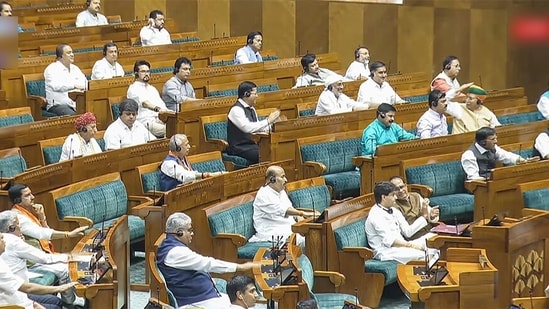
In a reply in the Rajya Sabha, Minister of State for Information and Broadcasting and Parliamentary Affairs Dr. L. Murugan said the Information Technology (Intermediary Guidelines and Digital Media Ethics Code) Rules, 2021, notified under the Information Technology Act, 2000, provide clear obligations for digital publishers and intermediaries to prevent the spread of unlawful, misleading and harmful content.
Age-Based Classification and Child Safeguards
Dr. Murugan said Part III of the IT Rules lays down a Code of Ethics for publishers of online curated content, requiring them to ensure that content prohibited by law is not transmitted. The Code mandates age-based classification of content into five categories and obligates OTT platforms to put in place adequate safeguards to restrict children’s access to age-inappropriate material.
Code of Ethics for News and Digital Media
The IT Rules also prescribe a Code of Ethics for publishers of news and current affairs, including adherence to the Programme Code under the Cable Television Networks Act, 1995, and the Norms of Journalistic Conduct under the Press Council Act, 1978. These norms prohibit dissemination of inaccurate, misleading or false content.
To ensure compliance, a three-tier grievance redressal mechanism has been established, comprising self-regulation by publishers at Level I, oversight by self-regulating bodies at Level II, and a Central Government oversight mechanism at Level III. The Minister said the self-regulatory structure at the first two levels preserves the spirit of freedom of speech and expression.
Obligations on Intermediaries and Fact-Checking
Under Part II of the IT Rules, administered by the Ministry of Electronics and Information Technology, intermediaries such as social media platforms are required to prevent the dissemination of content that is patently false, untrue or misleading. The Government also operates a Fact Check Unit under the Press Information Bureau, set up in 2019, to verify and counter fake news related to the Central Government by publishing accurate information on official platforms.
The Minister added that under Section 69A of the IT Act, 2000, the Government issues blocking orders against websites, social media handles or posts in the interest of national security, sovereignty, public order and related concerns.
Support for Creator Economy
Highlighting measures to support India’s growing creator economy, Dr. Murugan said initiatives such as the World Audio Visual and Entertainment Summit (WAVES) 2025, Create in India Challenges and WAVES Bazaar have helped promote local cultural representation and provided creators with industry-linked training and global exposure. Platforms like WAVES OTT, supported by Prasar Bharati, offer Indian creators opportunities to publish, promote and monetise authentic regional content.
The Minister was responding to a question raised by Dr. Kanimozhi NVN Somu in the Upper House.