Panaji, Nov 26 — The evolving landscape of film criticism in a digital-first world took centre stage on Day 7 of the 56th International Film Festival of India (IFFI), where leading film critics from India and abroad debated the shifting role of reviewers in shaping cinematic culture.
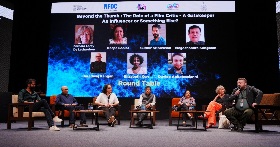
The roundtable, titled “Beyond the Thumb – The Role of a Film Critic: A Gatekeeper, an Influencer or Something Else?”, brought together veteran voices from the field and explored how criticism is transforming amid rising social media influence, fragmented content platforms and the entry of AI-generated reviews. The discussion was held alongside ongoing screenings at the festival.
The session was moderated by Davide Abbatescianni, with panellists Barbara Lorey de Lacharrière, Deepa Gahlot, Sudhir Srinivasan, Meghachandra Kongbam, Elizabeth Kerr and Baradwaj Rangan, each offering a distinctive perspective on the opportunities and challenges confronting film criticism today.
Critics Confront the Digital Disruption
Opening the session, Abbatescianni said that while big-budget commercial cinema no longer depends on critics, independent and debut filmmakers continue to rely heavily on thoughtful reviews. With more than 150,000 online publications now producing content, he voiced concern about diminishing editorial oversight and warned that increasing use of AI may place the field on a “slippery slope.”
French critic Barbara Lorey de Lacharrière described critics as essential mediators between filmmakers and audiences, particularly for niche and lesser-known cinema. She pointed to shrinking print space and the rise of self-promotion as key challenges, noting that research in France shows 80% of cinema critics cannot rely solely on criticism for income.
Fandom vs. Criticism
Indian critic Deepa Gahlot argued that the “democratization” of online reviewing has also invited dilution. She said much online commentary is driven by fandom, paid ratings and a lack of deeper engagement with cinema. The shift to OTT viewing, she added, has weakened appreciation for craft and technique.
Countering concerns of deterioration, Sudhir Srinivasan said digital platforms have created a more democratic ecosystem. Earlier, he noted, a few media outlets controlled critical discourse, whereas today “a thousand little voices” offer diverse opinions. While he now produces short video reviews, he said his critical approach remains unchanged.
Need to Strengthen Film Culture
Representing the International Federation of Film Critics (FIPRESCI), Meghachandra Kongbam stressed the importance of nurturing film culture and enhancing public understanding of cinema. He said independent filmmakers still depend on critics for visibility and suggested that with film now recognized as part of the creative economy, structured national-level discussions on criticism would be valuable.
Finding a Critical Voice
Elizabeth Kerr highlighted the need for critics to establish a strong personal voice amid varied editorial demands across platforms. She expressed concern about Key Opinion Leaders (KOLs) hired by distributors who often promote only positive views, calling it a major ethical issue in the current landscape.
Speed vs. Depth in the Social Media Age
Veteran critic Baradwaj Rangan spoke about navigating the pressures of the digital era, where instant reactions have replaced reflective Sunday review columns. While participatory culture has expanded the field, he acknowledged that critics now must “game” public reactions and contend with audiences—especially Gen Z—gravitating toward rapid, sensational formats.
Criticism Still Central to Cinema
Despite shifting formats and audience expectations, the panellists agreed that the core mission of film criticism—deep engagement with the medium—remains indispensable for both audiences and filmmakers. The roundtable reaffirmed that thoughtful criticism retains an essential place in sustaining a healthy film ecosystem.
About IFFI
Established in 1952, the International Film Festival of India is South Asia’s oldest and largest film festival. Jointly organised by the National Film Development Corporation (NFDC) under the Ministry of Information & Broadcasting and the Entertainment Society of Goa (ESG), the festival showcases global cinema, restored classics, masterclasses, competitions and the energetic Film Bazaar. The 56th edition runs from November 20–28 across venues in Goa.


Comments are closed.