India to Set Up First Integrated REPM Production Facilities; Move Aims to Reduce Imports, Support EV & Renewable Energy Sectors
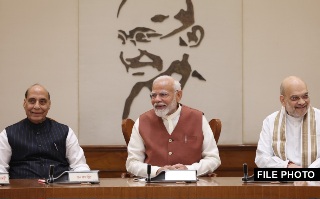
New Delhi, Nov 26 — The Union Cabinet, chaired by Prime Minister Narendra Modi, on Wednesday approved a ₹7,280-crore scheme to promote domestic manufacturing of sintered Rare Earth Permanent Magnets (REPM), a critical industrial input used across electric mobility, renewable energy, electronics, aerospace, and defence.
The initiative marks India’s first major push to build an integrated ecosystem for rare earth magnets, which are currently imported almost entirely. The government said the move will strengthen supply-chain security, advance the Atmanirbhar Bharat mission, and support the country’s Net Zero 2070 target.
Under the scheme, India will set up 6,000 metric tonnes per annum (MTPA) of REPM manufacturing capacity. The facilities will cover the entire value chain—conversion of rare earth oxides to metals, metals to alloys, and finally alloys to finished magnets.
Demand for REPMs is projected to double between 2025 and 2030 due to rapid expansion in electric vehicles, renewable energy technologies such as wind turbines, industrial automation, and electronic devices.
₹7,280 Crore Outlay, 5 Beneficiaries
The scheme will offer:
• ₹6,450 crore in sales-linked incentives over five years
• ₹750 crore in capital subsidy to support the creation of the manufacturing capacity
The 6,000-MTPA production capacity will be allocated to five beneficiaries through a global competitive bidding process, with each receiving up to 1,200 MTPA.
The scheme will run for seven years, comprising a two-year gestation period to set up facilities followed by five years of incentive disbursement.
Boost to Strategic Sectors
REPMs are among the strongest permanent magnets available and are essential in:
• Electric vehicle motors
• Wind energy systems
• Aerospace and defence platforms
• Robotics and industrial machinery
• Consumer electronics
Currently, India’s dependence on imports exposes these sectors to supply vulnerabilities. Establishing domestic production is expected to generate employment, reduce import reliance, and enhance India’s competitiveness in the global magnet market.
The government described the initiative as a “landmark step” toward building a technologically advanced, self-reliant industrial base. Officials said the scheme aligns with India’s long-term vision of becoming a global manufacturing hub and meeting its climate commitments.
The detailed guidelines and bidding process will be notified separately.