Farmers, traders suffer huge losses as Torkham and Chaman crossings remain sealed amid escalating tensions; Afghanistan eyes Iran’s Chabahar port as alternative
Srinagar: Trade between Pakistan and Afghanistan has come to a grinding halt for nearly a week following the closure of the Torkham and Chaman border crossings following border skirmishes between the two countries.
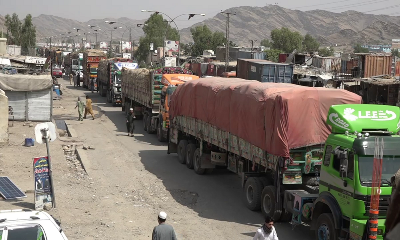
The shutdown has left thousands of freight trucks stranded, dealing a major blow to cross-border commerce and crippling the agricultural economy on both sides, Afghanistan’s Tolo News reported.
In FY 25, Pakistan’s bilateral trade with Afghanistan was about US$ 2 billion. Within that, Pakistan’s exports to Afghanistan were reported as US$ 1.39 billion, and imports from Afghanistan at US$ 612.5 million.
The border closures, enforced since October 10, have paralyzed key supply chains that carry fruits, vegetables, construction materials and consumer goods between the two neighbours. The Directorate General of Transit Trade in Pakistan confirmed that over 6,000 trucks are stranded across checkpoints at Torkham, Chaman, Jalalabad, Peshawar, and Kabul, severely disrupting trade flows The Dawn said.
A notification issued by the Directorate, dated October 15, stated that transit vehicles equipped with RFID seals and GPS tracking devices under the new monitoring system were unable to move due to congestion and security concerns. “To avoid overcrowding at terminals and to ensure the safety of bonded goods, transit processing has been temporarily halted until border operations normalize,” the notification said.
Farmers and traders count heavy losses
The most severe impact has been felt by Afghan farmers and exporters whose perishable goods — especially grapes, onions, and potatoes — have been rotting in stranded trucks or sold at throwaway prices in domestic markets.
“Our main problem is that all our goods have been stopped along the route without notice, and they are rotting,” said Mohammad Farooq Ahmadi, a trader based in Nangarhar. “We are selling whatever is left at half price just to cut our losses.”
Another exporter, Mashooq Habib, said nearly 1,000 trucks carrying fruits and vegetables are stuck at Torkham alone. “If the route is not reopened soon, all our produce will rot,” he was quoted by Tolo News as saying, urging both governments to immediately restore trade.
Local markets in eastern Afghanistan have been flooded with unsold fresh produce, causing prices to collapse sharply. Farmers fear the losses could run into millions of dollars if the suspension continues for another week. “We are being forced to dump food while our families go hungry,” lamented one farmer in Jalalabad.
The Afghanistan–Pakistan Joint Chamber of Commerce also raised alarm over the growing economic damage, warning of a potential domestic price hike for imported goods due to disrupted supply chains. “The closure has broken the balance of supply and demand,” said Khan Jan Alokozay, the chamber’s chairman. “If this continues, market prices will soar and small traders will go bankrupt.”
Shift toward Iran’s Chabahar Port?
Amid the ongoing blockade, an Iran Observer report suggests Afghan officials have opened talks with Iran to use the Chabahar port as an alternative export route for agricultural and industrial goods. The move, if realized, could reduce Afghanistan’s trade through Pakistan’s ports of Karachi and Gwadar, signaling a potential shift in regional trade alignments.
Analysts say the prolonged suspension risks undermining years of transit cooperation between the two countries and could accelerate Kabul’s pivot toward alternative corridors through Iran and Central Asia.
Economic tepercussions
Official data shows that Pakistan’s exports to Afghanistan surged by nearly 39 percent to $773.89 million in FY2025 from $558.03 million the previous year, underscoring the importance of the trade corridor. However, recurring disruptions — from border skirmishes to internet outages — have repeatedly shaken business confidence.
The Pakistan-Afghanistan border is one of South Asia’s most vital overland trade arteries, handling thousands of tons of goods daily. With both sides heavily dependent on the corridor, prolonged closure threatens not just agricultural livelihoods but also inflation stability and food security across the region.


Comments are closed.