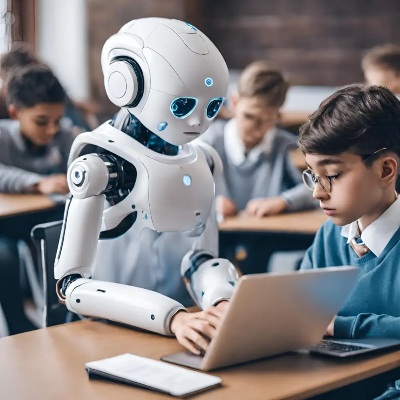
New Delhi: The Ministry of Education has announced that Artificial Intelligence (AI) and Computational Thinking (CT) will soon become a core part of India’s school curriculum, starting from Class 3 onwards. The initiative, aligned with the National Education Policy (NEP) 2020 and the National Curriculum Framework for School Education (NCF-SE) 2023, aims to prepare students for a technology-driven future.
The new curriculum will be introduced from the academic session 2026–27 and is being developed through an extensive consultative process involving CBSE, NCERT, KVS, NVS, and representatives from States and Union Territories.
At a stakeholder consultation held on October 29, Sanjay Kumar, Secretary, Department of School Education & Literacy (DoSE&L), emphasized that AI should be treated as a “basic universal skill”—one that helps students understand and interact with “The World Around Us.”
He said the goal is to make AI education inclusive, broad-based, and rooted in India’s educational context, while ensuring that it encourages creativity and ethical use of technology. “Every child’s distinct potential is our priority,” he noted, stressing that policymakers must continually re-evaluate educational standards in line with changing needs.
Curriculum development and implementation
The Central Board of Secondary Education (CBSE) has constituted an expert committee chaired by Prof. Karthik Raman of IIT Madras to develop the AI and CT curriculum. The framework will integrate both conceptual learning and practical problem-solving skills, gradually introducing students to how AI can be used for public good.
The Ministry has also announced a timeline for teacher training and resource development. Training modules under the NISHTHA platform and video-based digital learning resources will be prepared to support teachers in implementing the curriculum effectively.
A Coordination Committee comprising NCERT and CBSE representatives under NCF-SE will oversee curriculum structuring and ensure quality assurance.
Shri Kumar noted the importance of drawing lessons from international models while tailoring the curriculum to India’s specific educational and social needs. “It is good to have cross-national analysis, but it needs to be specific to our context,” he said.
Prachi Pandey, Joint Secretary (I&T), urged all agencies to adhere to the development timelines to ensure the curriculum and associated materials are ready by December 2025.


Comments are closed.