

Ziraat Times News Desk
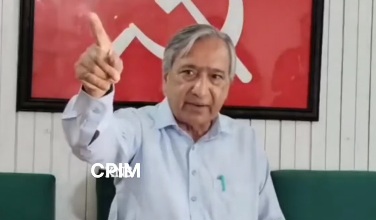
Srinagar: Chairman of the Environment Committee of the J&K Legislative Assembly, M.Y. Tarigami, on Friday said that the recent spell of floods in Jammu and Kashmir has caused “extremely devastating” losses to both property and human lives, underlining once again the urgent need for systemic reforms in disaster preparedness and environmental governance.
Addressing a press conference in Srinagar, Tarigami said the floods have wreaked havoc not only in J&K but also across the Himalayan belt, including Uttarakhand, Himachal Pradesh, and Punjab, leaving thousands of villages and towns devastated. “We express our deepest solidarity with all those who have lost their dear ones and also those who have lost their properties during this deluge. This is an immense human tragedy of big proportions,” he said.
The veteran legislator pointed out that the 2014 floods were a warning, but inadequate lessons were drawn from that disaster. “Had we acted on those lessons, the scale of the 2025 devastations could have been minimised,” he noted.
Criticism of Environmental Governance
Tarigami criticised the poor implementation of Environmental Impact Assessments (EIA), which are mandatory for projects in fragile regions. “In most cases, EIA is either violated or compromised. Our track record remains minimal,” he said.
He also took aim at the Union Government for not setting up a dedicated Climate Disaster Relief Fund, which could provide non-repayable aid to states during emergencies. “With more and more states facing the vagaries of nature, the creation of such a fund needs immediate attention,” he stressed.
Key Recommendations
Tarigami outlined urgent measures to mitigate future disasters:
-
Restoration of River Jhelum’s Capacity: Once capable of handling 63,000 cusecs in 1962, the river’s carrying capacity has halved due to heavy siltation. He called for a massive, ecologically friendly dredging operation of the Jhelum, its tributaries, distributaries, and receiving basins to reclaim lost volume and prevent future flooding across Jammu plains, the Kashmir valley, Chenab, and Pir Panjal valleys.
-
Third-Party Safety Audit: He urged for a neutral, high-level safety audit of all public infrastructure, including dams and bridges, to ensure accountability and fix responsibility where lapses are found.