SRINAGAR: The Jammu & Kashmir and Ladakh High Court has directed the Divisional Commissioner, Kashmir, to submit an Action Taken Report (ATR) by October 28 on the recommendations made by the Environmental Policy Group (EPG) in an ongoing Public Interest Litigation (PIL) concerning flood prevention in the Valley.
Welcoming the move, EPG Convenor Faiz Ahmad Bakshi described the court’s intervention as a “significant step towards ensuring accountability and scientific scrutiny” of works carried out under flood management and river protection projects in Kashmir.
Bakshi said the Valley remains highly vulnerable to floods, and stressed the need for sustainable measures to protect lives, property, and ecology. He recalled that on September 7, the EPG had submitted a comprehensive report through amicus curiae Advocate Nadeem Qadri, assisted by EPG legal counsel Advocate Shafqat Nazir, before the Division Bench headed by the Chief Justice. The report, prepared after consultations with experts and field assessments, highlights structural gaps, ecological degradation, and governance shortfalls that persist more than a decade after the 2014 deluge.
The EPG report calls for an independent third-party evaluation of all works executed under flood management projects, noting that large sums of public money have been spent with questionable outcomes, as highlighted by earlier government audits. The Group also sought clarity on the timelines for Phases I, II, and III of the flood recovery project, and transparency regarding improvements to the Flood Spill Channel (FSC).
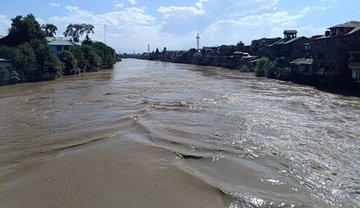
“The present flow-carrying capacity of the River Jhelum, its tributaries, and the FSC must be made public, along with details of the funds spent, so that people are assured of real preparedness,” the report stated. It further questioned what scale of probable floods the current river system could safely handle.
On pollution, the Group said the unchecked release of untreated sewage and effluents into the Jhelum and its tributaries was an “ecological crime,” demanding strict enforcement of Central and J&K Pollution Control Board standards. It also called for the revival of traditional networks of streams, wetlands, and lakes that historically absorbed floodwaters.
The EPG placed particular emphasis on the conservation of wetlands such as Hokersar, Khushalsar, Hygam, Mirgund, and Pampore, urging full implementation and funding of the government-approved Integrated Management Action Plan for Wetland Conservation (2022–2027).
Bakshi lauded the court for its proactive role, calling judicial intervention “a ray of hope” for the Valley. “Floods are not merely natural disasters but aggravated man-made crises born of neglect, encroachment, and short-sighted planning. It is now imperative for the administration to act decisively, transparently, and in consultation with environmental experts,” he said.
The EPG reaffirmed its commitment to support efforts aimed at safeguarding Kashmir’s environment and expressed confidence that the court’s directions would lead to time-bound and effective action.


Comments are closed.