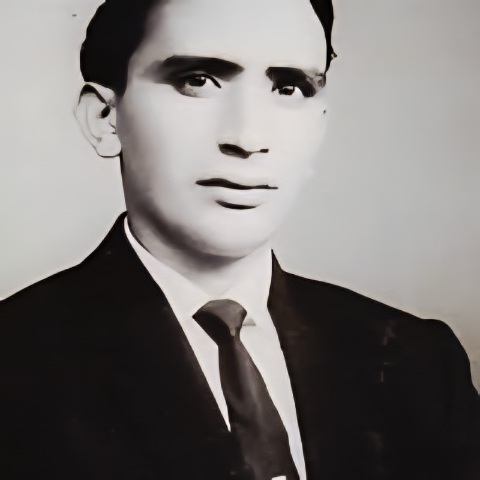
By: Er. Mohammad Ashraf Fazili
(Former Chief Engineer)
Of late it has been recognized that all modes of surface transport in the country viz. rail, road and water have equal importance and each of these is to be considered as part of an integrated transport system. One of the main advantages in favour of inland water transport is that most of the waterways are gifts of nature and can be used for navigation with a minimum investment.
The frequent traffic jams on our roads takes toll of our time, energy and challenges our patience causing lot of mental tension particularly when there is an emergency like carrying a critical patient to the hospital or to carry a flight on the airport.
Besides we find the roads occupied by the parked vehicles on both sides of the internal roads of the city leaving little space for the moving traffic. This is due to the absence of the required parking spaces for which a few multi storey parking need to be built in the city for which the acquisition of land and structures may be needed and should have formed an important item for the Smart City Project. Hence an alternative mode of transport on the waterways like River Jhelum, Dal Lake, and other lakes of the valley could relieve lot of pressure of traffic on our roads.
A hundred year back most of the Internal Commerce of Kashmir depended on the Jhelum. Before the construction of motor-able roads between Srinagar and Khanabal and also between Srinagar and Baramulla it was the Jhelum which was the great highway of passenger and goods traffic up and down the valley. Besides the river and its tributaries have been the main source of irrigation of the valley, thus owing its lush greenery to the river waters. The length from the source to Baramulla is 240 Kms while as the distance from Khannabal to Baramulla is 163 Kms. In fact Srinagar was known as Venice of the East as it was located on the banks of River Jhelum and brick-lined Nalla Mar, with its crisscrossing branch channels spread like spiders web on the right bank of the river Jhelum that got filled up due to pressure of urbanization and arrival of road transport.
The Study Group set up by the Govt. Of India in December 1953 recommended that Inland Water Transport should be allotted its proper place on the future plans of the country. The Committee on Transport Policy and Co-ordination which was recommended in July 1964 (originally constituted in July 1959) recommended that development of inland water transport should be viewed in each region in the context of integrated regional transport plan within the framework of the transport plan of the country as a whole. They also recommended that to ensure development of waterways potential, where natural conditions were favourable, it was necessary to work out long-term plans, keeping in view a perspective of at least 10 to 15 years.
Jhelum River may serve as important means of transport in Kashmir Valley especially in and around Srinagar city. With the growing agricultural and fruits production and congestion in traffic, road network is inadequate to meet the existing traffic requirement. It is a well established fact that inland water transport is the cheapest mode of transport for certain kind of traffic both over long and short distance specially between places located on the waterfront. Inland Water Transport (IWT) being more cost effective than other modes of surface transport can help in reducing the transport cost and stabilizing the prices of commodities at a reasonable level.
Development of waterway is less expensive as compared to construction of new roads and railways. The later requires extensive land acquisition with consequent problems of rehabilitation and environment while in the case of IWT the track is generally provided by nature.
Development of net work of new roads and rail in Srinagar urban area has to go a long way and is costly also. The increasing problem of passenger and cargo movement within Greater Srinagar area has been causing concern to the Government. Accordingly in Dec. 1988, the Planning Department of Jammu & Kashmir appointed RITES to prepare an integrated multi-modal transport plan to cater for its growing transport to demand up to the year 2021 and the final report on the same was submitted to the State Government in Jan. 1992.
Considering the traffic problems in Srinagar urban area the proposal for DPR for development of inland water transport on river Jhelum from Pampore to Chattabal in Srinagar city has been attracting the attention of Government of Jammu & Kashmir. The Commissioner & Secretary, Housing & Urban Development Department, Government of J&K invited RITES to submit a proposal for Detailed Project Report (DPR) for development of IWT system on River Jhelum in Srinagar city and awarded this project vide a letter dated 25.07. 1997.
After considering the Objectives, past studies on river Jhelum for development of IWT, potential of IWT in Kashmir Valley, Scope of Services, a DPR was prepared under my supervision when as Superintending Engineer Srinagar Development Authority I was designated as the Project Director IWT.
The DPR included 01. Introduction, 02. Traffic estimation and projection, 03. Hydro-graphic Survey 04. Waterway 05. Terminals 06. Vessel 07. Organization set up 08. Environmental Impact Assessment 09. Implementation Schedule: the project was proposed to be executed in 3 phases commissioning from the year 1999-2000 and implementation schedule to be worked out accordingly. 10. Project Apprisal 11. Conclusion and Recommendations.
The passenger vessel was designed by Veshakapatnam Shipping Company for 48 sitting and 58 standing passengers besides a special vessel for tourists to cater only 30 passengers. In earlier days when water transport was the only mode of transport, all almost all the shops selling the Kashmir arts & were located on either bank of the River Jhelum, besides most of the historic sites are situated within the walking distance from the river banks. Hence the IWT on River Jhelum would revive the business activities on the either banks of the River.
Based on the above study the following recommendations were made:
A) The project is recommended for immediate implementation, considering its tremendous potential of socioeconomic benefits, as the economic rates of return are as per the accepted norms.
B) The possibility of private investment for the development/operation of IWT system may be explored in detail to reduce the financial burden of the Govt. Of J&K. However if all the operations are obtained by the Government returns would be highest.
C) It is recommended that the techno-economic feasibility study of development of IWT in River Jhelum from Anantnag to Baramulla may be carried out at the earliest as it is expected to improve the viability of the project further.
For implementation of the Project the Govt. Directed to hand over the DPR to the LAWDA who later on transferred the same to the IFC Department and it is reported to be gathering dust since then on the shelves there. Except erecting signboards at the terminal sites no progress has been made in implementing the project. Every year we hear that the IWT on River Jhelum shall be taken in hand but there is no action observed on ground, though we continue to face increasing traffic jams in the city.
However recently there has been a good news in the media that the J&K govt. is actively working to develop inland water transport on the Jhelum river, with the aim of utilizing its potential for both transportation and tourism. The project is currently awaiting approval from the central govt. and involves developing infrastructure like ghats and fairways.
The project focuses on developing the Jhelum river from Pampore to Chattabal for inland water transport.
The infrastructure development includes identifying and establishing boarding and d-boarding points along the river banks and developing navigational fairways by dredging where necessary.
The J&K Govt. has submitted a detailed project report (DPR) to the Central Govt. for approval and the project is estimated to cost Rs 323 crore at the prevailing rates.
The Inland Waterways Authority of India (IWAI) i has signed an MoU with the J&K Govt. to develop river navigation infrastructure, including the Jhelum as part of three national waterways in the UT.
IWAI is responsible for setting up floating jetties, developing fairways, providing night navigational aids and conducting hydro graphic surveys.
So far IWAI has established an office in Srinagar and is working with local authorities to expedite the project. They have also awarded contracts for seven floating concrete jetties.
IWAI has conducted preliminary surveys to assess the feasibility of river stretches for water transport, identifying viable segments on the Jhelum, Chenab and Ravi rivers.
The project is also seen as a way to boost echo-tourism and provide a new mode of leisure and budget tourism on the rivers.
The j&k govt. Is also exploring the use of electric powered cruise vessels for passenger transport.
Water transport was historically significant in Kashmir and the project aims to revive this mode of transportation and its economic benefits.
There has been apprehension if the vessels can run in winter when water level of the river is low. For this the experts say that even one meter depth is sufficient to provide for the drag of the vessel, which can be easily maintained by the authorities.
It is expected that the project will be completed in the stipulated time and will provide an alternative mode of transport reducing pressure on the city roads besides boost the tourism by providing pleasure rides and revive shopping centers on either banks of the river and also provide access to the historical sites mostly located on and near the river banks as initially the city of Srinagar and towns like Anantnag, Awantipora, Bijbehara, Pampore, Baramulla were developed on the either banks of the river Jhelum.