

Ziraat Times Team Report
Srinagar — In a striking observation that highlights the escalating environmental emergency in India’s hill states, the Supreme Court has warned that if current ecological degradation continues unchecked, Himachal Pradesh could “vanish from the map of the country.” The warning, issued during a hearing on a land-use dispute, has far-reaching implications, not just for Himachal, but potentially for Jammu & Kashmir as well.
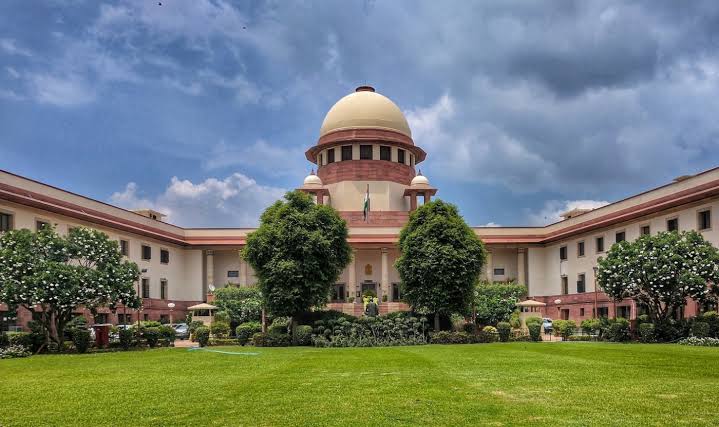
The remark came from a Bench comprising Justices JB Pardiwala and R Mahadevan while dismissing a petition by M/s Pristine Hotels and Resorts Pvt. Ltd. challenging a June 2025 notification that declared Shri Tara Mata Hill a green area, thereby banning fresh private construction.
In upholding the State’s notification, the Court went beyond the immediate case to initiate a suo motu public interest litigation (PIL) on Himachal Pradesh’s worsening environmental condition—flagging it as a national concern.
“If things proceed the way they are, then the day is not far when the entire State of Himachal Pradesh may vanish into thin air from the map of the country,” the Court stated bluntly.
Blame on human activity, not nature
While acknowledging nature’s fury in recent years—floods, landslides, and glacier melts—the Court held humans primarily responsible. Citing unchecked construction, road widening, hydropower projects, deforestation, and unregulated tourism, the Bench noted a “serious ecological imbalance” in the state.
“It is not right to blame nature alone. Humans are responsible for continuous landslides, road collapses, and vanishing rivers,” the Bench said, warning that vital river systems like the Sutlej are being reduced to trickles due to reckless damming and water diversion.
Projects such as Bhakra and Nathpa Jhakri, the Court noted, have been executed without comprehensive geological or cumulative environmental assessments, destabilising vast Himalayan ecosystems.
Climate change, tourism, and garbage: A deadly mix
Rising temperatures, erratic weather, glacier retreat, and prolonged dry spells were all cited as worsening factors. The Court pointed to “unseasonal rainfall” and “prolonged dry spells” affecting agriculture, water availability, and slope stability.
Religious and eco-tourism, once seen as economic boons, have now turned into environmental stressors. Popular destinations like Rohtang and Kullu are grappling with illegal construction, garbage dumping, and erosion of fragile biodiversity.
The State’s failure to implement solid waste management or curb illegal tree-felling was singled out as a major concern, particularly in hill towns and along trekking routes.
Revenue vs. sustainability: SC pulls up state
The Bench criticised the Himachal Pradesh government for allegedly placing short-term revenue generation over long-term environmental sustainability, urging both the State and Union Government to rethink their development models.
“Revenue cannot be earned at the cost of environment and ecology,” the Court warned, calling for immediate corrective steps.
Comments are closed.