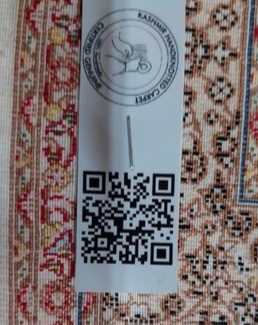
Srinagar: A delegation representing Kashmir’s handmade carpet industry, led by prominent businessman Sheikh Ashiq, has submitted an urgent representation to the Chief Minister of Jammu & Kashmir, seeking immediate government intervention to stop the sale of counterfeit carpets falsely marketed as authentic Kashmiri handmade products.
The delegation, which includes Sheikh Ashiq — Board Director of the Carpet Export Promotion Council (CEPC) and Indian Silk Export Promotion Council (ISEPC), and former President of the Kashmir Chamber of Commerce and Industry — highlighted the grave threat posed by machine-made carpets being passed off as traditional Kashmiri handmade ones in showrooms registered under the banners of “Handlooms,” “Heritage,” and “Arts & Crafts.”
The delegation also comprised Faiz Nissar, In-charge of CEPC’s Srinagar office; Firdous Ahmad and Fayaz Ahmad Wani of the Kashmir Carpet Cluster Development Organization (KCCDO); Ghulam Nabi Dar, Chairman of MEERAS Carpet Weavers Industrial Cooperative Ltd.; and Farooq Ahmad Shah, General Secretary of the Kashmir Carpet Manufacturers Association (KCMA).
According to the stakeholders, this misrepresentation is not only crippling the livelihoods of thousands of Kashmiri artisans but also eroding the global reputation of one of the Valley’s most revered traditional crafts. “Machine-made carpets, many of them imported, are being brazenly sold as ‘handmade Kashmiri’ carpets. This is an act of fraud that hurts both our economy and our heritage,” the delegation noted in its representation.
To curb this practice, the delegation has called for a strict government ban on the sale and display of machine-made carpets in registered handicraft outlets. They have demanded clear and mandatory signage certifying that only genuine handmade products are sold in such establishments.
The industry leaders also proposed the formation of a joint enforcement task force comprising government officials and industry stakeholders. This body, they suggested, would conduct regular inspections and take stringent action against violators of handicraft authenticity standards.
In addition, the delegation urged tighter regulation of imported carpets and the imposition of higher duties on foreign-made rugs—many of which, they claimed, are being falsely marketed as Kashmiri handmade carpets in major Indian cities such as Delhi, Jaipur, Mumbai, and Goa.
Speaking after the meeting, Sheikh Ashiq stated, “Our handmade carpets reflect the heart and soul of Kashmir’s culture. Allowing fraudulent carpets to be sold under our heritage’s name not only deceives loyal customers but devastates the very communities that dedicate their lives to keeping this craft alive. We appeal to the Government of Jammu & Kashmir for urgent, visible action to protect this invaluable legacy.”
The delegation warned that failure to act would result in irreversible damage to the region’s artisanal identity and cultural dignity. “This is more than an economic issue; it is a cultural emergency,” they said, urging swift policy measures to preserve the legacy of Kashmir’s handmade carpet sector and the livelihoods of the artisans behind it.