

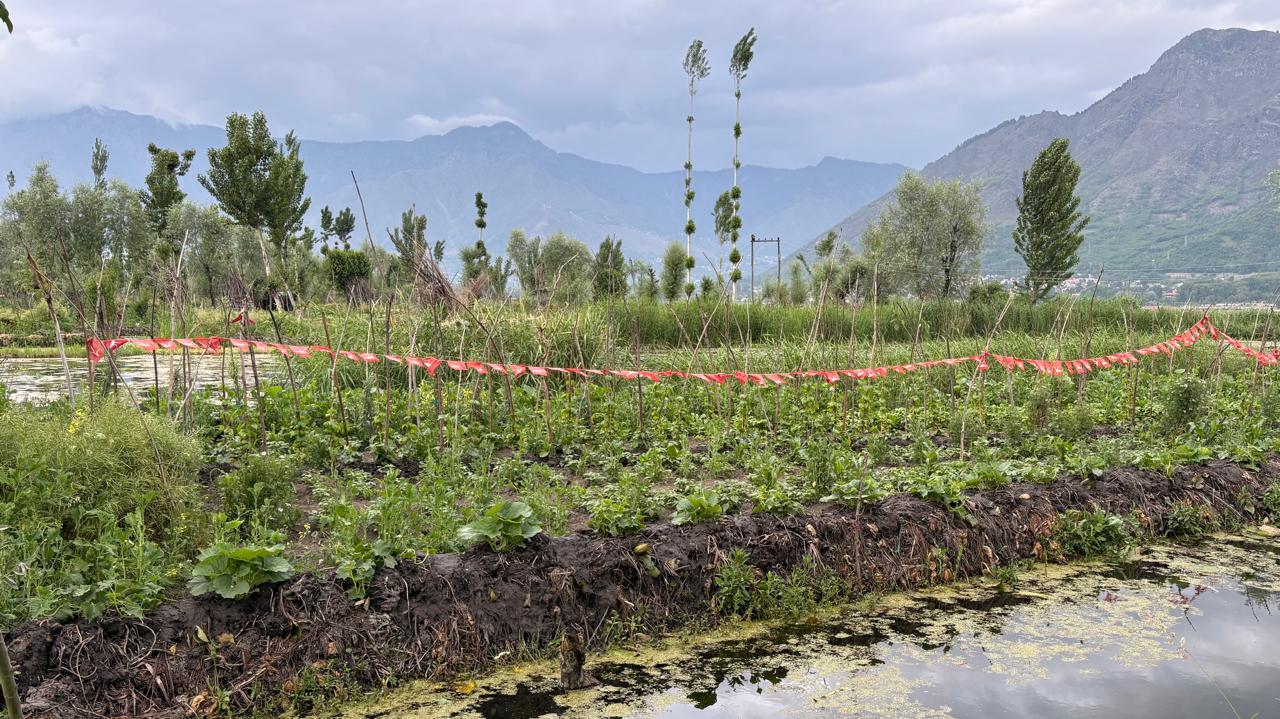
Don’t legalise Dal Lake  encroachment: EPG opposes Tanvir Sadiq’s Housing Bill

Advocacy group says Bill introduced by MLA Tanvir Sadiq could open the door to land filling and construction around fragile water bodies

Srinagar: The Environmental Policy Group (EPG) has opposed the Jammu & Kashmir Lakeside Residents’ Right to Eco-friendly Housing Bill, 2026, introduced in the Legislative Assembly by National Conference MLA Tanvir Sadiq, warning that the proposed legislation in its present form could create a precedent for legitimising encroachments, land filling and construction in and around fragile water bodies.

The Group said it recognised the need to ensure dignified living conditions and protect the legitimate interests of families who have historically lived around water bodies, but maintained that housing rights should not compromise the ecological integrity, carrying capacity and public character of lakes and wetlands.

“Dal Lake is not an ordinary residential settlement. It is a living ecological system, a natural flood buffer and one of Kashmir’s most important environmental assets,” the EPG said, adding that the answer to decades of administrative failure could not be to retrospectively legitimise activities that had contributed to the deterioration of the lake.

The Group cited findings of the Comptroller and Auditor General, which recorded that Dal Lake’s open-water area declined from 15.40 square kilometres in 2007 to 12.91 square kilometres in 2020, a reduction of 10.15 per cent.

The CAG audit also flagged encroachments, changes in land use, inadequate sewage management, incomplete sewer networks and weak monitoring as major concerns affecting the lake, the Group said.

“The Assembly must distinguish between protecting existing residents from arbitrary displacement and creating a legal framework that could facilitate expansion of habitation. These are two entirely different questions,” it said.

The EPG cautioned that provisions relating to repair, reconstruction or construction should not be interpreted as an unrestricted right to build within the lake or its ecologically sensitive areas. Any such activity, it said, should be subject to scientific assessment, clear demarcation of the water body, carrying-capacity studies and independent environmental scrutiny.

The Group also expressed concern over the possibility of land filling and reclamation for roads, residential structures or other infrastructure.

“Land filling in a water body is not development. It is permanent ecological alteration,” it said, warning that filling portions of a lake could compromise its water-holding capacity, natural drainage and ecological functions.

The EPG said the deterioration of Dal Lake could not be separated from the cumulative impact of illegal encroachments, conversion of water areas, untreated sewage and construction pressure. Any legislative intervention, it maintained, should address the causes of degradation rather than merely recognise the consequences of years of weak enforcement.

“Illegal encroachment cannot become legal merely because it has continued for years. If prolonged illegality becomes a basis for recognition, the law risks creating an incentive for future encroachment: occupy first, seek regularisation later,” the Group said.

It stressed the need to distinguish between repair of an existing lawful dwelling and construction of a new or expanded structure. No provision relating to housing rights, it said, should permit expansion of built-up areas into water channels, wetlands, flood channels, natural drainage systems or other environmentally sensitive areas.

The Group called for scientifically verified demarcation of Dal Lake, including its water spread, feeder channels, flood channels, buffer areas and ecologically sensitive zones. The boundaries, it said, should be placed in the public domain and periodically updated using satellite imagery and ground verification.

It also said sewage-treatment and waste-management infrastructure should precede any expansion or reconstruction of settlements, arguing that additional construction without adequate sewage treatment would increase the pollutant load entering the lake.

The EPG urged MLA Tanvir Sadiq and the government to consider the views of environmental scientists, wetland experts, hydrologists, urban planners, disaster-management experts and affected residents before taking the legislation forward.

“The intention to protect people from displacement is understandable and deserves consideration. But a humane housing policy cannot become an ecological liability. The government must protect both people and the water body, and neither objective should be pursued at the expense of the other,” it said.

The Group called for detailed environmental, legal and technical scrutiny of the proposed legislation before its passage.

“Dal Lake has already paid a heavy price for years of encroachment, pollution, land-use changes and regulatory failure. The Assembly must not create a framework under which the degradation of the lake becomes a fait accompli and then receives legislative protection. Conservation must remain the first principle governing every decision concerning a water body,” the EPG said.

LEAVE A REPLY

Please enter your comment!
Please enter your name here