A legislative resolution can sometimes become more than a formal document. It can become a message.
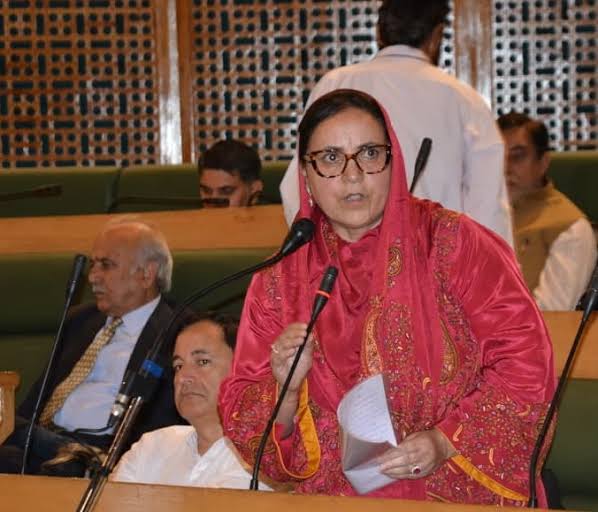
This week, when Education Minister Sakina Itoo brought the issue of the Teacher Eligibility Test (TET) before the Jammu & Kashmir Legislative Assembly, she did more than place a demand before the House. She placed the dignity, experience and anxiety of thousands of teachers at the centre of public debate.
In doing so, she spoke for a constituency that has spent decades educating and shaping others.
For years, teachers across Jammu and Kashmir have stood before blackboards, often under circumstances that few outside the classroom fully understand. They have taught through difficult winters, disruptions, uncertainty and long years of service. Generations of students have passed through their classrooms.
Many of those students went on to become doctors, engineers, civil servants, police officers and professionals.
The teachers stayed in the classroom, continuing to teach the next generation.
Now, for many of these teachers, the TET requirement has become a source of uncertainty.
More than a Test
The issue is legally complex, but its human dimension is remarkably simple.
The Supreme Court’s directions concerning TET for in-service teachers have created a new requirement for a section of serving teachers. The Government of Jammu and Kashmir has pursued the matter through the legal process and has filed a review petition before the Supreme Court.
At the same time, the issue has entered the legislative arena.
Sakina Itoo’s resolution seeks intervention with the Union Government regarding the relevant provisions of the Right of Children to Free and Compulsory Education Act and the regulatory framework governing TET, particularly in relation to teachers appointed before October 31, 2019.
But the minister’s argument has never been confined to a technical question of exemption.
Sakina Itoo has repeatedly described the matter as one of dignity.
A teacher who has spent decades educating children does not approach the question of professional competence in the same circumstances as someone entering the profession for the first time.
Their record is already visible in classrooms, in examination results, in the careers of their students and in the communities they have served.
Sakina Itoo’s Intervention
What matters about Sakina Itoo’s intervention is that the issue moved from concern to action.
The issue was raised publicly. The government pursued the judicial route. And then the Education Minister brought it before the elected House.
The matter has therefore moved on two institutional tracks: the courtroom and the legislature.
Promises in public life are ultimately judged by what follows them. On the TET issue, the minister’s public assurance was followed by a formal resolution before the legislature, alongside the government’s legal effort before the Supreme Court.
A Question of Respect
The TET debate raises a basic question: how does a society balance professional standards with respect for experience?
No serious education system can afford to compromise on the quality of teaching. TET exists within that larger objective.
But the experience of a teacher who has already spent decades inside the classroom cannot simply be separated from the question of professional competence.
The debate, therefore, is not necessarily between standards and teachers. It is about finding a fair balance between the two.
A teacher’s contribution cannot always be captured through an examination paper.
Sometimes it is found in the child who was encouraged to stay in school. Sometimes in the student who was the first in the family to enter college. Sometimes in the parent who still remembers a teacher decades after leaving the classroom.
These are not entries in a service book.
But they are part of the real record of a teacher.
The Assembly’s Message
The resolution has also acquired significance because it brought the issue into the collective space of the Legislative Assembly.
When the House debates the concerns of teachers, it signals that the issue goes beyond an administrative requirement. It concerns the lives and careers of thousands of people who have spent the most productive years of their lives educating Jammu and Kashmir.
The discussion also demonstrated that concerns surrounding teachers’ careers can transcend ordinary political divisions.
The question before the institutions is ultimately larger than any individual party.
From Teachers’ Day to the House
There is a certain symmetry to the episode.
On Teachers’ Day, Sakina Itoo had spoken about the TET issue and emphasised that the concern was not simply about the examination but about the dignity and wellbeing of teachers.
Days later, the issue found its place in the legislative process.
The concern therefore moved beyond a ceremonial Teachers’ Day message and into governance.
The Road Ahead
The resolution does not, by itself, amend a central law.
Nor can a legislative resolution determine the outcome of proceedings before the Supreme Court.
Those processes will follow their constitutional and legal course.
But democratic institutions are also about expressing the concerns of the people they represent.
The teachers of Jammu and Kashmir have now had that concern articulated in the Assembly and pursued through the judicial process.
For Sakina Itoo, it is also a defining moment in her tenure as Education Minister, not because the final legal outcome is already known, but because she chose to stand visibly behind a constituency whose contribution is fundamental to every other sector of society.
The doctor begins with a teacher.
The engineer begins with a teacher.
The civil servant begins with a teacher.
The police officer begins with a teacher.
Every profession ultimately traces its first lesson back to a classroom.
Perhaps that is why the TET debate has touched such a deep chord.
It is not only about whether a teacher should sit for a test. It is about whether decades of service should be acknowledged with dignity while the system continues to uphold the standards expected of the teaching profession.
This week, Sakina Itoo brought that question to the floor of the House.
When a society stands up for its teachers, it is not merely defending the past; it is protecting the people who shape its future.
Paint stripper fiberglassThe white strippersHentai nurse videoMature aunt judyMylie cyrus hot boobs picsAdult education and continuing educationSan diego facial
forensic reconstructionHealth vagina lumpClip porno da vedere xnxx Adult
friend fimnderTeen gang bang hardMy wife let
another man cum inside herGirl fucks striper in clubHow teens use love to muchFree online game sexyAdvantafes and disadvantages of adult and embryonic stem
cellsFt. Lauderdale fl adult communityMatur nude mom https://xnxxmega.com Courtney thorne smith fuckedAdult sailor moon costumesCelebrity nude
video capsAmateurs xxx moviesDisplay case strip lightsOld plump women fuckBomb ass white
booty 2Teen lesbian hardcore sex xnxx Fucked
with a pool stickOld men fuck boysMature movies handjobChubby pussy fat womenPull out unprotected pussyFree online stream
porn high qualityTeens with six pack absTraci bingham nude in playboyFree graphic bondage artwork galleriesHelen gurley brown cumCorinna escort in bucharest


Reinrassige Shih-Tzu-Welpen europaweit adoptieren🐶
Reinrassige Deutsche Schäferhundwelpen europaweit verfügbar 🐕🦺
Ragdoll-, Siam- & Ragamese-Kätzchen europaweit🐱
Europas Premium-Papageien aus Hausaufzucht 🦜
Paint stripper fiberglassThe white strippersHentai nurse videoMature aunt judyMylie cyrus hot boobs picsAdult education and continuing educationSan diego facial
forensic reconstructionHealth vagina lumpClip porno da vedere xnxx Adult
friend fimnderTeen gang bang hardMy wife let
another man cum inside herGirl fucks striper in clubHow teens use love to muchFree online game sexyAdvantafes and disadvantages of adult and embryonic stem
cellsFt. Lauderdale fl adult communityMatur nude mom https://xnxxmega.com Courtney thorne smith fuckedAdult sailor moon costumesCelebrity nude
video capsAmateurs xxx moviesDisplay case strip lightsOld plump women fuckBomb ass white
booty 2Teen lesbian hardcore sex xnxx Fucked
with a pool stickOld men fuck boysMature movies handjobChubby pussy fat womenPull out unprotected pussyFree online stream
porn high qualityTeens with six pack absTraci bingham nude in playboyFree graphic bondage artwork galleriesHelen gurley brown cumCorinna escort in bucharest