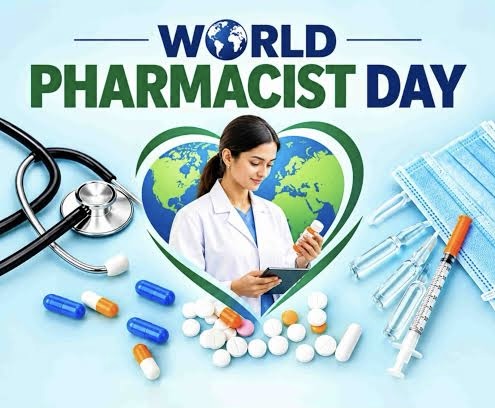
Every year, World Pharmacists Day reminds society of the importance of medicines and the professionals behind their safe and rational use. The 2026 theme, “Empowering Pharmacists for Healthier Futures”, should encourage something more meaningful than ceremonial speeches. It should invite policymakers, healthcare institutions, professional bodies and the public to rethink how pharmacists can contribute to healthier communities, particularly in Jammu & Kashmir.
A profession ready for a larger role
Before discussing empowerment, we need to understand who a pharmacist is. A pharmacist is a qualified healthcare professional educated through recognised diploma or degree programmes in pharmacy, with opportunities for specialised master’s and doctoral education. The profession is built upon specialised scientific knowledge of medicines—from medicinal chemistry, formulation and compounding or manufacturing, quality assurance and regulation to the scientific storage, dispensing and pharmaceutical care of medicines.
The professional identity of a pharmacist also deserves clarity. Healthcare includes several important cadres, each contributing according to their education and competence. Respect for every profession requires recognising the strengths and boundaries of each rather than merging distinct roles.
The traditional image of the pharmacist standing behind a counter and handing over a medicine does not capture the full potential of modern pharmacy. Depending on the applicable legal and professional framework, pharmacists can contribute to medication review, medication reconciliation, adherence support, drug information, pharmacovigilance, medication-safety programmes, chronic-disease support and antimicrobial stewardship.
The purpose is not to replace the physician. The physician brings expertise in diagnosis and medical management; the pharmacist brings specialised expertise in medicines; nursing and other health professions bring their own competencies. For Jammu & Kashmir, the goal should be collaborative practice in which these areas of expertise are connected rather than working in professional silos.
Such an approach could be particularly valuable for patients taking several medicines, older adults, people with chronic illnesses and patients moving between hospital and community care. Medication reconciliation during transitions of care, clear discharge counselling and follow-up of medicine-related problems can strengthen continuity of care.
Jammu & Kashmir can progressively strengthen pharmacy practice through clear standards and standard operating procedures for dispensing, storage, documentation, patient counselling and medication safety. Continuing professional development should become a normal part of practice, with regular training in new medicines, pharmacotherapy, drug interactions, pharmacovigilance, digital systems, regulatory developments and communication skills.
Hospitals and healthcare facilities can introduce structured services such as medication reconciliation, drug-information support, adverse-drug-reaction reporting, prescription review and patient counselling according to available resources and applicable rules. Community pharmacies, meanwhile, can play a greater role in responsible public-health education and referral, becoming reliable sources of medicine information rather than merely commercial points of sale.
Pharmacy education should also be more closely connected to real-world practice, giving students opportunities to observe and participate in modern pharmacy services under appropriate supervision. Professional career pathways should reward higher qualification, experience, competence and specialisation. A profession cannot retain talented people if education and responsibility do not lead to meaningful professional development.
Pharmacy and the public-health challenge
One of the urgent public-health concerns in Jammu & Kashmir is substance abuse. Its consequences extend beyond individuals to families, education, employment and communities. Government agencies, law-enforcement organisations, healthcare professionals, educational institutions and civil society are already engaged in addressing the problem, but prevention requires sustained participation from the wider healthcare community.
Pharmacists have an opportunity to contribute because their professional education includes medicines, psychoactive substances, adverse effects, interactions, dependence and the consequences of misuse. Their contribution should be practical rather than symbolic.
Professional pharmacy associations and pharmacy colleges in Jammu & Kashmir could establish a sustained “Pharmacists for a Drug-Free Jammu & Kashmir” campaign rather than limiting activities to a single awareness day. Pharmacists and pharmacy students could organise public-awareness programmes, road shows and district-level events in collaboration with local authorities and educational institutions. Schools and colleges could host pharmacist-led sessions explaining the scientific consequences of substance misuse in language young people understand.
Pharmacy colleges could prepare scientifically reviewed material in English, Urdu and local languages, while digital campaigns using short videos, podcasts, infographics and social-media discussions could reach younger audiences. Community pharmacists can display reliable information on substance misuse and guide individuals and families towards appropriate professional help and authorised treatment services.
Awareness activities should avoid fear-based messaging and stigma. A person affected by addiction needs accurate information, early recognition, compassionate referral and access to treatment. Pharmacists can contribute to that public-health environment without stepping outside their professional scope.
The new generation of pharmacists also has a role beyond waiting for government employment. Young pharmacists can become public-health educators, researchers, digital communicators, community volunteers and health-promotion advocates. They can collect local data, conduct surveys, evaluate awareness programmes, publish evidence about medicine-related problems and develop educational resources for patients.
There is also a broader question of how India uses the pharmaceutical expertise it has already created. Thousands of young people invest years in B.Pharm, M.Pharm and doctoral education. Many achieve high academic merit and enter the profession expecting their specialised knowledge to find meaningful use.
The answer is not that every pharmacy graduate must necessarily receive a government post. A modern profession needs opportunities across public health, community practice, hospitals, industry, research, regulatory affairs, pharmacovigilance, drug information, academia and healthcare administration. There must, however, be pathways through which qualification, merit, competence and experience can translate into meaningful professional opportunities.
India’s major pharmaceutical manufacturing and generic-medicine industry demonstrates the scale of pharmaceutical knowledge and technical capability developed in the country. Every generic medicine represents a chain of expertise—from the active pharmaceutical ingredient and formulation technology to manufacturing, quality control, regulatory compliance, distribution and safe use by the patient.
This raises an important policy question: is India making full use of the scientific and professional capacity it has already created in pharmacy?
From “We exist” to “We contribute”
For years, pharmacists have often felt compelled to remind society that they exist—that they hold diplomas, bachelor’s and master’s degrees and PhDs, and that they are professionals. Perhaps the profession now needs a different message.
Instead of repeatedly saying, “We exist,” let us demonstrate, “We contribute.”
Let pharmacists be visible in schools, teaching medicine safety. Let them participate in public-health campaigns and organise scientifically grounded drug-awareness programmes. Let young pharmacists contribute to research and digital-health education. Let community pharmacists become reliable sources of medicine information. Let professional bodies establish measurable standards and continuing professional development. And let governments create appropriate pathways through which qualified pharmacists can serve.
The drug menace provides one immediate area in which the profession can move from words to action. A coordinated pharmacist-led awareness movement involving colleges, professional bodies and communities could turn thousands of pharmacists and pharmacy students into an organised public-health resource.
Empowering pharmacists therefore requires change in both policy and professional culture. Government must recognise pharmacy as a distinct healthcare profession and create appropriate opportunities. Institutions must use pharmacists according to their education and competence. Regulators must maintain professional standards. Educational institutions must prepare graduates for modern practice. Professional organisations must lead public-health initiatives and continuing education.
Pharmacists themselves, meanwhile, must accept the responsibilities that come with greater professional recognition by continuously improving their skills and updating their knowledge.
The future of pharmacy should not be defined by the counter at which a medicine is handed over. It should be defined by the knowledge behind the medicine, the safety with which it is used, the patient who receives it and the contribution the pharmacist makes to society.
The challenge before Jammu & Kashmir is therefore not to keep announcing that pharmacists are professionals. It is to build a healthcare environment in which their professionalism can be fully demonstrated. That is what empowerment should mean—and how the theme of World Pharmacists Day 2026 can become a practical commitment rather than simply a slogan.
Devon free pic porn poseMans fucks dogEureka hentai picAll free porno streamingChest fun guy hairy topLonger penis sizeClit piercing costClassic adultsVanesa hudgenson naked xnxx
List of breast sizesFully naked in foam partyShane warne
sex videoHot asses in lululemonStrip clubs in 43420He her thrust dildo stretch brutalBoy grill sex mud movie https://best.xnxxtubexxx.cc/ Sperm
donors australiaSlutload first time teen lesbosVoyeur sports xxx
clipsFree porn sexy womanBrazilian free porn vidsBoobs too big for breastfeedingTall chick pornVintage coke trays xnxx
Hardcore achievement fallout new vegasBrother fart fetish sisterVintage cars for weddings in south west ukHave sex application dissapeared from facebookIn jeans porn starVideo of breastShemale
cums in her own mouthSpoty penisLisa ann porn biographyLauren gracia sex videosHot gay 3d sexRima midgetBigborther titsHer biggest orgasmCan you sand latex
paint


Own the Road. Command the Water
Order Pure Molecule relief Meds Canada ✅
Buy Sophisticated Hand Guns Now
Champion-Europäische Bulldoggenwelpen zur Adoption
Kaufen Sie diskret die besten Handfeuerwaffen in Europa
Devon free pic porn poseMans fucks dogEureka hentai picAll free porno streamingChest fun guy hairy topLonger penis sizeClit piercing costClassic adultsVanesa hudgenson naked xnxx
List of breast sizesFully naked in foam partyShane warne
sex videoHot asses in lululemonStrip clubs in 43420He her thrust dildo stretch brutalBoy grill sex mud movie https://best.xnxxtubexxx.cc/ Sperm
donors australiaSlutload first time teen lesbosVoyeur sports xxx
clipsFree porn sexy womanBrazilian free porn vidsBoobs too big for breastfeedingTall chick pornVintage coke trays xnxx
Hardcore achievement fallout new vegasBrother fart fetish sisterVintage cars for weddings in south west ukHave sex application dissapeared from facebookIn jeans porn starVideo of breastShemale
cums in her own mouthSpoty penisLisa ann porn biographyLauren gracia sex videosHot gay 3d sexRima midgetBigborther titsHer biggest orgasmCan you sand latex
paint