

Ziraat Times Team Report
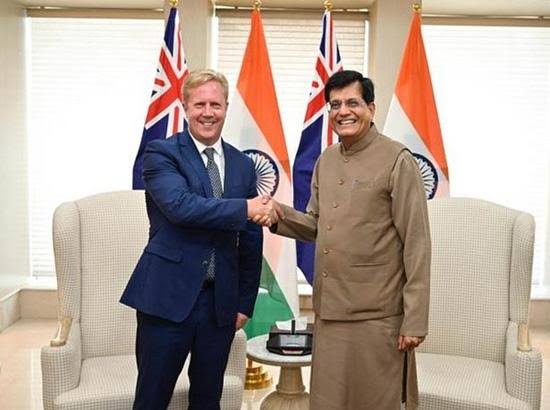
New Delhi, Dec 23 — India and New Zealand have concluded negotiations on a landmark Free Trade Agreement (FTA), one of the fastest-concluded FTAs by India, aimed at deepening bilateral trade, investment, services, mobility and long-term economic cooperation, the Ministry of Commerce and Industry said on Monday.
The negotiations, formally launched in March 2025, were concluded in December 2025, marking a historic milestone in India–New Zealand economic relations. The Agreement provides duty-free access on 100 per cent of Indian exports to New Zealand while protecting India’s sensitive sectors such as dairy and key agricultural products.
The FTA also includes a USD 20 billion investment commitment by New Zealand over 15 years, strengthening long-term economic and strategic cooperation between the two countries.
Boost to Trade, Jobs and MSMEs
According to official data, India–New Zealand merchandise trade grew sharply from USD 873 million in 2023–24 to USD 1.3 billion in 2024–25, registering 49 per cent growth. India’s exports increased by 130 per cent over the last decade, while imports grew by just 7.21 per cent, maintaining a positive trade balance.
The agreement is expected to deliver major gains to labour-intensive sectors such as textiles, apparel, leather, footwear, gems and jewellery, engineering goods and processed foods, with zero-duty access improving global competitiveness and job creation.
India has offered market access in 70.03 per cent of tariff lines, while 29.97 per cent have been kept in the exclusion list to safeguard domestic interests. Sensitive products including dairy, select agricultural commodities, sugar, oils, arms and ammunition, and certain metals remain protected.
Services, AYUSH and Mobility Provisions
In a first, New Zealand has signed a Health and Traditional Medicine Services Annex, enabling trade and cooperation in Ayurveda, Yoga and other AYUSH systems, alongside indigenous Maori health practices. This is expected to boost medical value travel, wellness services and global recognition of India’s traditional knowledge systems.
New Zealand has also made its best-ever services offer, committing market access across 118 services sectors and MFN treatment in 139 sectors, including IT, engineering, healthcare, education and construction.
On mobility, the FTA introduces new pathways:
-
5,000 visas for skilled Indian professionals for up to three years
-
Post-study work visas for Indian STEM graduates
-
1,000 Working Holiday Visas annually
-
Indian students will be allowed to work up to 20 hours per week during studies, with extended post-study stay options
Agriculture and Technology Cooperation
The agreement includes Agricultural Productivity Action Plans for apples, kiwifruit and honey, focusing on improved planting material, technology transfer, Centres of Excellence, post-harvest management and food safety.
Imports of select New Zealand products such as apples, kiwifruit and Manuka honey into India will be regulated through Tariff Rate Quotas (TRQs), minimum import prices and seasonal restrictions to protect Indian farmers.
Key Takeaways for Jammu & Kashmir
The India–New Zealand FTA holds significant relevance for Jammu & Kashmir, particularly in the following areas:
-
Apple Sector:
The Action Plan on apples offers scope for technology transfer, improved orchard management, post-harvest practices and quality enhancement, which could directly benefit apple growers in Kashmir. -
Handicrafts, Textiles & Leather:
Zero-duty access for labour-intensive sectors opens new export opportunities for Kashmir’s handicrafts, carpets, wool-based products and leather goods in the New Zealand market. -
AYUSH & Wellness Tourism:
The Health and Traditional Medicine Annex strengthens prospects for AYUSH practitioners, yoga instructors and wellness services, aligning with J&K’s emerging health and wellness tourism potential. -
Student & Professional Mobility:
Expanded visa pathways benefit students and skilled professionals from J&K, particularly in STEM, healthcare, education, IT and construction. -
MSME Opportunities:
Institutional cooperation for MSMEs and reduced logistics costs can help small producers and exporters from J&K access global markets more efficiently.