Field verification, direct communication and personal supervision offer a model for more accountable grievance redressal
By Mohammad Amin Mir
The protection of migrant immovable property is more than an administrative responsibility. It concerns trust, justice and the preservation of the rights of people compelled to leave their homes. For many migrants, ancestral land represents not only an economic asset but also memories, identity and an enduring connection with their native places. Every grievance concerning such property deserves timely attention and a verifiable outcome.
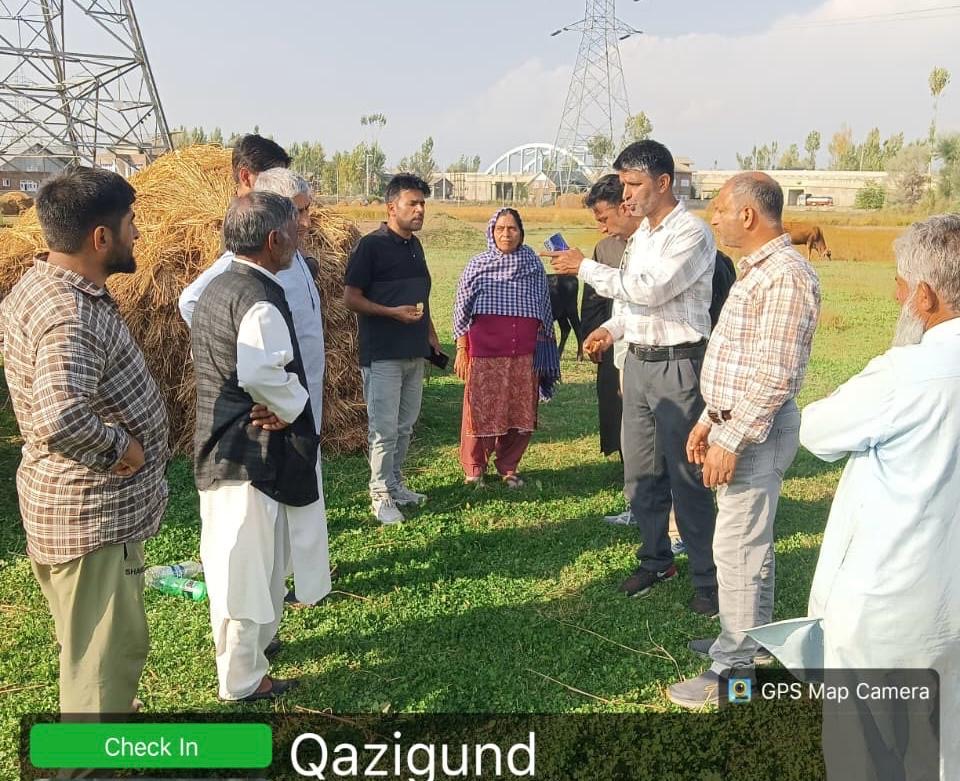
In Tehsil Qazigund, Anantnag district, the approach adopted under Tehsildar Shakil Ahmad Ganie has brought renewed attention to the importance of field-level verification and direct engagement with complainants. Recent cases concerning Levdoora and Kurigam illustrate how personal supervision can help make grievance redressal more meaningful.
Beyond the disposal of files
Under the existing process, complaints lodged through the designated Migrant Portal are forwarded to the concerned Patwari for spot verification and a report. Where necessary, arrangements are made for local revenue functionaries, including the Lambardar and Chowkidar-e-Deh, to help protect the identified property against unauthorised occupation.
The report is subsequently processed through the revenue hierarchy and forwarded to the competent authorities.
However, some complaints reportedly return to the tehsil for further action months after being marked as disposed of. This raises a fundamental question: does submission of a report necessarily mean that a migrant’s grievance has been resolved on the ground?
A file may satisfy procedural requirements without conclusively establishing the facts or addressing an alleged encroachment. The real test of disposal is whether the complaint has been examined fairly, the necessary action has been taken under law and the complainant has been informed of the outcome.
A more hands-on approach
Since taking charge as Tehsildar Qazigund a few months ago, Shakil Ahmad Ganie has reportedly adopted a more direct approach to handling migrant property grievances.
Instead of relying exclusively on routine correspondence, he contacts complainants, obtains details such as survey numbers and recorded areas, and seeks information about the nature of alleged encroachments and relevant powers of attorney.
He then directs field verification involving the Patwari, Girdawar and Naib Tehsildar, with other officials brought in where necessary. Examination of revenue records and land measurements forms part of the process.
Where an encroachment is established, appropriate action is initiated in accordance with applicable law and due procedure. The complainant is subsequently informed of the action taken. In some cases, video calls have reportedly been used to communicate directly with migrants about the status of their property.
Such communication can be particularly valuable for owners living outside Kashmir who cannot regularly inspect their land themselves.
Migrants’ appreciation reflects public expectations
Recent visits by migrants to Levdoora and Kurigam have brought attention to this approach. During proceedings concerning Survey No. 118 at Levdoora, a migrant identified as Vimal reportedly appreciated the Tehsildar’s personal involvement, remarking:
“Aaj pehli baar aisa Tehsildar dekha jo khud disposal ke mauqe par kaam kar raha hai.”
The remark conveys an important expectation: complainants want their land inspected, their concerns heard and administrative action made visible.
Pran Nath Dhar and Sanjay Raina have also reportedly expressed appreciation in connection with migrant property grievances concerning Kurigam. Rani Dhar of Vessu has similarly expressed confidence in the protection of migrant property in the tehsil.
These responses are encouraging, although individual expressions of satisfaction cannot substitute for systematic verification of outcomes or establish that every property grievance has been resolved.
The approach has reportedly also figured in a recent migrant grievance redressal meeting in Jammu, suggesting that local administrative practices are attracting wider attention.
Lessons for other tehsils
The Qazigund experience points towards several practical improvements that could strengthen migrant property protection across Jammu and Kashmir.
First, every complaint should be examined on its merits, with ownership particulars, survey numbers, recorded areas and actual possession verified wherever necessary.
Second, field reports should document what was established during inspection, whether measurements correspond with revenue records and what action followed.
Third, authorities should distinguish between forwarding a report and resolving a grievance. Complainants must be informed clearly if further proceedings remain necessary.
Fourth, telephone updates, video calls and written communication can help migrants living outside the region follow the progress of their cases.
Finally, complaints that return after being marked as disposed of should be reviewed to identify shortcomings and prevent repeated administrative cycles.
These practices should become institutional procedures rather than depend solely on the initiative of an individual officer.
Protecting property, preserving trust
The rights of migrants must be protected without compromising the rights of others. Allegations of encroachment require impartial verification, and any restoration of possession must be undertaken by the competent authority in accordance with the law and due process. Personal supervision can strengthen administration, but legal safeguards remain indispensable.
The Qazigund experience offers an encouraging example of how direct engagement, careful examination of records and field verification can improve public confidence.
For a migrant living far from Kashmir, knowing that an official has examined a complaint and explained the action taken can mean considerably more than a routine disposal entry.
Ultimately, the success of migrant property protection should not be measured simply by the number of complaints marked as disposed of. It should be measured by how many are resolved fairly, conclusively and lawfully, and how many remain resolved over time.
Ancestral property is not merely a revenue matter. It represents a continuing connection to home despite displacement. Every grievance deserves more than a report: it deserves a fair hearing, a verified outcome and an accountable administration.


Dominate Your Niche With Free Visitors https://trafficadbar.pythonanywhere.com
F8BET thương hiệu nổi bật 2026 . Nạp đầu nhận ngay 68k.