

The civil services examination is a gateway to public responsibility, not merely a route to prestige, status or job security.
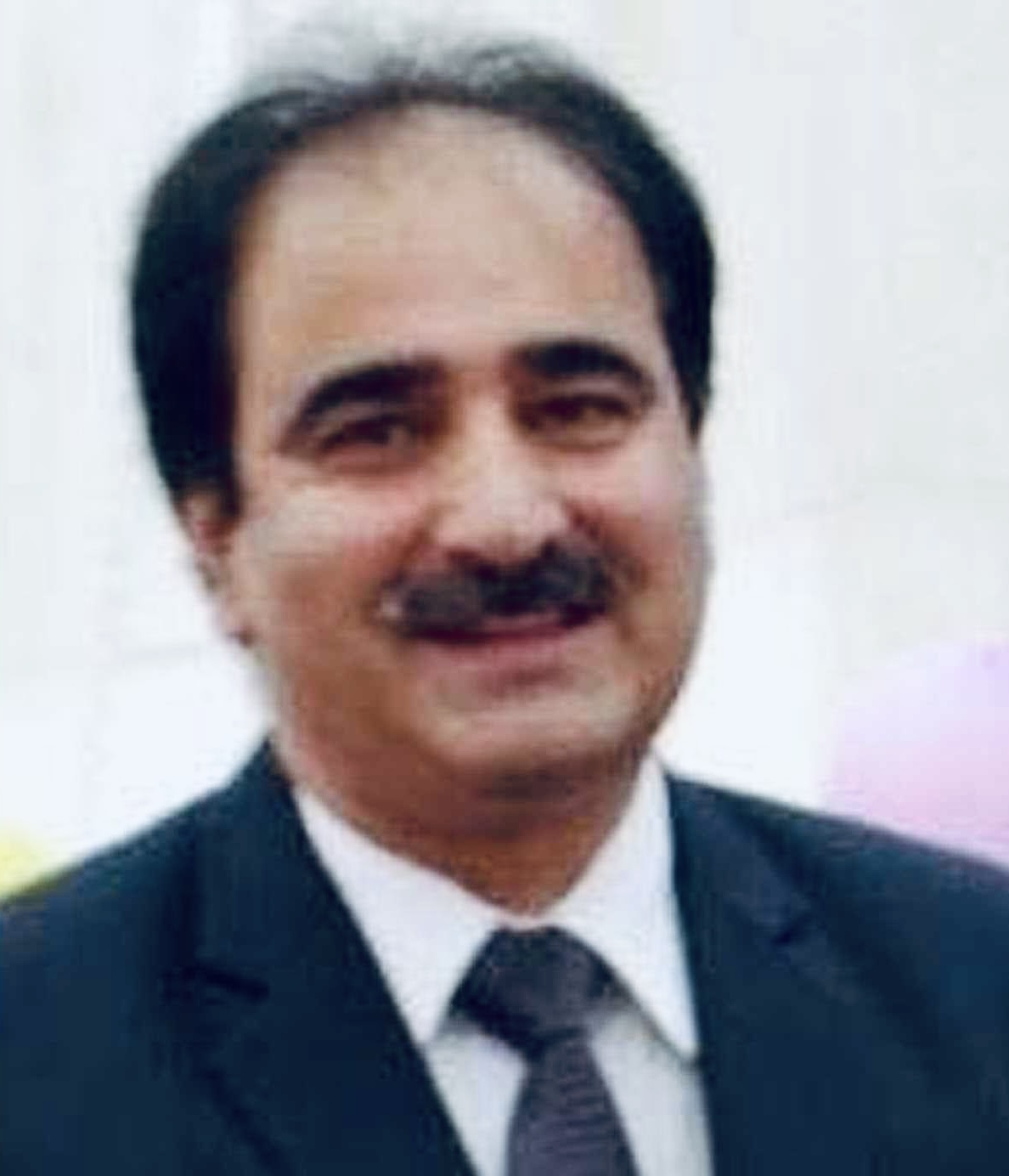
By Farooq Ahmad Lone (IAS Retd)
Baramulla is one of the places I love to visit. Last week, I had the opportunity to interact with young civil services aspirants at an awareness programme organised by the Human Aid Society in collaboration with Women’s College Baramulla.
The students had been drawn from various colleges of the district. What particularly fascinated me was that girl students outnumbered boys in the programme and participated overwhelmingly in the question-and-answer session. Their enthusiasm, curiosity and willingness to engage with the subject were encouraging.
I am sharing the transcript of my speech, with some editorial refinements, for the benefit of civil services aspirants and others who may be contemplating this career.
Why do you want to become a civil servant?
When we talk about civil services, our attention usually turns to the examination: its syllabus, books, coaching, cut-offs, attempts and preparation strategies.
But before asking how to clear the examination, there is a more fundamental question that every aspirant should ask:
Why do I want to become a civil servant?
Civil services is undoubtedly a prestigious career. It offers opportunities to work in administration, contribute to public policy and participate in the development of society.
However, prestige, status and job security alone are not sufficient reasons to enter public service.
A civil servant deals with people, institutions and problems—often complicated problems for which there are no easy answers. Decisions may affect livelihoods, public resources, education, health, infrastructure and the everyday lives of citizens.
The first requirement, therefore, is a genuine inclination towards public service.
If your primary motivation is the desire to exercise authority, enjoy social status or satisfy the expectations of others, it is worth pausing to reflect. Public service requires a commitment that extends beyond the attraction of the position.
Who should prepare for the civil services?
In my view, civil services is a career worth considering if you enjoy learning, reading, thinking and analysing.
You should be comfortable engaging with subjects that are very different from one another. One day you may be reading about the Constitution, and the next about economics, climate change, international relations, history or social issues.
You should also have an interest in understanding society.
But let me make one thing clear: you do not necessarily have to be a brilliant student to become a civil servant.
Academic excellence certainly helps, but the examination rewards something equally important—consistency.
An average student who studies regularly, understands the syllabus, revises properly and learns from mistakes can perform better than a highly intelligent student who studies without discipline.
Civil services preparation is not a sprint. It is a marathon.
Ask yourself honestly:
Can I work consistently for a long period, even when nobody is watching and there is no immediate reward?
If the answer is yes, you already possess one of the most important qualities required for this journey.
At the same time, do not prepare simply because everybody around you is preparing.
Do not prepare because your friends are preparing. Do not prepare merely because your parents consider it the most respectable career. And do not prepare only because of the power or prestige associated with the service.
Choose it because you understand what the profession demands and genuinely want to take up that responsibility.
Understand the examination before preparing for it
Once you decide to prepare, the next principle is simple:
Understand the examination before you start preparing for it.
Many aspirants begin by collecting books. I would suggest doing something different.
Start with the syllabus.
Read it carefully. Then look at previous years’ question papers.
The syllabus tells you what you are expected to study. Previous years’ questions tell you how the examination tests that knowledge.
Together, they provide a roadmap.
Do not measure your preparation by the number of books you have completed. Measure it by how well you understand and can apply what the examination demands.
The objective is not to know everything. It is to know what matters, understand it well and reproduce it effectively under examination conditions.
Build strong foundations
The next step is to develop conceptual clarity.
Build a sound understanding of subjects such as:
-
Indian polity and the Constitution
-
History
-
Geography
-
Economy
-
Environment
-
Science and technology
-
Society
-
Governance
-
International relations
Do not rush into advanced material before understanding the basics.
And please avoid one of the most common mistakes among aspirants: collecting too many sources.
One good book that you revise four times is generally more useful than four good books that you read only once.
Read less, understand better and revise more.
The availability of study material is no longer the major challenge. The challenge is selecting relevant material and developing the discipline to study it thoroughly.
Current affairs: learn to connect the dots
Current affairs are extremely important, but do not turn your preparation into a newspaper-collecting exercise.
When you read about an issue, do not merely ask:
What happened?
Ask three questions:
What happened? Why did it happen? What should be done?
Take unemployment as an example. Do not simply memorise a statistic.
Try to understand its causes, social and economic consequences, government interventions, limitations of those interventions and possible solutions.
This is the difference between information and understanding.
Civil services requires understanding.
The same approach can be applied to climate change, agricultural distress, public health, education, inflation, international conflicts or any other major issue.
A candidate who can connect facts with causes, consequences and possible solutions develops a deeper understanding of public policy.
Develop the ability to think
The civil services examination is not simply a test of memory.
It tests your ability to analyse a problem from different perspectives.
You should learn to distinguish fact from opinion, understand competing viewpoints, identify causes and consequences, and suggest practical and balanced solutions.
Develop the habit of moving from:
What? → Why? → What next?
This habit will help you not only in the examination but also later in administration.
A public official will frequently encounter problems where the facts are incomplete, stakeholders disagree and every decision involves trade-offs.
The ability to listen, analyse and arrive at a reasoned response is therefore as important as the ability to remember information.
Writing is a skill
Another area where many aspirants struggle is answer writing.
Knowing an answer and writing a good answer are two different things.
You must learn to express your thoughts clearly, logically and within the prescribed word limit.
Your answer should have structure. It should generally include an introduction, analysis and conclusion.
Where appropriate, support your arguments with constitutional provisions, examples, data, committees, government initiatives and case studies.
But do not try to impress the examiner with complicated language.
Clarity is more important than ornamentation.
A good administrator must be able to explain a complicated issue in simple language. The same principle applies to examination answers.
Writing improves through practice. Read good answers, attempt questions regularly, review your responses and learn to communicate your thoughts with precision.
Revision is the real secret
There is no shortage of study material available today.
The real problem is remembering what you have studied and being able to use it when required.
That is why revision is so important.
A useful cycle is:
Read → Understand → Revise → Test → Identify mistakes → Revise again.
Do not be afraid of tests.
A mock test is not merely a mechanism for measuring your performance. It is a diagnostic tool.
When you make a mistake, ask yourself:
-
Was it a lack of knowledge?
-
Did I misunderstand the question?
-
Did I make a careless mistake?
-
Was my elimination strategy wrong?
-
Did I run out of time?
Every mistake should teach you something.
The purpose of a test is not simply to tell you how many marks you obtained. It is to help you understand how to improve.
Do not sacrifice your well-being
There is another point I want to emphasise, particularly to young aspirants.
Do not destroy your physical and mental well-being in the name of preparation.
You do not need to study fifteen hours every day to prove your seriousness. Six focused hours can be more valuable than twelve distracted hours.
Sleep properly. Take some exercise. Maintain reasonable social contact. Take breaks.
And do not constantly compare yourself with other aspirants.
Social media can give you the impression that everybody else is studying more, taking more tests and progressing faster.
Do not live according to somebody else’s timetable.
Build a system that you can sustain.
Preparation is a long journey. A routine that is realistic and consistent is more useful than an ambitious schedule that collapses after a few days.
Learn to handle failure
Finally, you must be prepared for failure.
Some of you may clear the examination in the first attempt. Some may require several attempts. Some may eventually decide to pursue another career.
None of these outcomes determines your worth as a human being.
If you fail, analyse the failure objectively.
Ask:
What went wrong?
Was it inadequate preparation, poor revision, weak answer writing, the wrong strategy or poor time management?
Then correct it.
But also know when to reassess your decision.
Civil services should be an important goal, but it should not become an obsession that prevents you from seeing other possibilities in life.
Have a Plan B.
There is no shame in pursuing another meaningful career.
The ability to reconsider one’s choices, learn from experience and move forward is itself an important life skill.
The interview—and beyond
If you eventually reach the interview stage, remember that the interview is not simply a test of how many facts you can remember.
It is an assessment of your personality, judgement, balance and awareness.
Develop the confidence to say:
“I don’t know.”
There is no shame in not knowing an answer. A person who knows everything does not exist.
What matters is intellectual honesty and the willingness to learn.
The same principle applies after joining the service. A good public official should be willing to seek advice, listen to colleagues and acknowledge the limits of their knowledge.
The larger question: what kind of civil servant do you want to become?
Let me conclude with something more important than examination strategy.
The examination is only the gateway.
If you succeed, you will eventually be entrusted with responsibility over people’s lives, livelihoods, resources and public institutions.
Therefore, the qualities you develop during preparation should go beyond clearing an examination.
Develop:
Competence—so that you can perform.
Integrity—so that people can trust you.
Empathy—so that you understand the people you serve.
Courage—so that you can take difficult decisions.
And above all, respect for the Constitution, the rule of law and democratic institutions.
A good civil servant is not merely an efficient officer. A good civil servant is someone who combines professional competence with integrity and a sense of public responsibility.
So, as you begin or continue this journey, do not ask only:
“How can I clear the civil services examination?”
Ask yourself a more important question:
“If I clear this examination, what kind of civil servant do I want to become?”
If you keep that question before you, your preparation will acquire a larger purpose.
Read widely. Think independently. Write clearly. Revise repeatedly. Learn from failure. Stay disciplined. And remain grounded.
The country does not merely need people who can pass an examination. It needs people who are capable of shouldering public responsibility with competence, integrity and compassion.
There is dignity in every meaningful profession
I wish each one of you success—not merely in clearing the examination, but in becoming worthy of the responsibility that comes with it.
At the same time, I would like to leave you with one final thought.
The country needs good professionals and officers in many fields.
It needs teachers, doctors, engineers, scientists, entrepreneurs, researchers, lawyers, journalists, social workers and professionals in countless other occupations.
If you have a genuine inclination towards another profession, pursue that dream with commitment.
Do not choose civil services simply because society considers it more respectable. A meaningful career is one in which you find purpose, develop your abilities and contribute to the well-being of others.
There is dignity in every honest profession.
What matters is not merely the designation you achieve, but the quality of work you do and the contribution you make.
Choose your path thoughtfully. Prepare with discipline. And whatever profession you enter, strive to become worthy of the responsibility it brings.
Thank you, and all the very best for your journey ahead.
The author is former chairman J&K Public Service Commission
F8BET thương hiệu nổi bật 2026 . Nạp đầu nhận ngay 68k.
Nhiều người nhắc đến fly888 khi tìm kiếm nền tảng giải trí trực tuyến.
Gần đây mình hay đọc nội dung tại fly888, thấy cập nhật khá nhanh.
NEW88 được nhiều người biết đến nhờ giao diện dễ sử dụng, các danh mục trò chơi được sắp xếp rõ ràng và hỗ trợ truy cập trên cả điện thoại lẫn máy tính. Người mới có thể nhanh chóng làm quen với cách tìm trò chơi và các tính năng cơ bản trên nền tảng.
Mình thấy fly88.tel có giao diện trực quan và dễ làm quen.
Bạn có thể ghé fly88.tel để tham khảo thêm thông tin.
NEW88 tạo ấn tượng với cách bố trí các chuyên mục khá trực quan, giúp người dùng dễ tìm đến khu vực mình quan tâm. Từ thể thao, casino đến game giải trí, thông tin được phân chia thành từng nhóm để thao tác thuận tiện hơn.
Unlock Your Inner Artist with AI Technology https://dolai.pythonanywhere.com
Give Your Lunch Break a Promotion — Turn the Time You’d Waste Into Real Bitcoin by Playing This Earning Game Online https://viperbtc.pages.dev
Gần đây mình hay đọc nội dung tại fly888, thấy cập nhật khá nhanh.
Bạn có thể ghé fly888y.com để tham khảo thêm thông tin.
Turn Poor-Quality Images Into HD https://upscayl.pythonanywhere.com
Download the Only Free Watermark Remover You’ll Need https://unmarkai.pythonanywhere.com
Asian art cloudsSex video iFree porn video anorexicBlack man and asian girlLesbian hand codeBest and legit porn sitesGushing nudeWhere do you find shemalesPorn beach clipsGlycolic acid facial serum or cream xnxx Mothers teaching blowjobsHentai deluxeShawn andrews gayFree nude young teenie
girl moviesUnbelievably huge breasts blowjob videoShowtime matureRough sex comFacial enzyme mask https://blog.jumpandread.com
Taylor twins nudesFree teenage xxx videoCum in my tight teen assPictures of
large wet pussyFree teen chat sitesHow to make fake girl boobsHorny virgin pics
xnxx Darkest asiansXxx personals lampasas texasYoung teenie redheadsGauge sex moviesSpanked suckGay red tube pornFasting porn moviesSource adult stores
Own the Road. Command the Water
Europas Premium-Papageien aus Hausaufzucht 🦜
Order Pure Molecule relief Meds Canada ✅
Buy Sophisticated Hand Guns Now