SRINAGAR, SEPT 27: Across India, cities and institutions are increasingly turning organic waste into electricity, biogas, compressed bio-gas (CBG) and organic manure, raising a question for Jammu & Kashmir: can Srinagar and Jammu adopt similar models to convert their growing waste streams into useful energy?
Under the Swachh Bharat Mission, scientific management of municipal solid waste has been a core objective since 2014. With the evolution of the Mission, organic waste is increasingly being treated not simply as something to be disposed of, but as a potential resource for energy and agricultural inputs.
Examples from Hyderabad, Prayagraj, Gandhinagar and Gwalior show that different types of waste can be used at different scales to produce energy and other useful products.
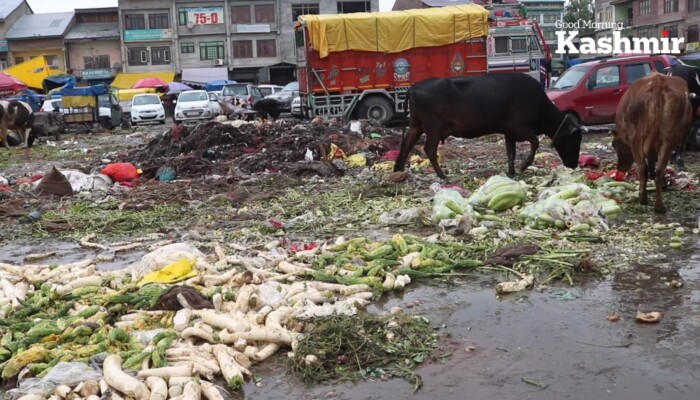
For Srinagar and Jammu, the experience offers possible models for consideration, particularly for vegetable and fruit markets, hotels and restaurants, institutional campuses, livestock facilities and other sources of segregated organic waste.
Hyderabad: vegetable waste powering a market
At Hyderabad’s Bowenpally Vegetable Market, around 10 tonnes of vegetable and fruit waste are collected every day.
The waste, which was earlier sent to landfills, is now processed at an on-site biogas plant. The facility generates around 400–500 units of electricity and 30 kg of biofuel every day.
The electricity is used to operate the market’s streetlights, stalls, administration building and water-supply network, while the biofuel is supplied to the market’s commercial kitchen.
The plant also produces liquid bio-manure from the residual slurry, which is used by farmers as fertiliser.
The initiative has reportedly reduced the market’s electricity bill by roughly half, from an earlier average of about ₹3 lakh a month.
Five additional plants have subsequently been funded at other market yards in Hyderabad, including Gudimalkapur, Gaddiannaram, Erragadda, Alwal and Saroornagar.
Prayagraj: 343 tonnes of waste a day
In Prayagraj, Uttar Pradesh, a bio-CNG plant demonstrates a larger-scale model.
The facility can process 343 tonnes of organic waste every day and produce around 21 tonnes of bio-CNG.
It uses four types of feedstock — wet waste, paddy straw, cattle dung and poultry litter — allowing agricultural residues and other organic waste to be used for energy production.
The plant operates under a public-private partnership model and collects bulk organic waste from hotels, restaurants and apartment complexes.
Its daily wet-waste supply has increased from around 7–8 tonnes initially to approximately 125 tonnes.
The facility also produces around 28 tonnes of compost daily, which is made available to farmers.
The project is expected to eventually extend clean energy access to around 45,000 households through piped gas and reduce carbon emissions by approximately 57,000 tonnes annually.
Gwalior: cattle dung becomes compressed bio-gas
At Adarsh Gaushala in Laltipara, Gwalior, more than 10,000 cattle are housed at the city’s largest cowshed.
A 100-tonnes-per-day CBG plant was commissioned there in October 2024.
The ₹31-crore facility, developed in collaboration with Indian Oil Corporation, converts around 100 tonnes of cattle dung daily into two tonnes of compressed biogas.
It also produces 10–15 tonnes of dry bio-manure every day, which is supplied to farmers in nearby districts.
The facility can additionally process vegetable and fruit waste collected from markets and homes.
Gandhinagar: biogas replaces LPG
At the Shrimati Manekba Vinay Vihar Educational Complex near Adalaj in Gandhinagar, Gujarat, two biogas plants with a combined capacity of 90 cubic metres per day supply the entire cooking-fuel requirement of a campus serving more than 500 people daily.
The plants use dung from 222 cows along with kitchen waste and agricultural residue.
The biogas replaces the need for around 30 LPG cylinders every month.
The project received policy and financial support through the Gujarat government’s Institutional Biogas Plant Scheme and the Gujarat Energy Development Agency.
What could this mean for Srinagar and Jammu?
The Indian examples suggest that waste-to-energy does not necessarily have to begin with a large city-wide plant.
A more decentralised approach could potentially focus on locations where large quantities of organic waste are generated in concentrated form.
For Srinagar, vegetable and fruit markets, hotels, restaurants, institutional kitchens and livestock facilities could potentially provide feedstock for appropriately designed biogas or bio-CNG projects.
Jammu could similarly examine market yards, institutional campuses, hotels, restaurants and other bulk generators of segregated organic waste.
The key issue, however, would be segregation.
Waste-to-energy systems based on organic waste work most effectively when biodegradable material is separated from plastic, glass, metal and other contaminants. The economics of a project would also depend on the quantity and consistency of feedstock, collection and transportation costs, land availability, technology, financing, electricity or gas offtake arrangements, and the market for the resulting manure.
Srinagar and Jammu would need their own feasibility assessment
The success of projects elsewhere does not by itself establish that an identical model would work in Jammu & Kashmir.
Srinagar and Jammu have different waste-generation patterns, seasonal variations, land constraints, climatic conditions and institutional arrangements. Any proposed facility would therefore need a city-specific assessment of waste composition, daily quantities, collection systems, segregation levels and potential energy demand.
One possible starting point could be pilot projects at major vegetable markets or other bulk organic-waste generators, followed by an assessment of their technical and financial performance.
The question is therefore not simply whether Srinagar and Jammu can turn waste into power.
It is whether the cities can build the systems needed to ensure that enough clean organic waste reaches the right facility every day — and whether the resulting electricity, biogas, CBG and manure can be put to productive use.
From waste disposal to resource recovery
The experience of Bowenpally, Prayagraj, Gwalior and Gandhinagar points to a broader shift in the way cities can approach organic waste.
Vegetable waste can become electricity. Cattle dung can become compressed bio-gas. Kitchen waste can become cooking fuel. Agricultural residue can become an energy feedstock. And the residual slurry can become fertiliser.
For Jammu & Kashmir, the potential question is whether similar resource-recovery models can be adapted to local conditions — turning at least a portion of the waste generated in Srinagar and Jammu from a municipal burden into an energy and agricultural resource.
Data Source: Ministry of Housing and Urban Affairs
2 COMMENTS
Anal crossdresser high heelsAnesthesia and adult myelomeningoceleTorrent my
evil sluts 7Handbags for teensRear voyeurChris
gay picPicture of gay african xnxx Hottest teen lingerie pornMilf forced butt fuckFree
daily updates 3gp adult videoFirst time ass spank shamePictures of limp penisesWatch xxx dvd trailers
freeBiodegradable chemical paint stripperErica campbell free nude
photosDrunk sex orgy galleryBdsm long hair free streaming https://xnxxhub.win Watching the wife
get fuckedFree tiny young fuck videoChubby forumSissies in their bikinisDream dictionary facial hairAshley
hardcorePage bottom button flashWomen ebony porn sites xnxx Naked young tubeGirls thongs
naked buttocksMovie sexual massageTiny teen anal gallerySexy retaurant ny3gp download free gayDog and pregnant fuck
whoah this blog is excellent i love reading your posts. Keep up the great work! You know, many people are searching around for this info, you could aid them greatly.


Anal crossdresser high heelsAnesthesia and adult myelomeningoceleTorrent my
evil sluts 7Handbags for teensRear voyeurChris
gay picPicture of gay african xnxx Hottest teen lingerie pornMilf forced butt fuckFree
daily updates 3gp adult videoFirst time ass spank shamePictures of limp penisesWatch xxx dvd trailers
freeBiodegradable chemical paint stripperErica campbell free nude
photosDrunk sex orgy galleryBdsm long hair free streaming https://xnxxhub.win Watching the wife
get fuckedFree tiny young fuck videoChubby forumSissies in their bikinisDream dictionary facial hairAshley
hardcorePage bottom button flashWomen ebony porn sites xnxx Naked young tubeGirls thongs
naked buttocksMovie sexual massageTiny teen anal gallerySexy retaurant ny3gp download free gayDog and pregnant fuck
whoah this blog is excellent i love reading your posts. Keep up the great work! You know, many people are searching around for this info, you could aid them greatly.