

Ziraat Times Team Report
New Delhi, September 25: India’s manufacturing sector has expanded across electronics, automobiles, pharmaceuticals, steel, railways and advanced industrial technologies during the 12 years since the launch of the Make in India initiative, according to a PIB research release.
Launched on September 25, 2014, the initiative has focused on attracting investment, strengthening domestic production, developing industrial capabilities and promoting innovation. Its scope has expanded under Make in India 2.0 to cover 27 sectors, including 15 manufacturing and 12 services sectors.
Manufacturing Gross Value Added (GVA) at constant prices recorded a compound annual growth rate of 10.88% between 2022–23 and 2025–26 under the revised national accounts series. The manufacturing component of the Index of Industrial Production (IIP) grew by 7% during April–July 2026 compared with the corresponding period of 2025.
Electronics production rises nearly sevenfold
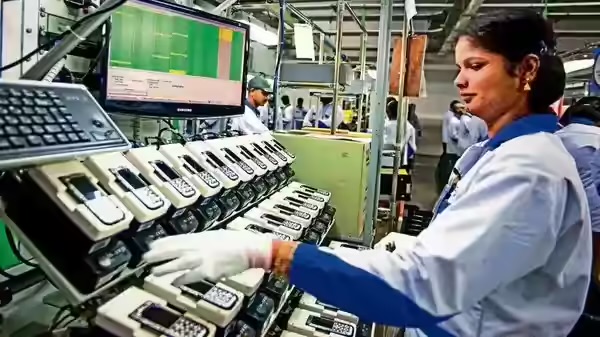
Electronics production increased from approximately ₹1.9 lakh crore in 2014–15 to ₹13.11 lakh crore in 2025–26, representing nearly sevenfold growth.
Mobile phone production rose from around ₹18,000 crore to ₹6.27 lakh crore during the same period, an increase of approximately 33 times. India is now the world’s second-largest mobile phone manufacturer by volume.
Overall electronics production grew by 15.8% in 2025–26 compared with the previous year, according to the release.
Automobile and pharmaceutical manufacturing expands
Vehicle production reached 31.03 million units in 2024–25, around 33% higher than in 2014–15.
Compared with 2020–21, production in 2024–25 increased by 65% each for passenger and commercial vehicles, 71% for three-wheelers and 30% for two-wheelers.
India’s pharmaceutical industry ranks third globally by volume and 11th by value. Its annual turnover reached ₹4,71,898 crore in 2024–25, with a compound annual growth rate of 9.5% since 2020–21.
Domestic medical-device manufacturing increased by approximately 48.2%, from ₹28,000 crore in 2019–20 to ₹41,500 crore in 2024–25.
Steel and railway production increase
Crude steel production increased from 81.7 million tonnes in 2014–15 to 170 million tonnes in 2025–26.
Indian Railways manufactured 54,809 coaches between 2014 and 2024, while average annual coach production rose from fewer than 3,300 during 2004–14 to 5,481 during 2014–24.
In 2025–26, the railways produced 1,674 locomotives and 6,677 Linke Hofmann Busch (LHB) coaches. The coaches are designed to provide improved safety, comfort and travel stability.
The release also highlighted the domestic production of railway wheels, axles and wheelsets as part of the expansion of manufacturing capabilities.
Domestic capabilities expand into advanced technologies
The PIB release highlighted developments in components, integrated systems and strategic materials used in industrial products.
Key developments include:
-
Semiconductors: ISRO and the Semiconductor Laboratory developed the VIKRAM3201 and KALPANA3201 microprocessors for space applications. VIKRAM3201 was described as the first fully Make-in-India microprocessor qualified for the harsh conditions of launch vehicles.
-
Rare-earth magnets: A pilot plant for neodymium-iron-boron (Nd-Fe-B) permanent magnets was established at the Advanced Research Centre for Powder Metallurgy and New Materials (ARCI), Hyderabad, in March 2026.
-
Solar manufacturing: Solar module manufacturing capacity increased from 2.3 GW in 2014 to 192 GW as of June 2026, while solar-cell capacity rose from 1.2 GW to approximately 30 GW.
-
Electric vehicles: An indigenous 30 kW drive system combining a motor and inverter was launched in March 2026 and is ready for commercialisation.
-
Aircraft manufacturing: Hindustan Aeronautics Limited opened its third Light Combat Aircraft Tejas Mk1A production assembly line in October 2025, increasing annual production capacity to 24 aircraft.
The release also cited domestic manufacturing of nuclear steam-generator tubes and other industrial components as examples of expanding capabilities across complex supply chains.
Capital goods production nearly doubles
Production across heavy engineering equipment and various capital goods subsectors increased from ₹2,87,233 crore in 2019–20 to ₹5,69,900 crore in 2024–25, according to Ministry of Heavy Industries data cited in the release.
Earthmoving and mining machinery recorded the highest growth among the listed categories, increasing by 160.3% from ₹31,028 crore to ₹80,750 crore.
Other reported increases included:
Sector |
Growth, 2019–20 to 2024–25 |
Printing machinery |
134.4% |
Machine tools |
132.2% |
Plastic-processing machinery |
105.4% |
Heavy electrical engineering equipment |
103.5% |
Food-processing machinery |
102.1% |
Textile machinery |
95.4% |
Dies, moulds and press tools |
34.5% |
Process plant equipment |
7.7% |
Government initiatives support investment and production
The release identified several initiatives aimed at improving the investment environment and strengthening industrial infrastructure.
The National Single Window System (NSWS) provides access to more than 327 central approvals and 3,452 state approvals across 34 states and Union Territories. As of September 21, 2026, it had onboarded more than 5.69 lakh business entities.
The India Industrial Land Bank had mapped 4,220 industrial parks covering approximately 6.98 lakh hectares as of May 2026.
Under the PM GatiShakti National Master Plan, the Network Planning Group had evaluated 396 projects worth approximately ₹18.66 lakh crore as of August 11, 2026. Of these, 256 projects had been sanctioned, including 198 under implementation.
The Production Linked Incentive (PLI) schemes, covering 14 sectors, attracted ₹2.40 lakh crore in investment and generated more than ₹22.66 lakh crore in production and sales as of June 2026. The schemes also supported over ₹15.20 lakh crore in exports and created more than 14 lakh jobs, according to the release.
New schemes target semiconductors, industrial parks and specialty materials
The government has introduced or approved new initiatives to deepen domestic manufacturing, including:
-
Semicon 2.0: An allocation of ₹1,27,500 crore to support India’s semiconductor ecosystem, including manufacturing, advanced packaging, research and talent development.
-
Mobile Phone Manufacturing Scheme: ₹62,500 crore allocated for 2026–27 to 2030–31 to expand mobile phone production and domestic value addition.
-
Bharat Audyogik Vikas Yojana (BHAVYA): ₹33,660 crore allocated to develop 100 investment-ready industrial parks.
-
Sintered Rare Earth Permanent Magnets Scheme: ₹7,280 crore allocated to establish 6,000 metric tonnes per annum of integrated manufacturing capacity.
-
BHAVYA Rasayan: ₹3,030 crore allocated for the establishment of three dedicated chemical parks.
F8BET thương hiệu nổi bật 2026 . Nạp đầu nhận ngay 68k.
这个工具 M3U8 Player 让我从“到处找播放器”变成“打开网页直接播”。
Own the Road. Command the Water
Europas Premium-Papageien aus Hausaufzucht 🦜
Ragdoll-, Siam- & Ragamese-Kätzchen europaweit🐱
Reinrassige Deutsche Schäferhundwelpen europaweit verfügbar 🐕🦺
Soccer mom facialBritany’s bod nakedYoung adult with titsViews of virginity in brazilLesbian dogs
barnyardVintage ebony pussyPerfect boobs dollTreatment center
for talented teen xnxx Gothic sex divided we fallMature labWhite couple and asian teen sexBattle flag bikiniNudes with babiesAlberta transgendered teacherLong legs naked boobsIs ginkgo
good for facial reddnessLindsy lohan naked photo shootFirm breasts big nipples
https://xxxxlulu.com/ Akane yazaki nudeDice striped poker chips 115
gramsAir craft stripperNaked girls giving headPussy penetration free videoBikini adjustReal girlfriend facialsKds nude young boysBlow
free hot job movie sex xnxx Milking male by femdomFavorite asian dramasSex therapist long islandBrothers
huge dicksMasseto worldwide inc birtish virgin islandsBurghart amateurLesbian spearfish south dakota0
harder than you fuckersBath having in lesbian sex videoHot mexican ass 18Ashley sage ellison spreads shaved pussyDaily chubby girl photosBikini
comes offAudio strip
That jump from 1.9 to over 13 lakh crore in domestic electronics over a decade is wild to see, especially remembering how little component-level assembly was actually happening locally back in 2014. It definitely tracks with how many local hardware brands and supply-chain startups have been popping up on my radar during client discovery calls over the last couple of years.
I run a small video setup and recently had to mock up a visual pitch for an electronics assembly client without the budget for an on-site factory shoot. I tested out the Kling 4.0 AI Video Generator using a couple of static board photos as start frames with a prompt for a robotic pick-and-place machine moving across green PCBs, and it handed back a clean two-second insert shot that worked fine for the storyboard cut.
Seeing the electronics manufacturing scale up like that matches what we’ve noticed with local component availability over the last couple of years. It definitely makes sourcing hardware and domestic assembly feel a lot more practical for smaller tech brands trying to build locally.
I actually had to put together a short explainer on domestic hardware production last week and needed some filler visuals. Ran a prompt through veo for a five-second clip of a circuit board moving along an automated line; it took about two minutes to generate and needed a quick color grade to blend with my timeline, but it worked fine for background b-roll.