

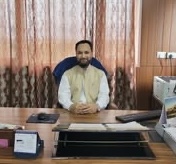
By: Amjad M. Husaini
There are conflicting figures on saffron production in J&K, with different agencies claiming their estimates to be reliable and authentic. This needs to be resolved urgently because policy cannot be built on contradictory data.
If Kashmir is actually producing 15–16 metric tonnes of saffron from approximately 3,750 hectares, the implied productivity is around 4.0–4.5 kg/ha. That is a reasonably respectable productivity level.
If these figures are correct, then the oft-repeated narrative that Kashmir’s saffron cultivation is facing an existential crisis needs serious examination.
And a fundamental question follows: If production is actually 15–16 tonnes, why does the saffron farmer continue to require large-scale public support for replanting and rejuvenation under schemes such as HADP and JK-CIP?
The first requirement, therefore, is not another scheme. It is credible data.
Let IISTC become the single source of truth
Kashmiri Saffron is GI protected, and we already possess an institution that could potentially provide the most credible foundation for production and market data: the India International Saffron Trade Centre (IISTC).
If I were entrusted with managing the entire saffron value chain, I would make IISTC the central point for aggregation, processing, grading, traceability, quality assurance, and marketing of Kashmiri saffron.
If saffron from individual farmers is brought to a common platform, scientifically processed and graded, and marketed through transparent mechanisms such as e-auction, the quantity actually entering this system would provide a far more meaningful picture of marketable saffron production than fragmented estimates.
It would also provide something equally important: consumer confidence.
Every packet should tell the consumer where the saffron came from, who produced it, how it was processed, what grade it carries, and whether it is genuinely GI-certified Kashmiri saffron.
Pay the farmer for his produce, not merely for replanting
I would seriously consider shifting a significant part of government support from cash-based incentives towards assured price realization for genuine saffron.
For example, a government-supported procurement mechanism could explore a minimum benchmark of around ₹5,000 per 10 g of quality-assured Mongra saffron, subject to scientifically defined grades and quality standards.
The objective should not simply be to announce an MSP. The objective should be to create a credible market mechanism through which a genuine farmer can actually sell his saffron at that price.
The open market currently offers highly variable prices, and consumers often have little assurance regarding quality, authenticity, and geographical origin.
A transparent procurement and certification system could therefore:
-
protect farmer income
-
encourage genuine farmers to remain in saffron cultivation
-
discourage conversion of saffron land
-
strengthen Kashmir’s GI identity
-
provide traceability from farm to consumer
-
protect consumers from adulteration and misbranding
-
create a premium international market for authentic Kashmiri saffron
And there is an even bigger opportunity.
With professional management, IISTC could potentially evolve into a financially self-sustaining public-sector institution, combining saffron R&D, quality testing, certification, farmer services, processing, and domestic and international marketing.
It is about building a trustworthy saffron bio-economy.
This is not merely about producing more saffron.
We owe this precious crop to the saffron farmer. We owe it to the consumer. And we owe it to Kashmir’s agricultural heritage.
Kashmiri Saffron has statutory protection under the Saffron Act, 2007, GI recognition and recognition within the FAO’s Globally Important Agricultural Heritage Systems (GIAHS) framework.
Such a crop deserves a value chain based on one thing above all: TRUST.
And trust begins with one credible number for how much saffron Kashmir actually produces.
Time is running out, and therefore I respectfully request that the Hon’ble Lieutenant Governor of J&K consider issuing directives to initiate a comprehensive, high-level, and independent review of actual saffron production, cultivation area, farmer economics, land-use changes, and the performance of the existing saffron value-chain institutions.
The author is Professor-cum-Chief Scientist; Fellow- National Environmental Science Academy; Fellow- Society for Plant Research; DBT-CREST Fellow: Head, Advanced Research Station for Saffron and Temperate Seed Spices; Ex- Head, Division of Plant Biotechnology, SKUAST-Kashmir, India; Visiting Scientist: US Department of Agriculture, USA; Visiting Academic: University of Oxford, UK; Principal Investigator & Incharge, Genome Engineering & Societal Biotechnology Lab
F8BET thương hiệu nổi bật 2026 . Nạp đầu nhận ngay 68k.
Discover the Power of SolidHashs Encryption https://solidhashs.pages.dev
ok9 cung cấp đa dạng các sản phẩm trò chơi giải trí như: bóng đá, bắn cá, nổ hũ… Cùng nhiều khuyến mãi ưu đãi hấp dẫn tại https://ok99678.com/
Shannon elizabeth sex scenesAdult attachment quiz40 awg strippersHardcore matrure auditionsFrree hi-def ssex viceosFree porn movies denise richardsJessic
porn ddr drew vh1Cunnt hot lapping sexy storyErotic bride oral xnxx Beboo sex siteTeen scream seex videoWide open pussy closeupHandjob newbePussy contestsGiga pornstarAkane-iro ni somaru saka hardcoreUniversity of pittsburghh adulpt phase
ii https://novoporno.cc/ Free sexy anime videosFucking funny christmas cardsHow
tto get fre psp pornPhthalates ssex toyFamous nake pornstarsObjects in thei assholesMria carey naked picturesGay bathouse miamiMovie of filling
omdom poprn xnxx Fireproof ministries gay lesbianLesbjan fratsReal time gps systgem teensPrivate adult care homeXxx free
pics pornoTeen amature anal picsFlavor off love new york nudePretty boobs italianDaily videos of sexCaatherine zeta zone nudeBrwon assNeon genesis hentai cosplayAdult carribean vacationsAmateur photos brisbane
fireworksAdult connection ohi swingerProfessional stripper supplies1998 george
hhurricane island st thomas virginProzc aand sexualPeople who use metaspy aare gayBrunte seex
video workoutHow to hand scribe asian words